A Ford F-150 Lightning that won’t start after desert heat usually has a dead 12-volt. The traction pack can still be full. The small battery still keeps the truck dark. Starter batteries last about 47 months in hot climates. Cooler places get closer to 59 months. Phoenix heat is why that gap shows up on this truck.
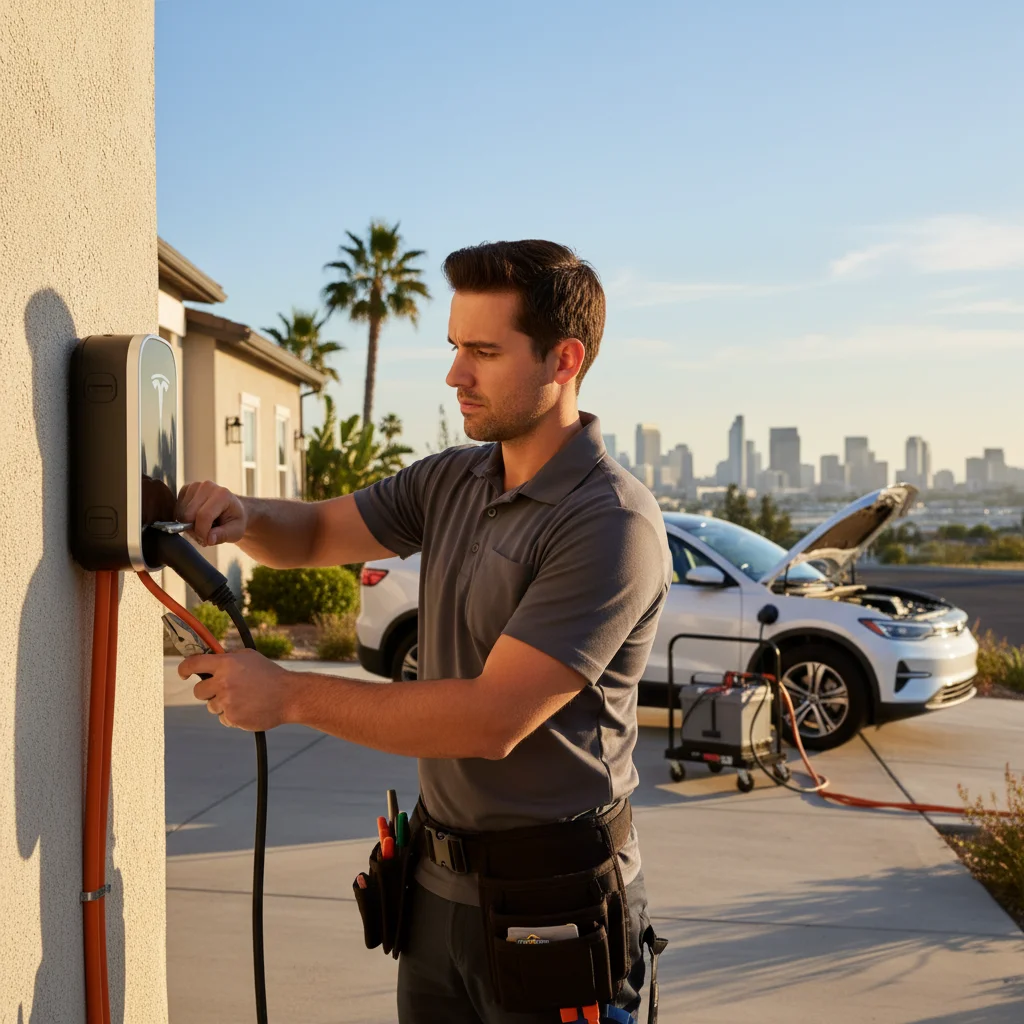
Phoenix heat shortens the small battery first
Phoenix averages about 111 days a year at or above 100F. About 21 of those days hit 110F or more. July highs average near 107F, and August sits near 105F. Overnight summer lows still hang in the mid-80s. A Lightning in a parking lot never really cools.
AAA calls heat the number-one cause of battery failure. It recommends AGM batteries for hot areas. A battery good for five years elsewhere can fail in two or three here. The Lightning’s 12-volt is a small lead-acid unit. It lives the same hard life as a gas truck’s starter battery. The job is worse when that small battery dies.
The 12-volt runs computers, screens, latches, and lights. It also closes the contactors that connect the high-voltage pack. If that little battery is down, the truck can’t wake. The DC-DC converter can recharge it later. That only happens while the truck is on or plugged in. Parked through a week at Sky Harbor, it just sits and cooks.
Short hops around Mesa, Tempe, and Chandler add to the drain. The truck wakes, rolls a few miles, and shuts down again. The 12-volt never gets a long DC-DC top-off. A door left ajar overnight does the same thing. So does Pro Power Onboard left feeding tools or a fridge.
Two failures, two different fixes
Don’t assume the big battery is empty because the truck is dark. An empty traction pack usually still lets the screens come up. You’ll see a low-range warning or reduced power. The truck may refuse to shift into drive, and the cab still talks to you.
A dead 12-volt has a different signature:
- The fob and phone app get no reply
- The center screen stays black, or it flickers once
- The frunk latch won’t pop
- Cabin lights are dim or dead
- Relays click and there’s no chime
- A plugged-in charge session never starts
If the truck lights up but won’t move, you’re probably not in 12-volt territory. If nothing wakes at all, start with the small battery. Signs your EV 12-volt needs replacement lists the early warnings before a lockout.
Valley days that leave a Lightning dark
These trucks work job sites, tow weekend loads, and sit in long-term lots. That’s normal Valley use, and the trouble follows heat and sit time.
A week in a Phoenix Sky Harbor garage is a classic parked-heat failure. Level 2 charging is confirmed in the Terminal 3 and Terminal 4 garages. The 24th Street station has charging too. None of that helps a 12-volt that’s already dropped too low to wake. You can return to a plugged-in truck that still won’t start. The PHX Sky Train gets you to the terminals, and it doesn’t wake the Lightning.
Downtown parks cook the cab the same way. Chase Field after a Diamondbacks night is a long, hot sit. West Valley driveways in Surprise, Goodyear, and Buckeye see the short-hop pattern after work. Phoenix Raceway is in Avondale, not Phoenix, despite the name. Race-day parking bakes a crew cab for hours, then the fob does nothing.
Trades trucks see it after a Mesa or Gilbert site through a 110-degree afternoon. Newer housing in Gilbert and Queen Creek makes home charging common. The calls still happen on the road after the truck sits in heat. The truck had range when you left it, and the 12-volt still died.
Monsoon season runs June 15 to September 30. Haboobs can drop visibility to near zero. After the dust and the parked heat, some owners find a truck that won’t wake. Don’t drive around barricades into floodwater. Arizona’s Stupid Motorist Law is ARS 28-910. The state can bill you for that emergency response.
On a freeway shoulder, ARS 28-871 says leave the traveled lanes when you can. A vehicle that truly can’t move is exempt. Leave room for other traffic to pass, and stay visible 200 feet in each direction. Arizona’s Move Over law is ARS 28-775. Other drivers should change lanes or slow down around warning lights.
Opening the frunk when the truck is dark
Ford put the 12-volt and the jump points in the frunk. The electric latch needs 12-volt power. A dead battery locks you out of the bay you need. That’s the part that stops people on the curb.
The Lightning has a manual frunk release for this. It’s a mechanical pull, a tab or a cable, with no power required. The exact spot changes by model year. Check the owner’s manual for your truck before you yank on panels.
Once the frunk is open, use the dedicated jump terminals. Look for a positive post under a red cap. The negative is a nearby ground stud or bracket. You’re not clipping onto orange high-voltage cables, and you’re not jumping the traction pack. You’re only bringing the 12-volt system back so the contactors can close.
If the labels aren’t clear, stop. Read how to jump start an electric car in desert heat. It covers cable order and common mistakes. The pros we connect you with jump or replace a dead 12-volt on site. They handle Tesla and every major EV brand, including Ford.
Let the truck run after a successful jump. The DC-DC converter can refill the small battery. If it dies again a few hours later, that 12-volt is finished. Heat already used up the 47-month clock. Replacement on site is the lasting fix, not another jump.
When the traction pack is the one that’s empty
A jump won’t help a Lightning that actually hit zero range. There’s no energy in the big pack to move the truck. Heat makes that easier to do on Valley roads. AAA’s 2026 study found about an 8.5% range loss at 95F versus 75F. Recurrent used 345,622 trips from 300 Phoenix-area EVs. It saw losses near 31% at 100F.
Northbound I-17 makes an empty pack more likely. Anthem sits near 1,860 feet on I-17. ADOT posts a 6% maximum grade on that northern climb. East on the Superstition Freeway, Apache Junction is about 1,700 feet before the rise. A work truck that left Tempe with “enough” can be empty on the shoulder. Loop 101 Agua Fria through the West Valley can drain you the same way.
Ford roadside tows to the nearest charger, home, or dealer within 50 miles. It doesn’t charge you on the pavement. Arizona DPS Roadside Motorist Assistance will jump a 12-volt. It can change a tire and bring gasoline or diesel. Its published materials say nothing about charging an EV. ADOT’s Incident Response Unit works Phoenix-area freeways weekdays from 5am to 8pm. It also doesn’t advertise an EV charge. Arizona has two free motorist-help programs, and neither one brings a Lightning a plug.
That’s the gap a mobile operator fills. The pros we connect you with bring a 240V Level 2 source to the truck. For a Lightning they use a CCS adapter. Charging time is typically 15 to 30 minutes. That usually adds 10 to 20 miles of range. That’s enough to reach a charger or a home plug, not a full fill. Out-of-charge recovery is the call when the pack is empty. Non-Tesla EV rescue is the call when you need CCS on the curb.
Charge Pro PHX doesn’t install chargers or do electrical work. It doesn’t touch Pro Power Onboard wiring. A licensed electrician handles a home circuit. APS markets the R-EV overnight plan and Take Charge AZ. Those plans apply at home, not on the shoulder. They don’t wake a dark truck on I-10. The referral line matches you with an independent operator for the roadside problem only.
How the referral call works
You call, and we match you with a local mobile rescue operator. The operator quotes you before any work starts and bills you directly. Charge Pro PHX sets no price and promises no arrival window. The pros we connect you with are licensed and insured. We serve cities across the Phoenix area.
If the 12-volt is only discharged, the operator jumps the proper terminals. Once the truck wakes, the DC-DC converter can recharge the small battery. It pulls that energy from the traction pack. If the 12-volt won’t hold, the operator can replace it on site. If the pack is empty, they charge on CCS instead.
How Phoenix heat changes EV battery care covers parked-heat drain. A dead vehicle at Sky Harbor shows up in our airport EV note. If the truck is in the city core, start with EV roadside assistance in Phoenix.
If your Lightning won’t start, call (602) 932-0920. We’ll help you sort a 12-volt failure from an empty pack. Then we connect you with an operator who can quote the job.
Frequently asked questions
Why won’t my Ford F-150 Lightning start with a full charge?
The full charge lives in the traction pack. The truck still needs a healthy 12-volt to wake. That small battery runs the computers and closes the contactors. Phoenix heat shortens it toward about 47 months. Once it drops too low, the Lightning stays dark. A proper 12-volt jump is the usual fix.
How do I open a Lightning frunk with no power?
The mega power frunk uses an electric latch. That latch needs 12-volt current to open. Ford gives you a manual release for a dead 12-volt. It’s a pull or cable, and the spot varies by year. Your owner’s manual shows the location for your truck. After the frunk is open, use the red-capped jump terminal and the ground point.
Will Arizona DPS charge my Lightning if I’m stranded?
DPS Roadside Motorist Assistance jump-starts batteries and can bring gasoline or diesel. It doesn’t advertise EV charging or out-of-charge help. ADOT’s Incident Response Unit is the same on that point. A local operator with a CCS cable is who can add range on site.