A delivery van EV that won’t wake at Sky Harbor usually needs a 12-volt jump. Heat in the Terminal 3 and Terminal 4 garages cooks the small battery. The East Economy lots do the same after a long parked shift. If the dash is dark, the main pack can still be full.
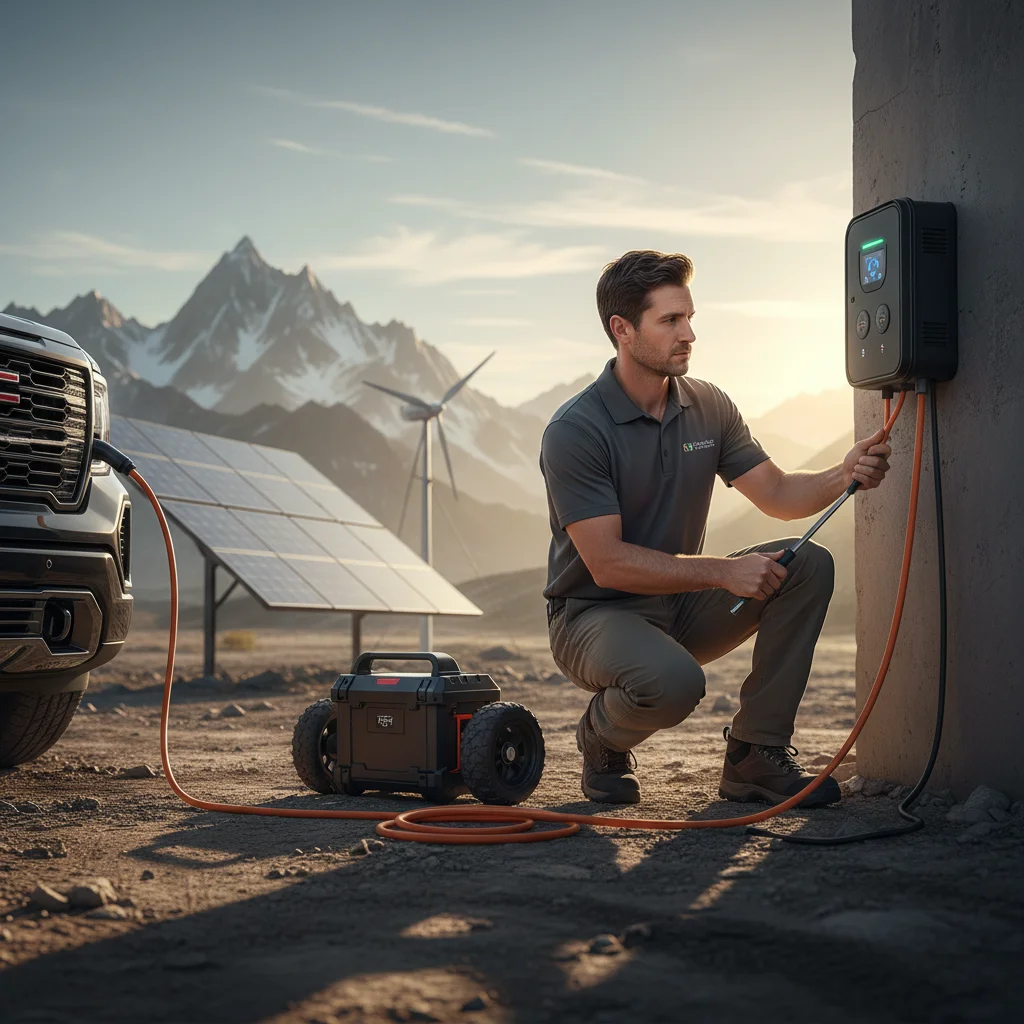
Heat in the airport garages is hard on a 12-volt
Phoenix runs about 111 days a year at or above 100F. About 21 of those days hit 110F or more, per NOAA 1991-2020 normals. July highs average near 107F. Overnight lows still sit in the mid-80s.
Sky Harbor parking is the Terminal 3 and Terminal 4 garages. East Economy has garages A and B plus a surface lot. There’s also the 24th St. station lot. The PHX Sky Train links East Economy to the terminals. A van that sat through a long airport shift often comes back dead. It’s the same pattern as a Tesla left a week in those lots. The 12-volt fails first.
Battery University, citing Battery Council International, found starter batteries last about 47 months in hot climates. A 12-volt that might last five years elsewhere can fail in two or three here. AAA calls heat the number-one cause of battery failure.
On an EV van, that small battery runs the computers, screens, and door hardware. It also closes the contactor that connects the traction pack. A DC-DC converter only recharges it while the van is on or charging. Parked telematics keep drawing power. When the 12-volt dies, a full main pack still can’t move the van.
Sky Harbor has confirmed Level 2 charging in the Terminal 3 garage. Those stalls sit on Level 1 west, Level 3, and Level 7. Terminal 4 has charging on Level 4 at the east end, zone B. There’s also charging at the 24th St. station. EVPassport installed that hardware in 2022. None of it helps until the 12-volt can close the contactors.
How to tell a dead 12-volt from an empty pack
If the van won’t power on at all, start with the 12-volt. No dash, no app, no door unlock: that’s the small battery. It’s the common Sky Harbor failure after a hot parked shift. A Tesla 12-volt jump on site works the same way on other EV brands.
If the van powers on and shows zero miles, the traction pack is empty. Recurrent reported EVs can lose 20 to 30 percent of range above about 95F. That dataset included 345,622 trips by 300 Phoenix-area EVs. A van that left a depot with enough range can still sit down. That happens on the I-10 Papago, the Maricopa Freeway toward Tempe, or Loop 202.
A Level 2 boost adds driving miles without unloading cargo. Mobile EV charging is how that on-site charge works.
State crews help, they don’t charge an EV
Arizona DPS Roadside Motorist Assistance will change a tire, bring gasoline or diesel, and jump a conventional battery. Its published materials don’t mention EV charging. ADOT’s Incident Response Unit works Phoenix-area freeways from 5am to 8pm on weekdays. It also doesn’t advertise bringing a charge to a van.
If you’re on I-10, I-17, Loop 202, or SR-51 Piestewa, those crews can still help. They won’t add 10 to 20 miles to a delivery EV. An independent operator does that.
ARS 28-871 says you shouldn’t sit in the traveled lanes when you can get off them. A vehicle that’s truly disabled and can’t move is exempt. Keep hazards on. ARS 28-775 is Arizona’s Move Over law. Other drivers should change lanes or slow for a stopped vehicle with warning lights.
Jump, charge, or tow
A local operator brings a 240V Level 2 source to the van. Native NACS covers Tesla plugs. CCS or J1772 adapters cover most other EVs. Typical charging time is 15 to 30 minutes. That usually adds about 10 to 20 miles. That’s charging time only. Nobody on this line can promise when a truck arrives.
If the 12-volt is the failure, the operator can jump it or replace it on site. Tesla, Rivian, Ford, Chevy, GMC, and other major EV brands all use that small-battery setup. When Tesla 12-volt batteries fail in desert heat walks through why it dies first. How to jump start an electric car safely in desert heat covers the on-site version.
Towing a loaded van is a different job. You still have to secure freight. You still need a drop that can charge it. Tesla roadside, for Tesla vehicles, tows toward a Supercharger or a service center. It doesn’t charge on site. See Your EV died: charge it, jump it, or wait for a tow.
Charge Pro PHX is a referral line. It doesn’t own trucks, employ technicians, or set prices. It matches you with an independent local operator. That operator quotes you before starting and bills you directly. The pros we connect you with are licensed and insured.
If you can still roll, get off the traveled lanes. Follow posted rules in the garages and East Economy. Call with the make, the lot or terminal, and whether screens light up. Say if you’re in Phoenix proper, or heading toward Tempe, Mesa, Chandler, or Gilbert. See the EV charging in Phoenix page.
Call (602) 932-0920 when you want a match. The operator confirms the work with you. If a jump or a boost won’t fix the van, they should say so.
Why does a Sky Harbor delivery van die after it sits?
Heat. A 12-volt here often lasts only two or three years. Parked telematics keep drawing power in the airport garages and East Economy lots. When that small battery dies, the van goes dark even with a full pack.
Can an operator jump a van that’s still loaded?
Yes. A 12-volt jump and a Level 2 top-off happen at the van. There’s no need to unload packages. Once the van wakes or has enough miles, the route can continue.
What if the van wakes but has no range left?
That’s an empty traction pack, not a 12-volt. An operator can add about 10 to 20 miles with Level 2 charging. Charge time is typically 15 to 30 minutes. That’s usually enough to reach a depot plug or a public charger the driver already uses.