The EV maintenance schedule Phoenix owners actually need starts with the 12-volt, not oil. There’s no engine oil, no spark plugs, and no fuel filter. Heat still eats the small battery, the tires, and the coolant loops. Follow your maker’s booklet for miles and months. Treat Valley heat as the item that booklet understates.
What a gas shop calendar gets wrong
Gasoline service lanes sell a ritual. An EV doesn’t use it. You won’t change engine oil on a Tesla, a Rivian, or a Bolt. There are no spark plugs and no timing belt. There’s no fuel pump to replace. Many EVs use a single-speed drive unit that sits for years. Some models still call for drive-unit fluid at high miles. Check the booklet before you assume the unit is sealed for life.
Phoenix averages about 111 days a year at or above 100F. About 21 days hit 110F or more, per NOAA normals. July highs sit near 107F. The work that matters here is heat, parking, and the 12-volt. Arizona has no annual safety inspection. Battery-electric cars are exempt from Maricopa County emissions testing. Hybrids aren’t exempt, so don’t mix the two. Nothing in that system will flag a weak 12-volt for you.
The 12-volt is the item that actually strands you
Every EV still has a small 12-volt battery. Some cars use a lithium pack for the same job. It runs the door handles, the screens, and the wake computer. That computer closes the contactor to the traction battery. If that small pack dies, the car won’t wake. A full high-voltage pack doesn’t save you. The DC-DC converter only recharges it while the car is on or charging. Parked in July, it’s on its own.
Heat is hard on that battery. Battery Council International work, cited through Battery University, tracked starter-battery life by climate. Hot-climate batteries lasted about 47 months. A five-year battery elsewhere can fail in two or three years here. AAA calls heat the number-one cause of battery failure. AAA points hot-climate drivers toward AGM when the car was built for it. Newer Tesla Model 3 and Model Y cars use a lithium 12-volt. Use the part the car was built for. Don’t swap chemistries on a guess.
Tesla features make the parked drain worse. Sentry Mode and Cabin Overheat Protection draw power while the car sits. That’s useful in a Sky Harbor garage in June. It’s also a 12-volt tax. Leave a car a week in Terminal 3, Terminal 4, or East Economy. The traction pack may still show miles. The 12-volt may not. Level 2 charging is confirmed in the Terminal 3 and Terminal 4 garages. The 24th St. station has it too. Plug in when you can. Don’t treat a plugged week as proof the small battery is fine. A dead 12-volt still leaves the car dark.
The same pattern shows up on older West Valley streets. Sun City has some of the oldest housing in the service area. 88.9% of those homes were built before 1980. Youngtown is next at 51.8%. Cars there sit more. A parked EV in July is a 12-volt test, not a rest. Newer East Valley and Pinal housing charges at home more often. Those trouble calls tend to happen on the road, after a commute. Either way, the 12-volt is the maintenance item people skip.
Slow screens and weak door handles are early tells. Odd electrical blips and a car that won’t wake are next. 12-volt warning signs are easier to catch in a driveway than on Loop 101. For Tesla owners, desert-heat 12-volt failures follow the same physics. Have the small battery load-tested when you already have the car in for tires. Don’t wait for a dark dash at Mortgage Matchup Center after a Suns night.
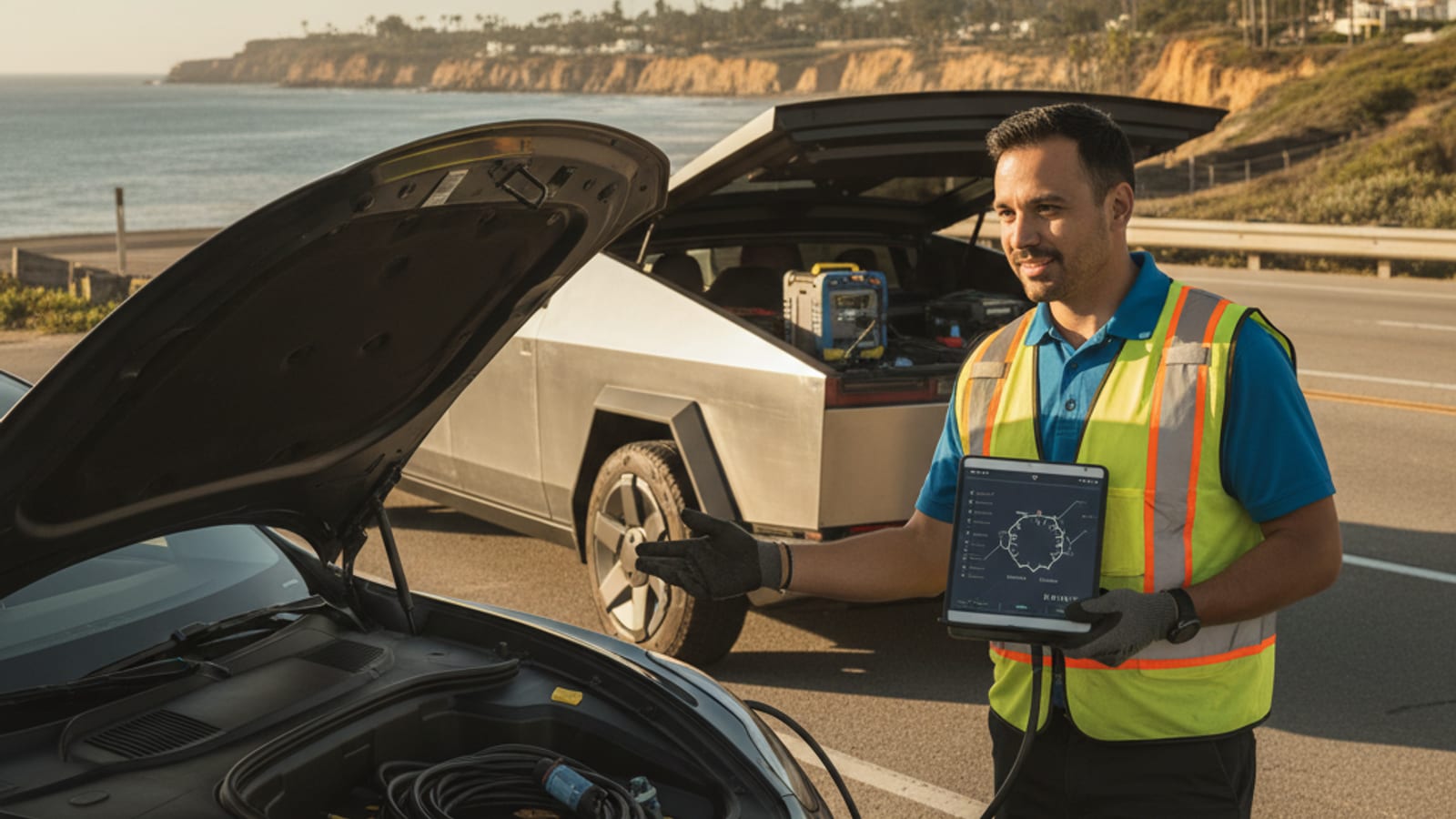
If it dies, you need a 12-volt jump or a replacement on site. Charge Pro PHX is a referral line. It matches stranded drivers with independent local operators. Those operators can jump a Tesla 12-volt and handle the same job on other brands. They quote before they start. They bill you directly. Charge Pro PHX doesn’t own trucks or employ techs.
The traction pack still needs a summer habit
The expensive battery is the one you bought the car for. It still needs heat management. AAA’s 2026 study found about a 10% efficiency drop at 95F versus 75F. Range loss in that study was about 8.5%. Recurrent used 345,622 trips from 300 Phoenix-area EVs. It reported 20 to 30% range loss above about 95F. Loss was near 31% at 100F. NREL notes that cabin cooling is one of the larger draws. Geotab found faster pack wear in hot climates. The extra fade was about 0.4% per year versus mild climates. None of those figures come from Tesla’s site.
You can’t change the weather. You can change how the pack lives in it. Park in shade when you have it. Pre-cool the cabin while the car is still plugged in. That way the pack and cabin aren’t fighting a heat-soak start. Keep software current. The battery management system is updated over the air on most late-model EVs.
Daily charge habits matter more in a desert than on a mild coast. Tesla’s published guidance for most cars is a daily limit below a full charge. Use 100% as a trip setting for a long run. Don’t make a full charge your weekday default. Other makers publish their own windows. Follow the app for your brand, not a forum rule. For pack care in this climate, read how Phoenix heat changes EV battery care.
Overnight charging is part of the schedule too
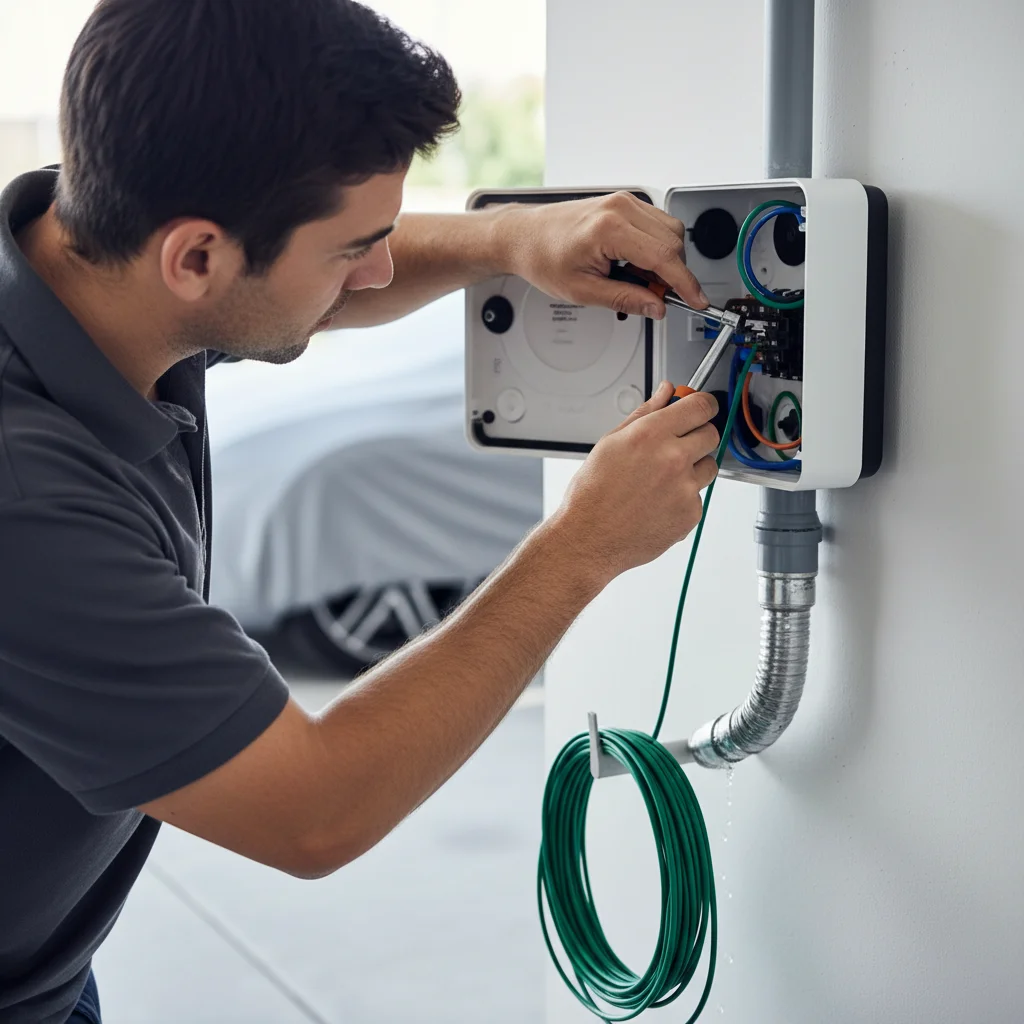
Home charging is maintenance in slow motion. A gentle overnight charge is easier on the pack than a hot midday stall. The Valley is split among five utilities. A single city can split block by block. Confirm your address. Don’t assume your neighbor’s plan is yours.
APS serves large parts of Phoenix, Surprise, Goodyear, Buckeye, and Queen Creek. It shares Chandler, Gilbert, Scottsdale, and Tempe with SRP. APS publishes the R-EV plan, marketed as EV Overnight Charging from 11pm to 5am weekdays. It also names a Level 2 smart-charger rebate, APS Smart Charge, and Take Charge AZ. Confirm the current offer with APS.
SRP serves much of Mesa. Its Electric Vehicle Price Plan closed to new enrollment after a February 2025 board decision. Existing customers may stay through the November 2029 billing cycle. SRP still names an Electric Vehicle Export Price Plan for solar customers. It also names a Marketplace Level 2 rebate, EV Smart Charge, and BizEV.
Mesa Municipal Electric covers about 5.5 square miles around downtown Mesa. It publishes the E1EV time-of-use rate. ED3 serves Maricopa in Pinal County, plus much of northern Pinal. It offers EV TOU 2-10 and on-bill smart-charger financing. ED2 serves Casa Grande, Coolidge, and Florence. No EV-specific program turned up on the ED2 site. Confirm rates with ED2 directly.
Tesla home charging on APS and SRP walks through how those bills run. Charge in the window your utility designed. Let the pack cool overnight instead of baking on a midday stall.
Tires and brakes still make the list
EVs are heavy, and they dump torque from a stop. Tires take that hit. Heat makes the rubber work harder on Loop 101 and I-10. The Superstition Freeway stretch of US-60 is the same. Haboobs load the tread with dust. Monsoon water hides potholes. Older streets in Sun City and Youngtown aren’t a new Gilbert arterial. Your manual sets the rotation interval. Don’t stretch it because the car has no oil light. Check pressures when the car is cool. A 107F afternoon on an ASU Tempe lot will lie to the gauge.
Alignment matters more on a heavy EV than on a light gas hatch. Uneven inner wear is a maintenance clue, not a tire brand problem. Regenerative braking saves pads. It doesn’t save you from seized calipers. Heat, dust, and long cruising with little pedal use can stick a caliper. Have pads, rotors, and lines looked at when the tires come off. Brake fluid absorbs moisture. Your booklet sets the change interval. Follow that interval even if the pads look thick. Arizona won’t catch a stuck caliper on a sticker.
Coolant, cabin air, and the charge port
The traction pack and the power electronics run on their own coolant loops. Those loops keep cells from cooking in 110F sun. They’re also a service item. Some systems are designed as long-life fills. Others call for inspection or replacement on a published interval. There’s no Valley-wide figure that applies to every brand. Open the manual. If a shop can’t show the procedure for your model, pick one that can.
Cabin filters clog faster here than a mild-climate booklet implies. Official monsoon runs from June 15 to September 30. Haboobs drop visibility and push fine dust into every intake. After a dust wall, check the filter. If the AC smells like dirt, replace it. Refrigerant service follows the maker, not a gas-car hunch.
The charge port is the other summer failure point. Dust, pollen, and monsoon spray collect in the door. Look before you plug in. Don’t force a wet connector. If the latch won’t release after a storm or a hot public session, stop yanking. Heat swells plastic and can hold a pin.
Grades make the cooling loop earn its keep. Northbound I-17 toward Anthem, New River, and Black Canyon City is a real climb. ADOT posts a 6% maximum grade on the northern stretch. Forum drivers on that climb reported about 481 Wh/mi up versus 293 down. That’s about 40% more energy uphill. The Beeline, SR-87, posts a 7% grade into Slate Creek Canyon toward Payson. None of that is an oil-change problem. It’s a thermal-management problem. A neglected coolant loop shows up on those grades first.
Read the booklet for your brand, then add heat
Intervals aren’t universal. Tesla, Rivian, Ford, Hyundai, Kia, Chevy, and BMW publish their own lists. Some want tire rotations on a short cycle. Some want a 12-volt test at a numbered visit. Some call out brake fluid by years, not miles. EV maintenance schedules by brand is a starting map. The glovebox booklet still wins. Tesla’s support pages are the right place for Tesla intervals. Other makers put the same content in the app or the PDF. If a number isn’t in that document, it isn’t your schedule.
Add a desert layer on top. Test the 12-volt before summer, not after the first 110F week. Recheck it if the car sat at Sky Harbor or Phoenix-Mesa Gateway. A Sun City driveway for days is the same test. Replace cabin filters after haboob season, even if the mile count is early. Look at tires after a long I-17 or Beeline weekend. Keep the daily charge limit in the app. Put the car in shade when you can. That’s the Phoenix-area schedule oil never covered.
When a skipped item leaves you on the shoulder
A missed 12-volt test doesn’t stay a shop problem. It becomes a shoulder problem. ARS 28-871 bars a highway stop when you can get off the traveled lanes. That’s outside a business or residence district. A vehicle disabled so badly it can’t move is exempt. When you’re stopped, leave room for traffic to pass. Stay visible 200 feet in each direction. Arizona’s Move Over law is ARS 28-775. Other drivers must change lanes or slow down for a stopped vehicle with lights.
Arizona does run free motorist help. DPS Roadside Motorist Assistance will change a tire. It brings gasoline or diesel and can jump a battery. ADOT’s Incident Response Unit works Phoenix-area freeways from 5am to 8pm weekdays. It clears debris, changes tires, and helps stranded motorists. Published materials for both programs name gasoline and diesel. They don’t advertise bringing an EV a charge. If the traction pack is empty, a mobile operator is who brings a charge. If the 12-volt is dead, a jump may be enough. Don’t assume a gas-can truck can wake a Tesla.
The operators the referral line connects you with bring a 240V Level 2 source. They use a native NACS plug. Non-Tesla EVs get a CCS or J1772 adapter. Typical charging adds 10 to 20 miles in 15 to 30 minutes of charging. That is charging time, never an arrival time. They also jump or replace a dead 12-volt on site. The pros we connect you with are licensed and insured. For an empty pack, mobile EV charging is the on-site option. For a dark dash with miles still on the display, start with the 12-volt.
Charge Pro PHX matches you with those operators across the Phoenix area. It performs no work and holds no license. The operator quotes you before starting. If you need that match, call (602) 932-0920. Keep the owner’s manual in the car, or the PDF in your phone. The schedule only helps if you can read it when the dash is dark.