Your Cadillac Lyriq sat through a Phoenix afternoon over 100 degrees. The Ultium pack still shows plenty of range. Screens stay dark, and the fob won’t unlock. After a hot parked day, a Lyriq that won’t start is almost always the 12-volt. Heat killed the small battery that wakes the car.
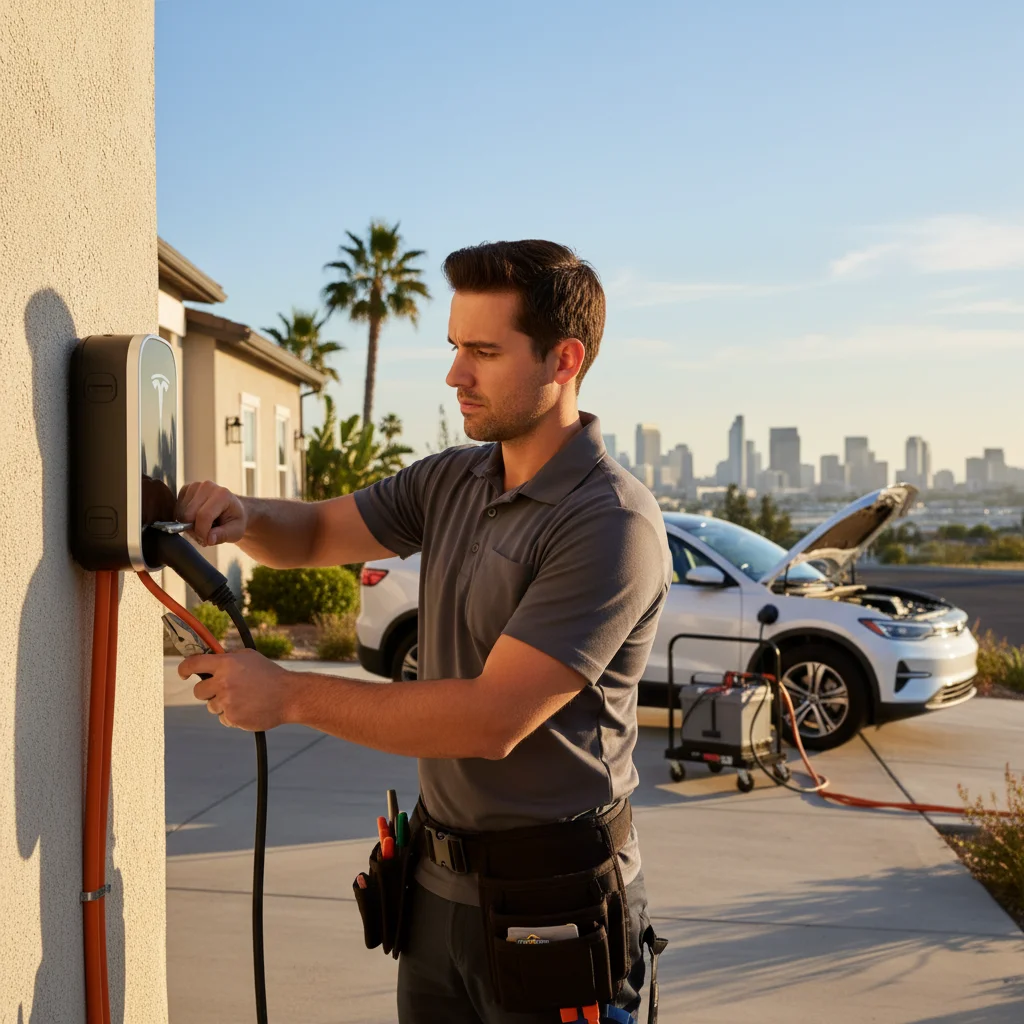
Heat is what kills the Lyriq’s 12-volt
Phoenix averages about 111 days a year at or above 100 degrees. About 21 of those days reach 110 or more. July highs sit near 107 degrees, and August is near 105. Overnight summer lows often stay in the mid-80s. The accessory battery never cools overnight.
Battery Council International work, via Battery University, tracked starter-battery life in heat. Those batteries last about 47 months in hot climates. In cool climates they last about 59 months. AAA names heat as the top cause of battery failure. A 12-volt might last five years in a mild city. In the desert it can fail in two or three.
The Lyriq still needs that accessory battery to boot. It runs the door handles and the screens. It also runs the contactor that ties the Ultium pack to the car. A DC-DC converter only tops the 12-volt up while the car is on. It also recharges during a session that’s actually charging. Parked in a Scottsdale garage, it just sits and bleeds. How Phoenix heat changes EV battery care is the same story on every brand.
What a Lyriq no-start looks like from the curb
Owners blame the drive pack first. Heat does cut range. Recurrent reported 20 to 30 percent range loss above about 95 degrees. Near 100 degrees the loss was about 31 percent. That came from 345,622 trips by 300 Phoenix-area EVs. AAA’s 2026 study found about an 8.5 percent range drop at 95 versus 75. That’s a range problem. It’s not why the car won’t power on.
An empty Ultium pack still usually lets the screens boot. You get a low-range warning. You can often still select a gear. A dead 12-volt gives you nothing. There’s no chime, no display, and no powered handles. A fading fob over the prior week is an early hint. You press the brake and hear no click.
| What you see | What it usually means |
|---|---|
| Dark cabin, fob silent, no dome light | 12-volt is fully down |
| Dim lights, fob only works up close | 12-volt is weak. Start with a jump. |
| Screen boots, dies, then repeats | Modules may need a 12-volt power cycle |
| Dash is alive, indicated range is near empty | Out of charge. You need miles, not a jump. |
| Car starts, then shows a high-voltage warning | Ultium-side fault. That needs a dealer scan. |
Parked Valley days that cook the accessory battery
The East Valley and the West Valley don’t fail for the same reasons. Newer housing in Gilbert, Surprise, and Maricopa in Pinal County often has home charging. The call still happens on the road after a work-lot sit. Sun City housing is mostly from before 1980. Parked cars there sit through hot afternoons with no charge session.
A week in the Sky Harbor garage. You leave the Lyriq in Terminal 3, Terminal 4, or East Economy while you fly. Level 2 charging is confirmed in the Terminal 3 garage on Level 1 west, Level 3, and Level 7. Terminal 4 has it on Level 4 at the east end, zone B. EVPassport installed that charging at PHX in 2022. The 24th St. station has Level 2 charging too. Plug in if you can. That still won’t save a 12-volt already on its last cells. A week of parasitic draw in a hot garage finishes a weak battery. You come back, and the fob does nothing. That’s a 12-volt death, not an empty drive pack. A delivery van EV that died at Sky Harbor is the same parked drain.
Event parking that runs long. Hours at Chase Field for the Diamondbacks cook a parked Lyriq. So does Mortgage Matchup Center for the Suns and Mercury. State Farm Stadium in Glendale, Arizona, is the same kind of sit. Phoenix Raceway is in Avondale, not Phoenix, despite the name.
A West Valley commute that looked fine at dawn. Overnight lows in the mid-80s don’t save a weak battery. APS serves large parts of Phoenix, plus Surprise, Goodyear, and Buckeye. SRP covers much of Mesa and shares other cities block by block. Confirm your own address. APS R-EV is the overnight plan, 11pm to 5am on weekdays. SRP’s Electric Vehicle Price Plan is closed to new enrollment. Existing customers may stay until the November 2029 billing cycle. An overnight charge session keeps the DC-DC working. A skipped session leaves the 12-volt on its own.
Paradise Valley the town is its own incorporated place. It’s not the Paradise Valley urban village inside Phoenix. A long lunch on those desert streets is another classic sit.
Jump the 12-volt, don’t guess at the pack
You’re waking the low-voltage system, not the drive pack. Never clamp onto the orange high-voltage cables at any point. The 12-volt on a Lyriq lives under the hood, with labeled jump terminals nearby. If the interior is fully dead, the hood release inside may not work. Check the owner’s manual for emergency access on your model year.
Connect a lithium jump pack to the labeled positive and negative points. Give the electronics a minute or two to recover, then try start. How to jump start an electric car in desert heat covers the same low-voltage idea.
If the car still won’t wake after a clean jump, stop. Take it to a Cadillac dealer for a scan. Don’t force a charge session on a car that’s throwing high-voltage faults. A jump that works once and dies again usually means the 12-volt is finished. Watch the signs a 12-volt needs replacement before it strands you. Independent operators we match can replace that battery on site when it’s the failed part. They quote you before they start, and they bill you directly.
The Lyriq sits on GM’s Ultium platform. So do the Honda Prologue, the Chevy Blazer EV, and the Escalade IQ. A Honda Prologue that won’t start after heat uses the same 12-volt gate. The Cadillac Escalade IQ fails the same way after a dead 12-volt.
If the dash lights up and range is near zero, that’s a different problem. You need miles on the traction battery, not a jump. Independent operators in the non-Tesla EV rescue network bring a 240-volt Level 2 source. They use CCS or J1772 adapters on a Lyriq.
If you’re stuck on a Valley shoulder
On a freeway shoulder, think about the statute first. ARS 28-871 says get off the traveled lanes when you can. A vehicle that truly can’t move is exempt. Leave room for other traffic to pass. Stay visible from 200 feet in each direction. Put your hazards on. Stay out of the travel lane while you wait. Other drivers must move over under ARS 28-775.
Monsoon season runs June 15 to September 30. Haboobs can drop visibility to near zero. Don’t stand on an open shoulder in a dust wall. Don’t drive around barricades into water. ARS 28-910 lets the state bill you for that rescue. Wait in the car with the hazards on.
Arizona does run free motorist help. DPS Roadside Motorist Assistance will change a tire, bring gasoline or diesel, and jump a dead battery. ADOT’s Incident Response Unit works Phoenix-area freeways from 5am to 8pm on weekdays. Neither program advertises bringing an EV a charge. Confirm what the crew on scene can actually do.
Don’t point a freshly jumped Lyriq up I-17 toward Anthem and hope. Northbound I-17 posts a 6 percent maximum grade. Anthem sits around 1,860 feet. Forum drivers on that climb report about 40 percent more energy going up than coming down. The nav often underestimates that hit. The Beeline toward Payson has a posted 7 percent grade into Slate Creek Canyon. Get the 12-volt sorted before those runs.
What a local operator can do on site
Charge Pro PHX is a referral line for the Phoenix area. We don’t own trucks, and we don’t send our own technicians. We match you with an independent mobile rescue operator. The pros we connect you with are licensed and insured. They bring a 240-volt Level 2 source for CCS and J1772 cars. They also jump or replace a dead 12-volt on site.
The operator quotes you before starting, and you pay that operator directly. Nobody here can promise when a truck appears. If the pack is empty, on-car charging time is typically 15 to 30 minutes. That usually adds about 10 to 20 miles of range. That’s charging time, not a promise of when someone arrives. If the 12-volt failed, the work is a jump or a swap at the car.
A jump is a wake-up. It’s not a new battery. If the 12-volt is cooked, it’ll die again. Heat in this valley makes that second failure fast. Park it on a 240-volt home charger if you have one. That keeps the DC-DC working while the pack charges. It still won’t rebuild a worn 12-volt. If it dies twice, don’t keep driving it.
Frequently asked questions
Why won’t my Cadillac Lyriq start if the main battery is charged?
The gauge is reading the Ultium drive pack. That pack can be nearly full while the car stays dead. The 12-volt boots the computers and closes the contactors. After a Phoenix day above 100, that small battery is usually first to fail.
How do I jump a Cadillac Lyriq?
You’re jumping the 12-volt, not the Ultium pack. Use the labeled terminals under the hood. Stay off the orange high-voltage cables. If the interior hood release is dead, use the emergency procedure in the owner’s manual. Give the electronics a minute or two, then try start.
Can a Lyriq refuse to start even with a full pack?
Yes. A dead 12-volt strands the car completely, even with a full traction battery. A module hang can also block Ready when the app still shows charge. If a jump still leaves a high-voltage warning, that’s a dealer scan.
If your Cadillac Lyriq won’t start in the Phoenix area, call Charge Pro PHX at (602) 932-0920. Describe the dash so the operator brings a jump pack or a Level 2 source.