Hyundai Ioniq 5 charging time is two clocks, not one. A Long Range pack on Level 2 often needs about 6 to 7 hours. A capable DC stall can take 10 to 80 percent in about 18 minutes. That 18-minute figure is Hyundai’s published ideal. Phoenix heat above about 100F stretches both sessions. July highs average near 107F here. Overnight lows still sit in the mid-80s. Those extra minutes are how a planned charge becomes a stall.
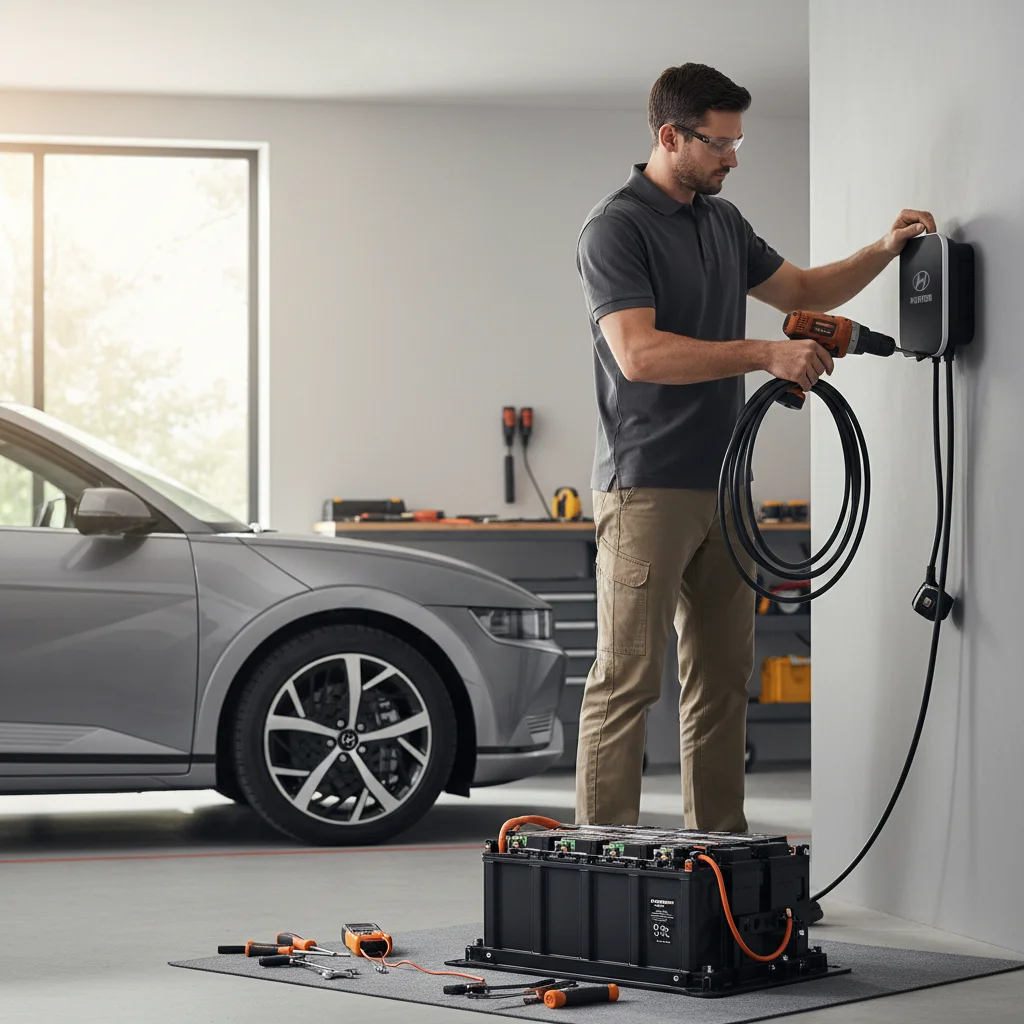
Brochure minutes versus a Phoenix afternoon
Hyundai’s fast-charge number assumes a mild pack and a stall at full rated power. The Phoenix area doesn’t give you that weather. NOAA normals put about 111 days a year at or above 100F. About 21 days hit 110F or more. August still averages near 105F. The pack spends those hours defending itself. It isn’t taking every kilowatt you hoped for.
That derate is the local answer to Hyundai Ioniq 5 charging time. The car isn’t broken. It’s protecting the cells. An 18-minute spec sheet session can sit longer while the thermal system works. Home charging stretches too. A hot pack and a hot garage both slow the handoff from the wall.
If you want the pack sizes behind those hours, read Hyundai Ioniq 5 battery size and what heat does to range. The Standard Range and Long Range packs don’t share the same clock.
Why the 800-volt system only helps at a fast stall
Most EVs on Valley roads still use a 400-volt architecture. The Ioniq 5 is one of the few mainstream cars built on 800 volts. That higher voltage lets a compatible DC fast charger push more power. The cables and cells stay cooler while they take it. That’s why the 10 to 80 percent number looks so short on paper.
Home charging doesn’t get that shortcut. A Level 2 wall unit feeds a fixed rate. The car’s internal voltage doesn’t make a 240-volt circuit faster. An Ioniq 5 on a garage charger looks a lot like other EVs with a similar pack. The 800-volt advantage only shows up when the stall can actually feed it.
That split is why the same search has two honest answers. Plug in at home in Chandler and you get the slow clock. Hit a high-power CCS stall off I-10 and you get the fast one, if heat allows.
Home charging when the house never cools off
A regular 120-volt outlet will charge an Ioniq 5. It’s Level 1, and it’s a backup, not a plan. A full charge from empty can run past a full day. Most owners only use it when the 240-volt circuit is down.
Level 2 is the daily setup. On Level 2, Standard Range is about 5 to 6 hours from a low charge. Long Range is about 6 to 7 hours. Those are Hyundai’s published windows. Plug in after dinner and you usually wake up full. Heat changes the margin.
Phoenix summer nights don’t dump the heat. Lows in the mid-80s keep the pack warm. Cabin preconditioning and climate control add load before you leave. NREL reports cabin cooling is one of the biggest range draws. AAA’s 2026 study found about a 10 percent efficiency drop at 95F versus 75F. Range loss in that study was about 8.5 percent. Recurrent looked at 345,622 trips by 300 Phoenix-area EVs. It reported 20 to 30 percent range loss above about 95F. Loss was near 31 percent at 100F. You start the morning with fewer miles than the dash suggested in March.
That’s how a stretched home charge turns into a stall. You unplug with enough for the I-17 run toward Anthem. Or you count on the Loop 101 commute. Then the air conditioner eats the buffer. How Phoenix heat changes EV battery care covers the habits that keep more of that buffer.
If the house still runs on a 120-volt cord, that’s a panel and circuit question. It isn’t a car question. APS and SRP both publish EV rate plans by name. APS markets the R-EV plan as EV Overnight Charging from 11pm to 5am on weekdays. SRP’s Electric Vehicle Price Plan closed to new enrollment after a February 2025 board decision. Existing SRP customers on that plan may stay through the November 2029 billing cycle. Confirm your address. Service in this metro splits block by block.
Fast charging in heat, not on a spec sheet
The 18-minute 10 to 80 percent figure needs two things. The charger has to match the car’s peak rate. The battery can’t already be heat-soaked. A stall running below its rating will cap you. So will a pack that’s sat in a Sky Harbor garage all week. Level 2 charging is confirmed in the Terminal 3 garage at Phoenix Sky Harbor. It’s also in the Terminal 4 garage and at the 24th St. station. A week in those lots is a heat soak, not a rest.
Charge speed isn’t a straight line. The Ioniq 5 takes power fastest in the middle of the session. It tapers as it nears full, like most EVs. That’s why drivers stop around 80 percent on a trip. The last 20 percent can take nearly as long as the first 80. In 107F weather, that taper starts earlier. The thermal system is already busy.
The Ioniq 5 uses a CCS port. Adapters exist for NACS stalls. Speed through an adapter varies by model year and by the stall. Check what your year supports before you count on a specific plug.
Public charging that says connected and then sits there is a different problem. Why EV charging stops at a random percentage is the next read if the percent won’t climb.
When the clock runs out on the road
A stretched charge is annoying at home. On a freeway shoulder it’s a legal and safety problem. ARS 28-871 says you should get off the traveled lanes when you can. A vehicle that can’t move is exempt. You still need to leave room and stay visible. ARS 28-775 is the Move Over law. Traffic should shift a lane around a stopped car with lights on.
Arizona DPS Roadside Motorist Assistance will change a tire. It will jump a 12-volt and bring gasoline or diesel. ADOT’s Incident Response Unit works Phoenix-area freeways on weekdays. It does similar motorist help. Neither program advertises bringing an EV a charge. That’s the job an independent mobile operator actually does.
Charge Pro PHX is a referral line. We don’t own trucks. We don’t charge the car ourselves. We match you with a local operator who quotes you before starting. The operator bills you directly. The operator brings a 240-volt Level 2 source to the Ioniq 5. Non-Tesla EVs use a CCS or J1772 adapter. Typical charging time on site is 15 to 30 minutes. That’s enough to add about 10 to 20 miles of range. That’s charging time, not a promise of when someone arrives.
If the car won’t wake after a hot park, start with the small 12-volt. A dead 12-volt kills the contactors even when the main battery is full. Hyundai Ioniq 5 won’t start after sitting in Phoenix heat walks that checklist. A cable that won’t release is another known Ioniq 5 heat issue. Hyundai Ioniq 5 charge port stuck after a hot Valley charge covers that snag.
For a CCS car that’s empty on the pavement, use the non-Tesla EV rescue line. We serve the Phoenix area, including Phoenix, Mesa, and Tempe. That includes East Valley cities around Loop 202. Call (602) 932-0920 and we’ll connect you with an operator.
Frequently asked questions
How long does a Hyundai Ioniq 5 take to charge at home in the heat?
On Level 2, Standard Range is about 5 to 6 hours from a low charge. Long Range is about 6 to 7 hours. Heat above about 100F can stretch that window. Level 1 on a regular outlet can run past a day from empty.
How fast is Ioniq 5 DC charging when it’s over 100F?
Hyundai’s published 10 to 80 percent time is about 18 minutes under ideal conditions. That needs a capable stall and a pack that isn’t heat-soaked. A stall below its rating adds minutes. Target 80 percent in summer, not a full top-off.
What if the Ioniq 5 stops charging or I’m stranded?
A stuck port, a dead 12-volt, or an empty pack are different jobs. If you can’t move the car, stay visible. Get off the travel lanes when you can. A local operator can bring Level 2 charging to the car, or jump the 12-volt, once you’re matched.