A Hyundai Ioniq 5 charge port stuck after a hot Valley session is usually a seated latch pin. It’s not a wrecked inlet. Phoenix averages about 111 days a year at or above 100F. About 21 of those days reach 110F or more. July highs average near 107F. August sits near 105F. Overnight lows still hang in the mid-80s, so the port barely cools. Unlock the car. Press the handle release. If the CCS cable still won’t move, stop yanking it.
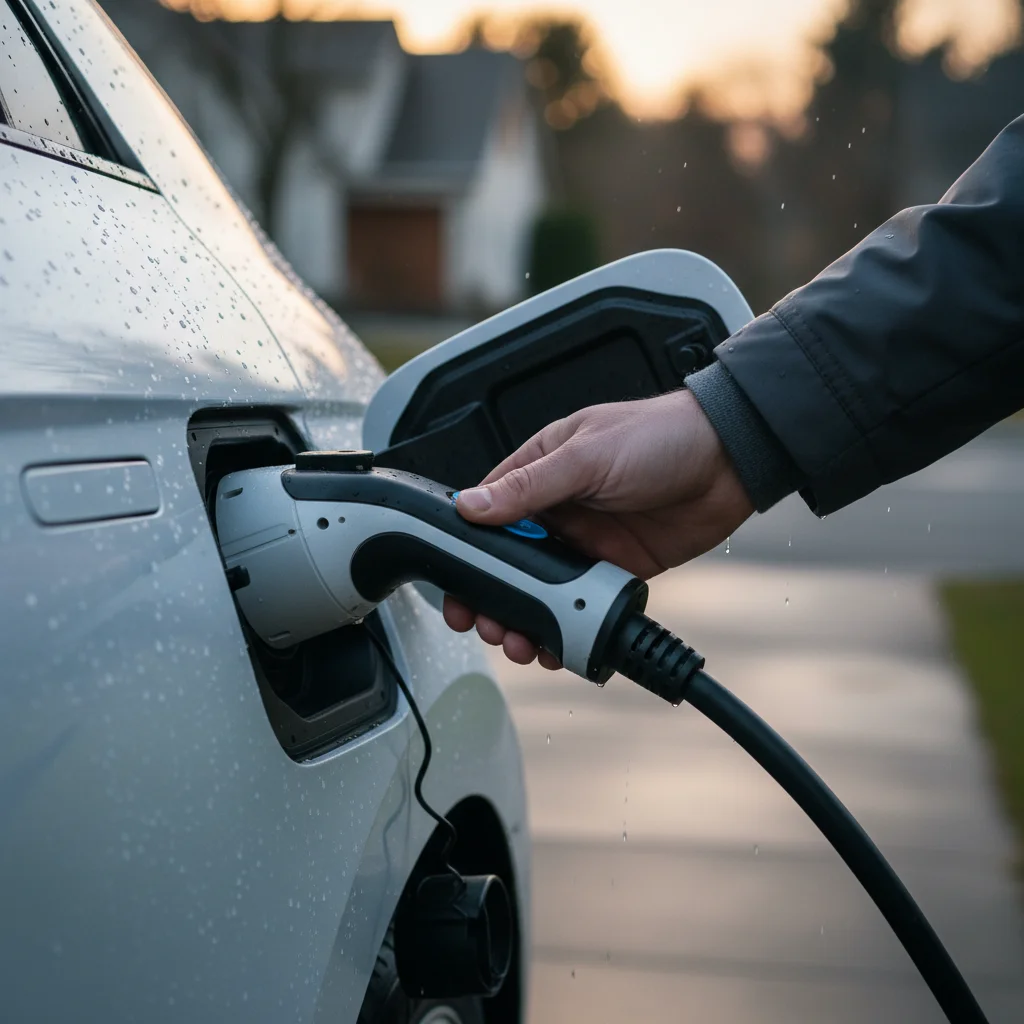
The Ioniq 5 doesn’t use a dumb flap and a single pin. It pairs a motorized charge door with a separate lock on the connector. That lock is a small metal pin. It slides into a notch on the CCS handle so the cable can’t drop mid-session. Software is supposed to retract it when charging ends, or when you unlock the doors. Heat can leave that pin seated. So can a messy handshake with a public DC stall, or a tired 12-volt.
You’ll meet this in workplace lots in Tempe. It happens in the Terminal 3 and Terminal 4 garages at Sky Harbor. It happens on hot lots after a night at Chase Field. The session looks finished. The dash looks calm. The handle still won’t come out.
What 100-degree air does to the inlet
Metal expands in this climate. Plastic gets tacky. Fine dust from a haboob can sit in the latch track. Official monsoon season runs June 15 to September 30. It throws grit as well as rain. None of that requires a broken part. The pin just doesn’t slide the way it did in mild weather.
Cabin cooling already taxes range here. Recurrent’s Phoenix-area dataset put losses near 31% at 100F, from 345,622 trips across 300 local EVs. AAA’s 2026 study found about a 10% efficiency drop at 95F versus 75F. You may have arrived at the stall with less buffer than the nav promised. Then the session ends and you’re physically tied to the unit. That’s not an empty-pack problem yet. It’s still a stranded-car problem if you can’t leave.
A lot of Valley Ioniq 5s charge at home. APS markets the R-EV plan as EV Overnight Charging from 11pm to 5am on weekdays. Morning unplug in a sun-baked carport is a common first fight with this latch. A stuck cable at home is a delay. A stuck cable on I-10 is different. So is one on Loop 101 Agua Fria, Loop 101 Price, or the Superstition Freeway. That’s the one that blocks a stall and a shoulder.
The I-17 climb makes the stakes clearer. Forum drivers report roughly 481 Wh/mi going north versus 293 coming down. That’s about 40% more energy uphill. ADOT posts a 6% maximum grade on northern I-17. You may have needed that DC session before Anthem or Black Canyon City. You can’t stay married to the handle.
Start with the car, not the trunk panel
Do the quiet sequence first. It clears a software freeze more often than a trunk pull does.
Lock the doors with the fob. Wait a few seconds. Unlock them. Repeat that two or three times. Don’t mash the button. Give the actuator a beat between presses.
If you have Hyundai Bluelink, end the session from the phone. A remote stop can send the retract command the car never fired at the stall.
Look at the charger screen. If it still shows an active session, use the stop control on the unit. Then wait. The pin isn’t instant.
Try the release button on the CCS handle itself. Pull straight back. Don’t twist the handle. Don’t pry the motorized door with a key or a screwdriver.
If the doors won’t unlock and the screens are dark, stop. That pattern is a dead 12-volt after Phoenix heat, not a sticky latch. The port lock is electronic. No 12-volt means no retract signal, no working fob, and often no normal hatch release.
How to use the Ioniq 5 manual release
Hyundai put a mechanical override in the cargo area for this failure. Use it after the software steps, not before. Pulling the pin while the stall is still live can fault the unit for the next driver.
Park so the hatch opens away from traffic if you can. Turn the car off. Confirm it’s unlocked if the 12-volt still has life. Open the rear hatch and slide cargo off the left liner.
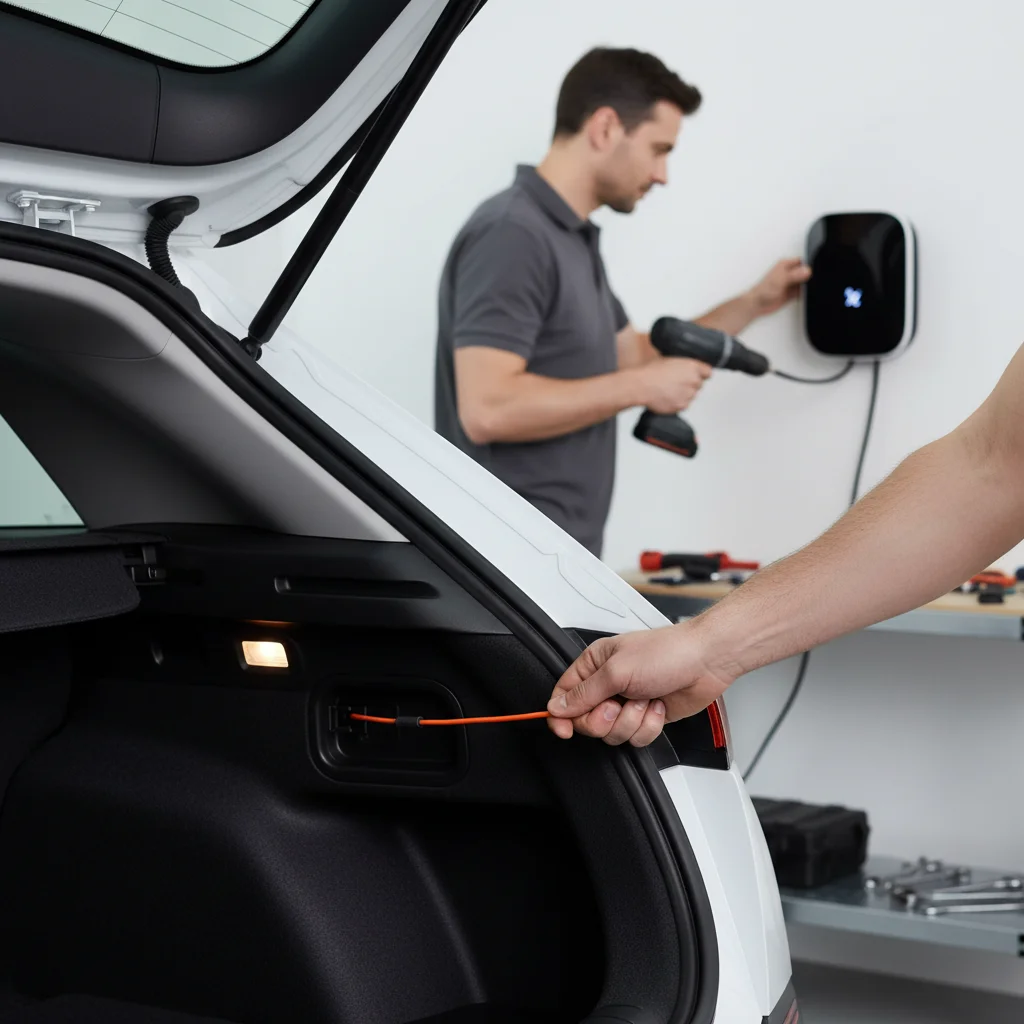
Look for a small rectangular panel on the driver’s side. It sits in the trunk trim, roughly behind the tail lamp. Pop it with your fingers. If it’s stubborn, a plastic trim tool beats a metal key.
Inside you’ll see a short cable loop. It’s often black. Some years use an orange tab. That’s the manual charge-port release. Pull the loop toward the center of the trunk in one steady motion. You’re listening for a clunk at the inlet. You’re not trying to rip the cable out of the wall.
Walk to the port and pull the CCS handle straight out. Snap the panel back in when the cable is free. For the diagram that matches your model year, Hyundai keeps it in the owner manuals library.
Other EVs jam the same way in this heat. The Ioniq 5 just gives you two motorized parts that can fail independently. A walkthrough that covers other brands is in EV charge port won’t release.
Software freeze or a pin that won’t move
A software freeze is the usual story. The car and a public DC charger never finished talking. Someone tapped stop at the wrong second. A power blip left the session half-open. The pin never got the retract command.
A hardware bind is a different job. Heat-swollen plastic, packed dust, or a bent notch on the handle can trap the pin. If the trunk cable is rock-hard, stop. If you pull it and hear nothing at the port, stop. Forcing it can shear the actuator. That turns a stuck cable into an inlet that needs a shop.
You can’t always tell from the curb. If the handle looks cracked or melted, leave it. On a public unit, call the support number printed on the cabinet. Do that before you pull the loop. Give them the station ID on the unit. Remote support can often force-stop the session. That’s cleaner than a mechanical pull while the stall still thinks it’s charging.
A stall that says connected and never moves the percent is a cousin of this mess. Work that path in public charger connected but not charging first. Don’t assume the car is the only fault.
If you’re still plugged in at a busy stall
Stay with the car. Don’t walk off with a live CCS handle in the port.
Work the fob, Bluelink, and the stall stop control in that order. Then call the number on the cabinet. Only then use the trunk release.
This shows up after events as much as after commutes. Mortgage Matchup Center dumps Suns traffic onto downtown streets. Chase Field does the same for the Diamondbacks. Phoenix Raceway sits in Avondale, not Phoenix. Race-day heat cooks every inlet in the lot. Sloan Park in Mesa does it during Cactus League afternoons. The car finished a DC top-off so you could get home. Then the handle stayed.
If you’re on a freeway shoulder, Arizona law is plain. ARS 28-871 says stay off the traveled highway when you can. A vehicle disabled so badly it can’t be moved is the exception. Leave room for other traffic to pass. You need to be visible 200 feet in each direction. ARS 28-775 is the Move Over law. Approaching drivers must change lanes or slow for a stopped vehicle with warning lights. Put your hazards on. Don’t stand in a travel lane to wrestle the cable.
Arizona DPS Roadside Motorist Assistance will change a tire. It will jump a 12-volt. It will bring gasoline or diesel. ADOT’s Incident Response Unit covers Phoenix-area freeways from 5am to 8pm on weekdays. It helps stranded motorists. Neither program advertises an EV charge. Neither one publishes a charge-port release. That’s the gap an independent mobile operator fills.
Arizona has no toll roads and no toll express lanes. A stuck session isn’t a toll problem. Texts about unpaid Arizona tolls are scams. Ignore them while you deal with the cable.
The 12-volt that turns a stuck plug into a lockout
The Ioniq 5’s screens and door handles lean on the small 12-volt. So does the charge-port pin. The traction pack can be well above empty and the car still acts dead. A DC-DC converter only tops the 12-volt up while the car’s on. It also charges while plugged in. A long sit in a Sky Harbor garage is enough. A weekend in a Mesa or Scottsdale lot does the same. The small battery is the first thing that quits.
Level 2 charging is confirmed in the Terminal 3 garage at Sky Harbor, the Terminal 4 garage, and the 24th St. station. A car that never reached those stalls still sits in a hot structure. Heat is hard on the 12-volt even when the traction pack is fine.
Battery Council International work, via Battery University, found starter batteries last about 47 months in hot climates versus 59 in cool ones. AAA names heat as the top cause of battery failure. A battery that might last five years elsewhere can be done in two or three here.
If the fob is silent and the hatch won’t open, don’t pry the charge door. You need power restored first. An operator can jump the 12-volt on site, wake the latch, then release the handle. Plenty of Ioniq 5 owners learn in that moment that the traction pack was never empty. The 12-volt was.
When to stop DIY and call a local operator
Stop pulling if the trunk cable feels ready to break. Stop if there’s no clunk. Stop if the CCS handle is cracked. Stop if the inlet door is pinched on the cable.
Call for help if you can’t open the hatch. Call if you’re on I-17 north toward Anthem. Same if you’re on US-60 through Gold Canyon. Call if you’re boxed into a garage stall with no safe room behind the car.
Hyundai and Kia roadside have a documented reputation for struggling to get a dead EV towed. Owners are told to specifically request a tow. A tow is the wrong first move here. A seated pin or a flat 12-volt doesn’t need a flatbed yet. Get the cable off first. Get the car able to roll. Then talk about a flatbed. ARS 28-872 lets police order a disabled vehicle removed. Owners pay the tow and storage before release. Get the handle out yourself or with an operator. That’s how you stay off that path.
Charge Pro PHX is a referral line. It doesn’t own trucks. It doesn’t do the work. It matches you with independent local mobile rescue operators who already work CCS cars. The operators we connect you with are licensed and insured. They bring a 240-volt Level 2 source. They carry a CCS or J1772 adapter for non-Tesla EVs. That typically adds 10 to 20 miles of range in 15 to 30 minutes of charging. That’s charging time, never an arrival time. They can also jump or replace a dead 12-volt on site. The operator quotes you before starting and bills you directly.
If the pack is fine and you only need the handle out, say that on the call. If you aborted a DC session and you’re too low to reach another stall, say that too. Non-Tesla EV rescue is the matching path for an Ioniq 5. For Valley charging context, start at EV charging in the Phoenix area. Care for the traction pack in this climate is a separate job, covered in how Phoenix heat changes EV battery care.
If you’re stuck on the cable and the trunk release won’t move it, call (602) 932-0920. We’ll connect you with a local operator.
Frequently asked questions
Why is my Ioniq 5 charge port stuck after a hot charge?
The pin that holds the CCS handle never got the retract command. Heat and grit can bind it too. Phoenix keeps that inlet at or above 100F for long stretches of summer. Lock and unlock with the fob. Stop the session in Bluelink. Then try the handle. If the screens are dark, treat it as a 12-volt failure first.
How do I release a stuck Ioniq 5 charging cable?
Work the fob, the Bluelink stop, and the stall’s stop control. Do that before you open any panels. If those fail on a public unit, call the support number on the cabinet. Ask for a remote force-stop. Last step is the manual loop in the cargo area. It’s on the driver’s side, behind the small liner panel. Pull toward the center of the trunk, then pull the handle straight out.
What if the Ioniq 5 cable is stuck because the 12-volt is dead?
The latch is electric. A dead 12-volt leaves the pin seated and often leaves you locked out of the hatch. That’s not a DIY trunk-panel job. An operator restores 12-volt power, then releases the cable without levering the inlet.