A July Loop 101 run can drain an Ioniq 5 faster than the window sticker. The Hyundai Ioniq 5 battery size is 58.0 kWh on Standard Range. The Long Range pack is 77.4 kWh. Usable energy sits near 54 kWh and 74 kWh. Heat, grades, and cabin cooling decide the rest in the Phoenix area.
Those pack figures are the common 2022 through 2024 trims. Confirm your model year on the door sticker. The Hyundai app lists it too. A later car can differ. EPA range on those years was about 220 miles for Standard Range rear-wheel drive. Long Range rear-wheel drive sat near 303 miles. Long Range all-wheel drive sat near 260 miles. None of those lab numbers assume a Phoenix July. They also skip a Beeline climb and cabin cooling at 107F.
Heat is what turns a 303-mile sticker into a shorter day
Phoenix averages about 111 days a year at or above 100F. About 21 days hit 110F or more. Those are NOAA 1991 through 2020 normals, via NWS Phoenix. July highs average near 107F. August highs sit near 105F. Overnight summer lows still land in the mid-80s. The pack doesn’t get a cool reset at 2 a.m. The record high is 122F, set June 26, 1990. You don’t need a record to lose miles. Ninety-five degrees is enough.
AAA’s 2026 study found about a 10 percent efficiency drop at 95F versus 75F. Range loss in that test was about 8.5 percent. A 250-mile car finished just under 230 miles. That improved on AAA’s 2019 finding of 17 percent. It’s still a real cut on a Glendale, Arizona commute. It’s also a cut on a Peoria, Arizona run around Loop 101 Agua Fria.
Recurrent measured actual trips. The dataset included 345,622 trips by 300 Phoenix-area EVs. EVs in that work lost 20 to 30 percent of range above about 95F. Loss ran near 31 percent at 100F. Put that on a Long Range rear-wheel Ioniq 5. The 303-mile EPA figure isn’t what you have at 104F on I-10 with the A/C high. NREL reports climate-control loads as one of the biggest range draws. Cabin cooling comes from the same pack that moves the car.
Geotab found faster aging in hot climates. Cars that spend more than 35 percent of days above 27C degraded faster than cars in mild climates. Geotab put that extra degradation near 0.4 percent per year. Phoenix spends far more than 35 percent of days in that heat. This isn’t a scare line. It’s why daily charge habits here look different from a mild-coast playbook.
For the care side of that, read how Phoenix heat changes EV battery care.
Monsoon season runs June 15 to September 30. Haboobs can drop visibility to near zero. Flash floods follow the same storms. ARS 28-910 bills drivers who go around a barricade into floodwater for the emergency response. Don’t drive into water. A detour around a washed crossing also burns range you didn’t plan to spend.
Two packs, one 800-volt architecture
Hyundai sold the Ioniq 5 with two lithium-ion packs. Both use the car’s 800-volt architecture. That high-voltage design is why DC fast charging can peak so high when the stall and the pack cooperate.
Standard Range, 58.0 kWh gross
Gross capacity is 58.0 kWh. Usable capacity is about 54.0 kWh. Most of these cars are rear-wheel drive. Peak output is about 168 horsepower and 258 lb-ft. EPA range is about 220 miles. Zero to 60 is about 7.4 seconds.
A Tempe to downtown hop on a cool morning fits this pack. A Surprise to Sky Harbor run in August is tighter. So is a Queen Creek to central Phoenix day with errands. Start charged. Leave a buffer. Don’t treat 220 as miles you can spend to empty.
Long Range, 77.4 kWh gross
Gross capacity is 77.4 kWh on 2022 through 2024 Long Range cars. Usable capacity is about 74.0 kWh. Rear-wheel drive makes about 225 horsepower and 258 lb-ft. EPA range is about 303 miles. Zero to 60 is about 7.3 seconds. All-wheel drive makes about 320 horsepower and 446 lb-ft. EPA range drops to about 260 miles. Zero to 60 is about 4.7 seconds.
The extra energy is why highway-minded owners pick this pack. It doesn’t cancel Phoenix heat. It doesn’t cancel a 6 percent I-17 grade north of Anthem. ADOT posts that 6 percent maximum on the northern I-17. Anthem sits near 1,860 feet. New River sits near 2,140 feet. Sunset Point rest area sits near 3,410 feet. Sky Harbor is only about 1,135 feet. That northbound run is a climb.
SR-87, the Beeline, posts a 7 percent grade into Slate Creek Canyon. Payson sits near 4,920 feet. US-60 east of Apache Junction climbs toward Superior at about 2,890 feet. Forum drivers on the I-17 climb have reported about 481 Wh per mile going up. Coming down sat near 293 Wh per mile. That’s roughly 40 percent more energy uphill. The nav often undercounts it. A Long Range pack gives you more room to be wrong. It doesn’t make the grade free.
I-10 south to Casa Grande sits near 1,380 feet. I-8 west toward Gila Bend drops to about 700 feet. Downhill feeds regen. Uphill doesn’t.
2022 to 2024 spec snapshot
| Feature | Standard Range RWD | Long Range RWD | Long Range AWD |
|---|---|---|---|
| Gross pack | 58.0 kWh | 77.4 kWh | 77.4 kWh |
| Usable pack, approx. | 54.0 kWh | 74.0 kWh | 74.0 kWh |
| Drivetrain | RWD | RWD | AWD |
| EPA range | about 220 miles | about 303 miles | about 260 miles |
| Peak power | 168 hp | 225 hp | 320 hp |
| Torque | 258 lb-ft | 258 lb-ft | 446 lb-ft |
| Level 2 AC max | 10.9 kW | 10.9 kW | 10.9 kW |
| DC fast max | up to 239 kW | up to 239 kW | up to 239 kW |
| 0-60 mph | about 7.4 s | about 7.3 s | about 4.7 s |
EPA range is a lab estimate. Heat, speed, payload, and tires move it. Usable capacity is approximate. Hyundai holds a buffer at both ends of the pack.
What usable capacity means on a 110F afternoon
Gross capacity is what the cells can hold. Usable capacity is what the car will let you drive. Hyundai keeps a slice off the top and the bottom. That buffer protects cell life. On the Ioniq 5, usable energy is typically around 95 percent of gross. You won’t see a true chemical zero. You also won’t see a true 100 percent of the chemistry.
You can’t unlock the buffer with a hidden setting. It isn’t extra range. In this climate, sitting at 100 percent in a sun-baked lot is extra heat in the cells. Holding daily charge nearer 80 percent is the calmer pattern.
Valley miles aren’t all the same miles
The Phoenix area isn’t one commute. Gilbert and Chandler on Loop 202 Santan aren’t Cave Creek. Buckeye on I-10 isn’t Fountain Hills on the Beeline. Scottsdale’s Pima stretch of Loop 101 isn’t Grand Avenue, even though Grand Avenue is also US-60. The Superstition Freeway is the eastern US-60. They’re different roads that share a number. Know which freeway you’re on when the range number starts sliding.
Speed is a quiet drain. Holding 75 on I-10 through Goodyear and Avondale uses more energy than 65. Cabin cooling on a 107F afternoon stacks on top. Preconditioning while plugged in at home moves that cooling onto wall power. That’s the habit that actually helps before a Loop 101 Price run out of Mesa or Tempe.
Tire pressure swings with heat. Low tires raise rolling resistance. Check them in the shade. Don’t check them after a freeway blast.
Payload isn’t the EPA cycle. Two adults, a stroller, and grocery bags add weight. The AWD Long Range already starts with less EPA range than RWD. Load it in July and the gap grows.
If the gauge is already sliding, read EV running low in Phoenix heat: what to do before you’re stranded.
Arizona doesn’t observe daylight saving time. Your charging schedule stays on MST year round, offset -07:00. APS overnight windows don’t jump an hour in March.
There are no toll roads and no toll express lanes in Arizona. Loop 202 South Mountain is free. Scam texts about unpaid Arizona tolls are scams. Solo HOV access for alternative-fuel plates ended September 30, 2025. Plan the lane, not a sticker exemption.
ADOT’s National Electric Vehicle Infrastructure plan is adding DC fast sites along I-10, I-17, I-8, I-19, I-40, and parts of US-60 and SR-347. Construction is underway in 2026. A designated corridor is a plan, not a live stall. Check the app for the stall you actually intend to use.
How to read remaining miles in July
The Ioniq 5’s remaining-miles figure is a prediction. It isn’t a contract. It looks at recent efficiency. After a cool overnight charge in Gilbert, the number is optimistic. After 20 minutes of I-10 at 75 with the A/C at max, it drops. Believe the second number more.
A Standard Range car that shows 80 miles at 8 a.m. in Mesa may show far less by 4 p.m. The pack was hot. The cabin is hot. The first 15 minutes of driving spend energy on cooling. That’s NREL’s climate-control point in daily form.
Long Range AWD starts with the smaller EPA number, 260 versus 303. In monsoon rain, AWD is the more planted car. On a dry July I-10 run, RWD wastes less energy. Plan the day around heat, not the brochure.
Highway estimates still miss some Valley grades. The I-17 north of Anthem is the clear example. The Beeline toward Fountain Hills and Payson is another. US-60 through Mesa toward Apache Junction and Gold Canyon is a third. Start those runs with more percent than the pin suggests. If you’re already low, don’t add a side trip through Rio Verde or Carefree on a hunch.
Parking days: Sky Harbor, games, and campus lots
A lot of Ioniq 5 trouble here isn’t a grade. It’s a parked car. Phoenix Sky Harbor has Level 2 charging in the Terminal 3 garage on Level 1 west, Level 3, and Level 7. Terminal 4 has Level 2 on Level 4 at the east end, zone B. There’s also charging at the 24th St. station. The PHX Sky Train links East Economy to the terminals. A car left a week in a hot garage often comes back to a dead 12-volt. The traction pack can still show charge. The car still won’t wake.
Chase Field downtown and Mortgage Matchup Center, the Suns’ arena, follow the same pattern. A long sit, then a hot restart. State Farm Stadium is in Glendale, Arizona. Phoenix Raceway is in Avondale, not Phoenix, despite the name. Event traffic, A/C, and a low arrival charge are how an Ioniq 5 ends up stuck in a lot.
ASU’s main campus is in Tempe. The Polytechnic campus is in Mesa. A car that sits in sun all day, then leaves at 5 p.m., is working from a hot pack. Overnight Level 2 at home is the clean fix. A public stall that fails at 4:50 p.m. is a different problem.
Cactus League lots add the same parked-car pattern in spring. Sloan Park, Salt River Fields, Camelback Ranch, and the other Valley parks cook a cabin the same way.
Phoenix-Mesa Gateway’s official amenities list didn’t confirm on-site EV charging. Confirm on the airport’s current list before you leave a car there.
The small battery can strand a full pack
People search hyundai ioniq 5 battery size for the traction number. Plenty of no-start calls are the 12-volt. That small battery boots the car. It runs door handles, screens, and the contactor that connects the main pack. The DC-DC converter only recharges it while the car is on or charging. Park in 110F sun with electronics ticking, and the 12-volt is the one that quits.
Battery Council International work, via Battery University, found starter batteries last about 47 months in hot climates versus 59 in cool ones. A battery that lasts five years elsewhere can fail in two or three in the desert. AAA calls heat the number-one cause of battery failure. It recommends AGM batteries for hot regions.
If the Ioniq 5 is silent, the glass won’t drop, and the app can’t wake the car, start with the 12-volt. Hyundai Ioniq 5 won’t start after sitting in Phoenix heat walks through that. A full 74 kWh usable pack won’t help if the contactor never closes.
Charging the pack at home and on a DC stall
Peak DC fast charging is up to 239 kW on a compatible stall. Under good conditions, 10 percent to 80 percent can land around 18 minutes. A hot pack, a busy stall, or a 110F afternoon all slow that curve. How long a Hyundai Ioniq 5 takes to charge in desert heat covers session length in this climate.
The port is CCS. A NACS adapter lets you use many Tesla Superchargers. Carry the adapter if you use Superchargers along I-10 or I-17. Check the app before you spend the last 20 miles of range on a hope.
Arizona had about 141,800 battery EVs and 33,900 plug-in hybrids as of 2025, per DOE AFDC. The state doesn’t publish county-level EV counts, so there’s no verified Maricopa County figure. The Ioniq 5 is a CCS car in a mix that includes a lot of NACS Teslas. An adapter is part of owning this car here.
Wall power: Level 1 is a trickle, Level 2 is the daily tool
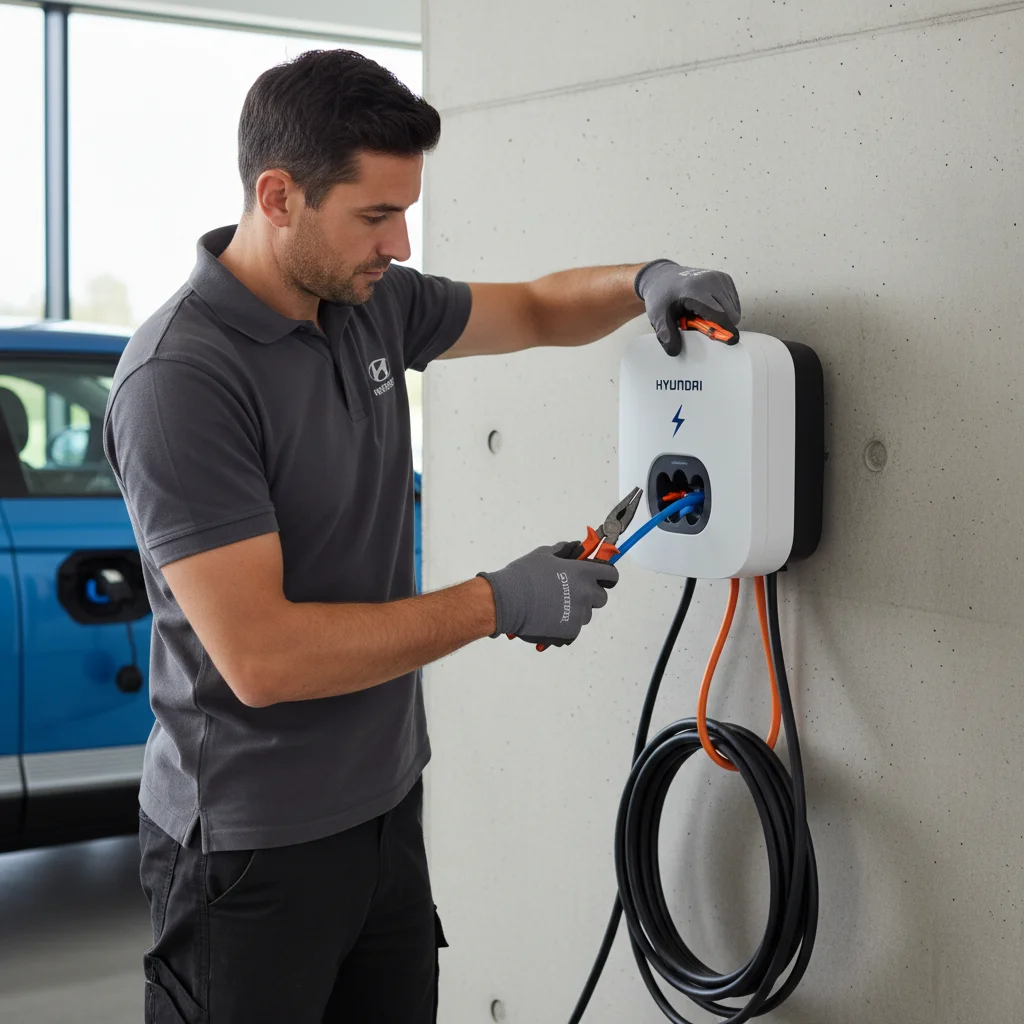
A 120-volt Level 1 cord adds about 2 to 4 miles per hour. It won’t refill 74 kWh usable overnight. A 240-volt Level 2 session at the car’s 10.9 kW max adds roughly 35 to 40 miles per hour. Empty to full on the Long Range pack is about 7 to 8 hours at that rate.
Utilities in the Valley split, sometimes block by block. Confirm your address. APS serves large parts of Phoenix, plus Surprise, Goodyear, Buckeye, Queen Creek, Apache Junction, San Tan Valley, Litchfield Park, El Mirage, Youngtown, Sun City, Anthem, and Gila Bend. It shares Chandler, Gilbert, Glendale, Scottsdale, Tempe, Peoria, Avondale, and Paradise Valley with SRP. APS names the R-EV residential EV rate plan, marketed as EV Overnight Charging from 11 p.m. to 5 a.m. weekdays. It also names a Level 2 smart-charger rebate, APS Smart Charge, and Take Charge AZ.
SRP serves much of Mesa and shares the East Valley. Its Electric Vehicle Price Plan closed to new enrollment after a February 2025 board decision. Existing customers may stay through the November 2029 billing cycle. SRP also names an Electric Vehicle Export Price Plan for solar homes, a Level 2 rebate through the SRP Marketplace, EV Smart Charge, and Business EV Charging, BizEV.
Mesa Municipal Electric covers about 5.5 square miles around downtown Mesa, over 18,000 customers, and names an E1EV time-of-use rate. ED3 serves the city of Maricopa and much of northern Pinal County. Maricopa the city is in Pinal County, not Maricopa County. ED3 names EV TOU 2-10 and an EV smart-charger on-bill financing program. ED2 serves Casa Grande, Coolidge, and Florence. No EV-specific program turned up on its site. Ask your utility for current terms. Program names are public. Amounts aren’t guessed here.
Newer housing in Maricopa, Surprise, and Gilbert is where home Level 2 shows up more often. About 88.9 percent of Sun City housing was built before 1980. That’s a panel conversation, not a pack-size conversation. The newest stock is the Pinal and far-suburb belt, where home charging is common and the calls tend to be on the road.
DC sessions on a hot pack
Peak kilowatts need a cooperative pack and a healthy stall. A 110F afternoon after I-10 isn’t the ideal lab curve. Precondition on the way to a DC stall when the car allows it. Daily charging at home on Level 2 is gentler on the cells than stacked DC sessions. Use DC when the trip needs it.
If the cable won’t release after a hot session, that’s a known Ioniq 5 problem. See Hyundai Ioniq 5 charge port stuck after a hot Valley charge.
Daily habits that fit this climate
Keep daily charge between about 20 and 80 percent when you can. Save 100 percent for a real I-17 or Beeline day. Sitting at 100 percent in a sun-soaked lot adds heat to the cells.
Precondition while plugged in. Cool the cabin and the pack on wall power before you pull onto Loop 101.
Use i-Pedal and regen on descents. Energy spent climbing I-17 or the Superstition Freeway can partly return on the way down. It won’t return one for one.
Smooth throttle at 65 to 70 beats an 80 mph I-10 blast. High speed is expensive in kilowatt-hours.
Hyundai’s published traction-battery warranty on the Ioniq 5 is typically 10 years or 100,000 miles, whichever comes first. Confirm the terms for your VIN with Hyundai. Warranty language isn’t a range guarantee. It also doesn’t jump a dead 12-volt on the shoulder.
Arizona has no annual safety inspection. EVs are exempt from emissions testing in Maricopa County Area A. Hybrids aren’t. None of that changes how heat treats the pack.
The federal clean-vehicle credits ended for vehicles acquired after September 30, 2025. Arizona has no state EV rebate. Arizona has no annual EV registration surcharge. Those policy notes don’t add miles. They keep the ownership picture honest.
Vehicle-to-load on the Ioniq 5 can feed about 3.6 kW to a household outlet. That’s a tool or a camping fridge. It isn’t a practical way to refill another EV on I-17.
Empty on a Valley shoulder
It still happens. A detour off I-10. A stalled DC session. A Beeline climb the nav undercounted. An SR-347 run toward Maricopa that went longer than the estimate.
Arizona DPS Roadside Motorist Assistance will change a tire, bring gasoline or diesel, jump a 12-volt, add water, and call a tow. Its published materials name gasoline and diesel. They say nothing about charging an EV. ADOT’s Incident Response Unit works Phoenix-area freeways on weekdays. It clears crashes and debris and helps stranded motorists. It doesn’t advertise an EV charge. The state won’t refill your 74 kWh pack.
ARS 28-871 says you shouldn’t sit on the traveled part of a highway outside a business or residence district if you can get off it. A vehicle that can’t move is exempt. Leave room for traffic. Stay visible. ARS 28-775, the Move Over law, is why other drivers need to shift a lane when lights are on the shoulder.
Hyundai factory roadside has had documented trouble getting a dead EV towed. Owners are told to specifically request a tow. Factory help is often a tow to a charger, not a charge on the spot. If the car won’t roll, say so when you call.
Charge Pro PHX is a referral line. It matches stranded EV drivers with independent local mobile rescue operators. It doesn’t own trucks. It doesn’t employ technicians. It doesn’t set prices. The operator quotes you before starting and bills you directly. Distance, time of day, and how much range you need are what move that quote.
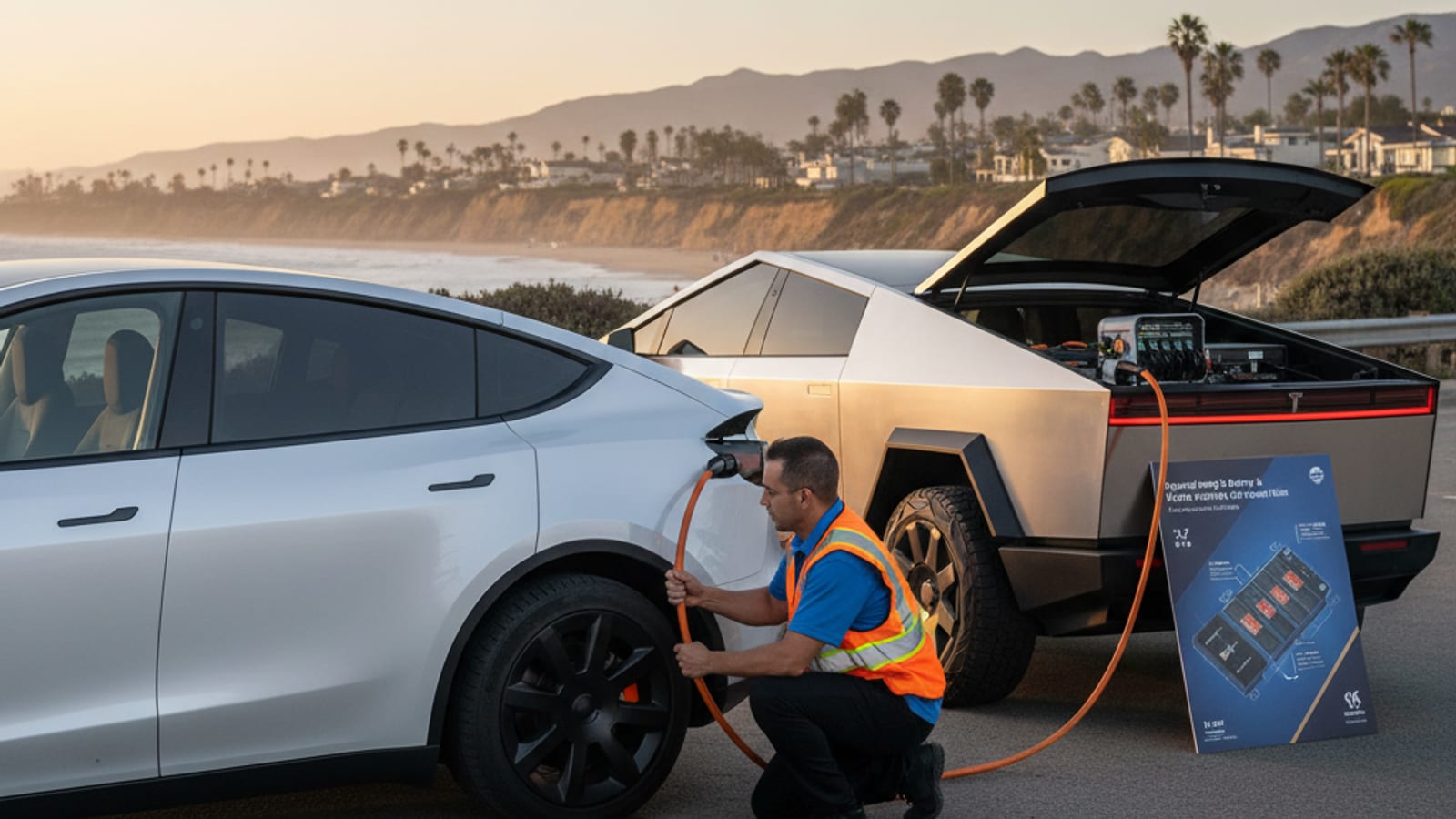
Operators bring a 240-volt Level 2 source to the car. They carry a CCS adapter for the Ioniq 5. Typical charging adds about 10 to 20 miles of range in 15 to 30 minutes of charging. That’s charging time. It isn’t a promise of when someone arrives.
If you need that on-site top-up, start with mobile EV charging or non-Tesla EV rescue.
Frequently asked questions
What is the Hyundai Ioniq 5 battery size?
Standard Range is 58.0 kWh gross, about 54 kWh usable. Long Range is 77.4 kWh gross, about 74 kWh usable on 2022 through 2024 cars. Confirm later model years on your window sticker.
How much range does Phoenix heat take off an Ioniq 5?
AAA’s 2026 test showed about 8.5 percent range loss at 95F versus 75F. Recurrent’s Phoenix-area trip data showed 20 to 30 percent loss above about 95F, and near 31 percent at 100F. Speed and A/C sit on top of that.
What should I do if this car hits empty on a Valley road?
Get off the traveled lane if you can. Put the hazards on. Don’t count on DPS or ADOT for an EV charge. Ask for a mobile Level 2 top-up, or a tow if the car can’t be charged on site.
Charge Pro PHX matches Ioniq 5 drivers with an independent operator. Call (602) 932-0920. The operator quotes before any work starts.