The EV dies on Grand Avenue, the northwest US-60 through the West Valley. Get the car fully out of the travel lane if you can still roll. Turn on the hazards and stay with the vehicle. Then sort an empty traction pack from a cooked 12-volt. After that, match with an independent mobile operator. The operator can charge or jump you on site.
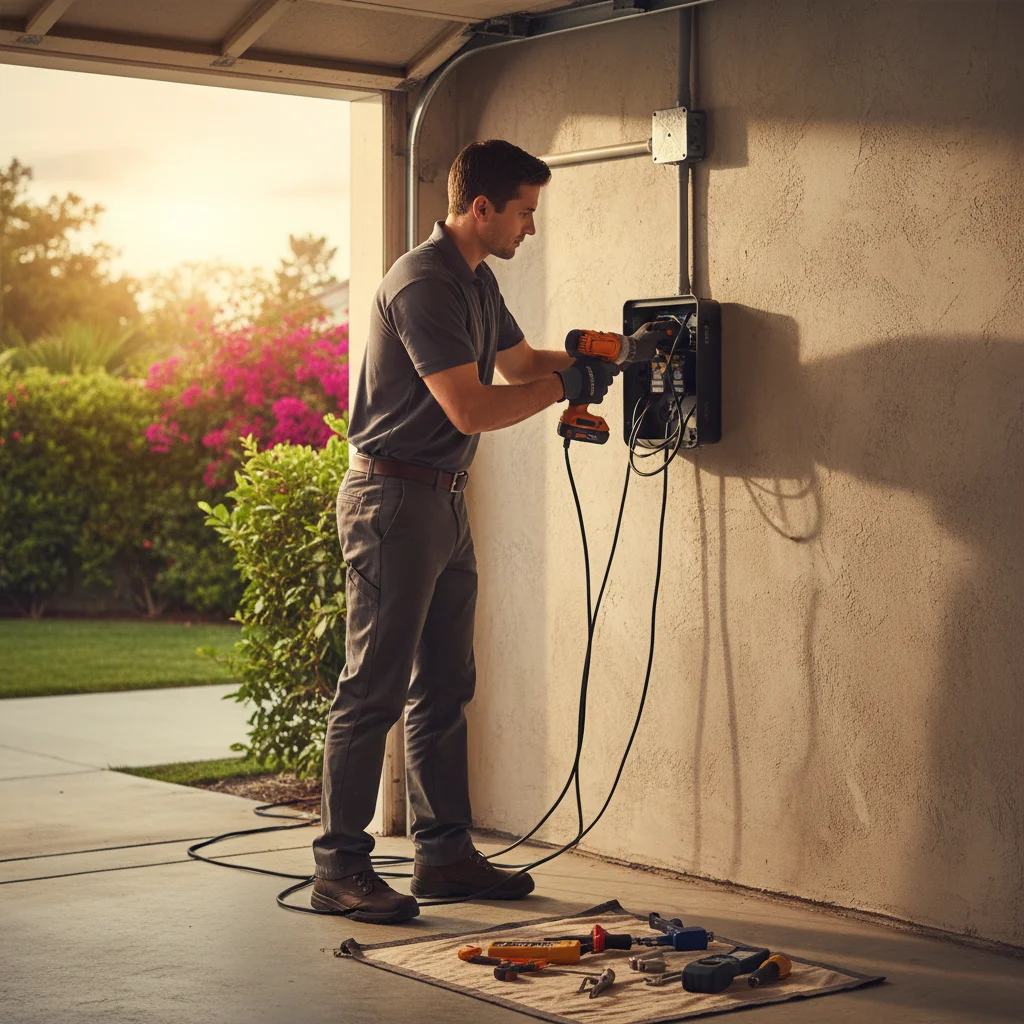
This US-60 is Grand Avenue, not the Superstition
US-60 in the Phoenix area is two different roads. Northwest of downtown, that number is Grand Avenue. It’s the diagonal surface highway toward Surprise and Wickenburg. East of the Stack, the same number is the Superstition Freeway through Mesa. If your nav only says US-60, say Grand Avenue out loud. A Superstition stall is a different call. For that east segment, read stranded on the Superstition Freeway.
Grand Avenue leaves central Phoenix near the Stack. The Stack is I-10, I-17, and US-60. From there the road cuts northwest through the West Valley. It runs through Glendale, Arizona, then El Mirage. Youngtown and Sun City sit along the same diagonal. Surprise sits farther out, where Grand Avenue meets Loop 303. Past the built-up edge, the route continues toward Circle City. Wickenburg is where Grand Avenue meets US-93.
This isn’t a limited-access East Valley freeway. It’s a surface highway with signals, driveways, and business frontage. That changes where you can stop, and how you describe the pin.
Arizona has no toll roads and no toll express lanes, as ADOT confirmed. SB 1340, effective January 1, 2024, bars new ones without a new legislative vote. A text about an unpaid Grand Avenue toll is a scam.
Clear the lane while you still have a little roll
ARS 28-871 is the stop rule that actually matters here. You may not stop on the traveled part of a highway. That applies outside a business or residence district if you can get off it. A vehicle disabled so badly it can’t move is exempt. When you stop, leave room for other traffic to pass. Stay visible 200 feet in each direction.
Grand Avenue has city-street stretches and highway stretches. If you can still coast, use that last motion. Aim for a driveway, a lot entrance, or a wide shoulder. Two tires on the white line still sit in the lane. Get the whole car out.
Turn hazards on before you finish rolling. Arizona’s Move Over law is ARS 28-775. Other drivers must change lanes or slow for warning lights. You can’t make them do it, but you can still make yourself seen. On a right-side stop, the driver’s door opens toward traffic. Use the passenger side if you have to get out. Keep the car between you and the lanes. If you can stay inside with belts on, do that.
Don’t walk Grand Avenue hunting for a public plug. This research didn’t confirm station counts by mile. Don’t guess a walkable charger from the travel lane. A mobile EV charging operator can come to the car once you’re stable.
Police may order a disabled or obstructing vehicle removed under ARS 28-872. Owners pay reasonable tow and storage before release, and ADOT mails notice. Arizona sets no statewide tow-rate cap. Cities and counties may set local maximums under ARS 9-499.05 and 11-251.04. Confirm those rules with the city or county that governs the stop. Glendale, Surprise, and Wickenburg aren’t the same clerk.
If the stall becomes a minor crash, move off the traveled roadway when it’s safe.
Why West Valley trips run out here
This corridor is a commute diagonal, not a weekend cruise. People use it for work, errands, and event nights. Glendale, Arizona loads State Farm Stadium and Desert Diamond Arena. Westgate fills after those events. Phoenix Raceway is in Avondale, not Phoenix, despite the name.
Heat spends the buffer you thought you had. Phoenix averages about 111 days a year at or above 100F. About 21 days reach 110F or more. Those are NOAA 1991-2020 normals via NWS Phoenix. July highs average near 107F. Summer overnight lows still sit in the mid-80s. Cabin cooling isn’t optional on this stretch.
AAA’s 2026 study found about a 10% efficiency drop at 95F versus 75F. Range loss in that work was about 8.5%. Recurrent reported 20 to 30% range loss above about 95F. Loss sat near 31% at 100F. That dataset included 345,622 trips by 300 Phoenix-area EVs. Don’t treat those figures as a Tesla spec. tesla.com wasn’t a source for range-in-heat numbers.
Sun City has the oldest housing in the service area. About 88.9% of it was built before 1980, per ACS 2020-2024. Youngtown is next, at 51.8% before 1980. Older garages often lack a modern 240-volt circuit. Surprise is almost all newer stock. Under 3% of its housing predates 1980.
APS serves Surprise, El Mirage, Youngtown, and Sun City. It shares Glendale and Peoria with SRP. That split can change block by block. Confirm your address with the utility later. Ask about APS R-EV or SRP’s EV Smart Charge. Amounts aren’t listed here because they change. On the shoulder, the utility can’t roll a truck to you.
Loop 101 Agua Fria is the west freeway that crosses this diagonal. If you died on the loop instead, use the Agua Fria out-of-charge guide. Don’t mix the two pins.
Monsoon season runs June 15 to September 30. Haboobs can drop visibility to near zero, and flash floods follow. ARS 28-910 is the Stupid Motorist Law. Don’t drive around a barricade into water.
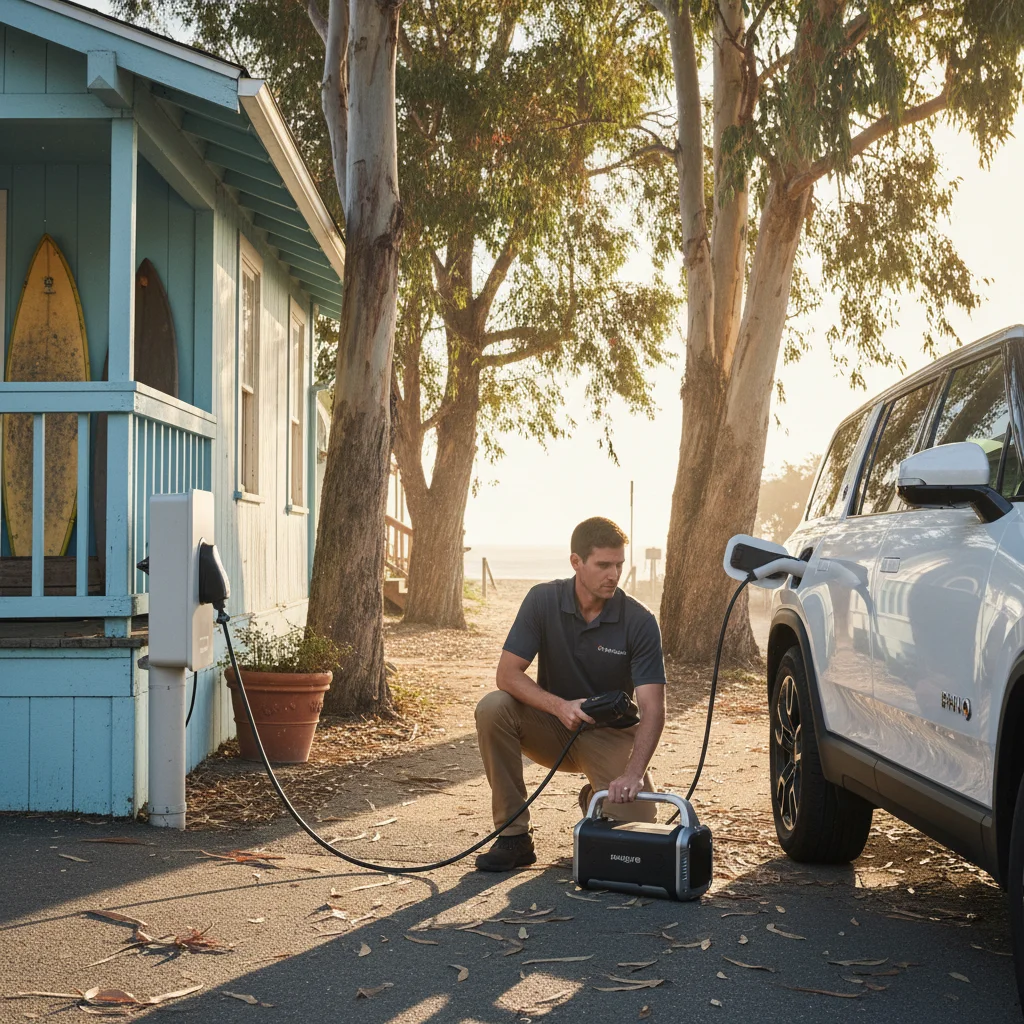
Empty pack, or a 12-volt that cooked
Not every silent EV on Grand Avenue is out of traction charge. In desert heat, the small 12-volt often fails first. Battery Council International work via Battery University is the citation. Starter batteries last about 47 months in hot climates. They last about 59 months in cool ones. A battery good for five years elsewhere can fail in two or three here. AAA calls heat the number-one cause of battery failure.
In an EV, that little battery runs door handles, screens, and the contactor. The contactor connects the high-voltage pack. A full traction battery won’t help if the 12-volt is dead. The DC-DC converter recharges it only while the car is on or charging. Tesla features like Sentry Mode and Cabin Overheat Protection draw while parked.
A Glendale event lot can leave a parked EV looking bricked after a hot night. Sun City clubhouse lots see the same lockout pattern. If the car is silent and the screen is black, say so. You may need a 12-volt jump or replacement, not only a charge. Independent operators in this network can jump or replace a dead 12-volt on site. They can also bring a 240V Level 2 source to the car. Native NACS fits Tesla. CCS or J1772 adapters cover everyone else.
If the car is awake and shows a true zero, that’s an out-of-charge call. Out-of-charge recovery is the service page for that job. For Glendale pins, see EV roadside assistance in Glendale. For the northwest edge, see mobile EV rescue in Surprise.
State motorist help will change a tire, not fill an EV
Arizona runs two free roadside programs in this metro.
Arizona DPS Roadside Motorist Assistance is statewide. It was originally funded by the Maricopa Association of Governments. Crews change tires, provide gasoline or diesel, jump-start dead batteries, add water, and call tows. In 2018 the program assisted 75,235 motorists statewide. Published materials name gasoline and diesel. They say nothing about charging an empty EV. Hours and corridor lists aren’t published. Ask DPS what they can do at your pin.
ADOT’s Incident Response Unit covers Phoenix-area freeways from 5am to 8pm on weekdays. It’s a 14-member unit, sponsored by State Farm since 2020. The unit clears crashes and debris, changes tires, and helps stranded motorists. There’s no EV-specific mention in the public description. Grand Avenue is a surface highway, not a limited-access freeway. Confirm whether IRU covers your exact pin.
A jump from either program might help a dead 12-volt. An empty traction pack is a different call.
Charge Pro PHX is a referral line. We match stranded EV drivers with independent local mobile rescue operators. We don’t hold a trade license for the work, and we don’t own the trucks. The pros we connect you with are licensed and insured. The operator quotes you before starting and bills you directly.
A charge on site versus a tow off Grand
A flatbed can clear Grand Avenue, but it doesn’t put miles in the pack. Many EVs need a flatbed so the drivetrain isn’t dragged. The drop is often a yard or a charger the tower chooses. Arizona sets no statewide cap on private tow rates. Confirm the quote before they hook the car.
Tesla roadside, for an empty pack, tows to a Supercharger or service center. It doesn’t charge on site. Ford tows to the nearest charger, home, or dealer within 50 miles. Independent operators can bring 240V Level 2 to the bumper instead. They typically add 10 to 20 miles of range. That takes 15 to 30 minutes of charging. That’s time on the plug, not an arrival clock.
Charge Pro PHX doesn’t set the price. Distance along Grand Avenue moves it. So does time of day, stadium let-out, and how many miles you need. A bump to a Glendale arterial isn’t the same job as range toward Wickenburg. The operator quotes before work starts. If the number isn’t right, you can decline.
For the far northwest pin, rural EV rescue in Wickenburg covers the long desert miles past Surprise. Circle City sits on that same Grand Avenue stretch.
What to tell the person you call
Give a clean location. Say Grand Avenue, not just US-60. Say northwest-bound or southeast-bound, and name the last city you passed. Glendale, Arizona, isn’t Glendale, California. Peoria, Arizona, isn’t Peoria, Illinois. El Mirage, Youngtown, Sun City, and Surprise are short, named stretches. Sun City and Sun City West are unincorporated CDPs with no city government.
Give color, make, and model. Give battery percent if the screen still works. Say whether the car is silent, and whether the doors still unlock.
If you still have a sliver of range, leave the travel lanes. Meet on a side street in Glendale or Surprise.
Don’t promise an officer a made-up arrival window. Charge Pro PHX publishes no arrival time. Tell them you’ve matched with a mobile EV operator. The operator will quote you and give their own timing.
Call (602) 932-0920 when you want that match. An independent operator quotes before any work starts.