EV roadside assistance in Surprise is usually a road call. It’s not a dead receptacle in the garage. This West Valley city sits on APS. Almost all of its housing is post-1980. Overnight charging is the norm in Marley Park, Surprise Farms, and Sierra Verde. When that overnight session falls short, you need help at the car. EV roadside assistance in Surprise is that mobile operator. Charge Pro PHX connects you with that independent pro. The operator brings a 240-volt Level 2 source and quotes you before they start.
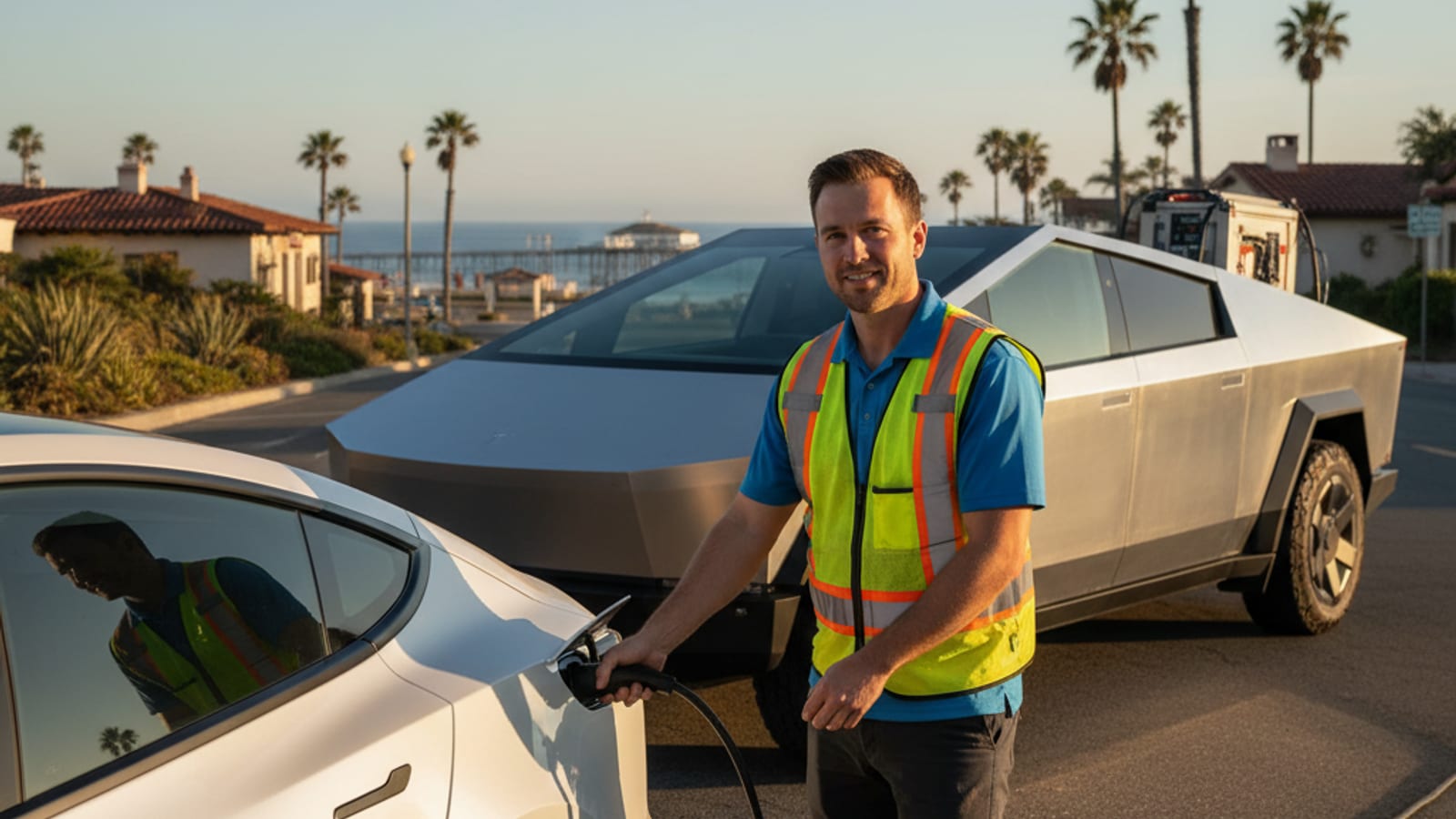
That’s the shape of this city. Surprise isn’t an old grid where home charging is rare. Census housing data shows only 2.8 percent of homes here were built before 1980. Nearby Sun City sits at 88.9 percent pre-1980 stock. Youngtown sits at 51.8 percent. Those older streets produce driveway 12-volt calls. Surprise produces highway and arterial calls instead. You left home thinking the pack was ready. Grand Avenue heat and cabin cooling said otherwise.
Charge Pro PHX is a referral line for the Phoenix area. We don’t own trucks, a yard, or charging gear. We don’t employ technicians, set prices, or publish hours. The operator bills you directly after the quote.
Why Surprise calls happen on the road
Surprise covers about 110.5 square miles. ACS 2020-2024 puts the population at 154,948. That’s a large West Valley city, not a pocket suburb. The far northwest edge of the built-up Valley sits here. Grand Avenue and Loop 303 hand traffic toward open desert. Neighborhoods like Greer Ranch, Litchfield Manor, and Arizona Traditions have garages. Home charging is common in those tracts. The weak point is the trip after you unplug.
EV charging in Surprise starts at home for most owners. Arizona Public Service serves all of Surprise. If you ever doubt a map, confirm your own address with APS. The R-EV residential EV rate plan is the overnight one. APS markets it as EV Overnight Charging. Weekday hours are 11pm to 5am. APS also names a Level 2 smart-charger rebate. It names APS Smart Charge and Take Charge AZ. Take Charge AZ is a public and workplace program, not your garage circuit. Those program names are on aps.com. Amounts aren’t something we’ll guess, so check APS before you enroll.
A rate window isn’t a full battery. Tesla home charging on APS and SRP walks through how that bill is structured. The overnight plan is about when you charge. It doesn’t promise the pack hit 100 percent before you backed out.
Marley Park and Surprise Farms sit on the West Valley commute. That commute uses Loop 303 and Grand Avenue. Sierra Verde and Greer Ranch do the same. A commute that looked easy on the dash still burns cooling energy. Surprise is 110-plus square miles, so the first hop isn’t the whole day.
Overnight charging that still leaves you short
You plugged in after dinner, and the app showed a lightning bolt. At dawn the number is lower than you needed. Bell Road, Loop 303, and the rest of the day still sit ahead.
Valley heat does that work overnight. Phoenix averages about 111 days a year at or above 100F. About 21 days reach 110F or more. Those figures are NOAA 1991-2020 normals via NWS Phoenix. July highs average near 107F, and August averages near 105F. Overnight summer lows still sit in the mid-80s. Surprise runs that full Valley heat. Open, exposed desert sits north and west of the last tract.
AAA’s 2026 study found about a 10 percent efficiency drop at 95F versus 75F. Range loss on that same comparison was about 8.5 percent. Recurrent reports 20 to 30 percent range loss above about 95F. Loss near 31 percent shows up at 100F. Recurrent’s set included 345,622 trips by 300 Phoenix-area EVs. NREL notes cabin cooling as a major load, so you’re not imagining the missing miles.
Parked cars keep spending energy after you go inside. Tesla Sentry Mode draws while you sleep, and Cabin Overheat Protection draws too. The 12-volt only gets a DC-DC top-up while the car is on. It also charges while the car is plugged in and actually taking current. If heat soak kept the pack busy all night, morning range can still be thin. For the parked-car version, see overnight charging that still fails.
The APS weekday window is six hours. A deep evening drain on a large pack may not refill in those six hours. That’s on a normal 240-volt home circuit. Weekend R-EV hours weren’t something we could confirm from APS’s weekday marketing. APS lists 11pm to 5am on weekdays. Read your bill and the current R-EV page before you plan around weekends.
Sometimes the handle just wasn’t latched. The port looked closed, and current never flowed. You learn that on Loop 303, not in the garage. Check the app for watts, not only a connected icon.
If you live in 85374, 85379, or 85388, say that ZIP when you call. 85387 and 85361 cover more of the north and west edge. 85342 shows up on the list too. A ZIP plus a cross street beats a vague Surprise pin.
Grand Avenue, Loop 303, and stadium parking
US-60 in Surprise is Grand Avenue. That’s the northwest run, not the Superstition Freeway in the East Valley. Loop 303 is the west belt. Bell Road crosses Grand in the commercial core. Those three roads carry most of the city’s through miles.
From Surprise the map stretches toward Wickenburg. After the last subdivision, the land opens and the remaining trip gets longer. That longer remaining trip is why a thin overnight charge fails. Plan the whole loop, including heat.
Spring training is a named local drain. Surprise Stadium hosts the Kansas City Royals and the Texas Rangers. The Surprise Recreation Campus sits in that same civic cluster. A few hours in a hot lot pulls cabin protection and the 12-volt. You return to a car that shows less than when you parked.
Peoria, Arizona, sits east, and so does Glendale, Arizona. Goodyear and Avondale sit south. Those hops look short. In July they still cost cooling energy. El Mirage sits closer, with a different housing mix than Surprise Farms. A West Valley errand still isn’t a round-the-block trip.
What a mobile Level 2 rescue actually does
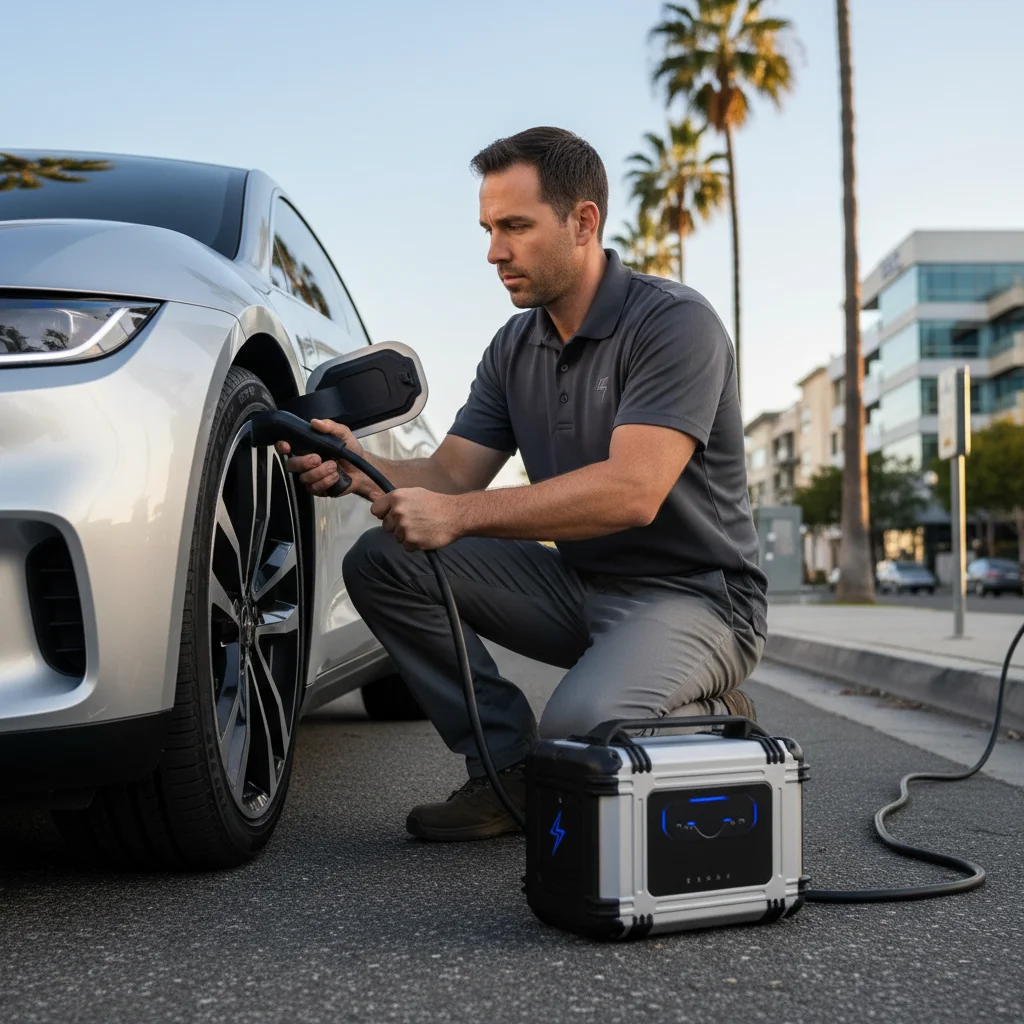
Mobile EV charging is a 240-volt source rolled to your inlet. It isn’t a DC fast stall. Teslas use a native NACS plug. Other EVs use a CCS or J1772 adapter. Operators handle Tesla and every major EV brand that uses those inlets.
A typical session adds about 10 to 20 miles of range. Charging time is usually 15 to 30 minutes. That’s charging time, not an arrival time. Charge Pro PHX doesn’t promise when someone shows up. The operator tells you their window when they call. They quote before the cable goes in.
You don’t need a full pack on Grand Avenue. You need enough to roll to a stall you already planned. Or you roll home to the wall unit. Out-of-charge recovery is that smaller dump of energy.
Stay with the car if you’re on a shoulder, hazards on. The operator connects, and you watch the miles climb. When you have a workable buffer, they stop. You drive the rest. They don’t escort you across town.
Factory roadside is a different product. Tesla won’t charge you on site. Tesla tows to the nearest Supercharger or service center, and that tow is billed. Ford’s published program tows to the nearest charger, home, or dealer within 50 miles. Rivian, Hyundai, and Kia owners should specifically request a tow. Do that if they start with the factory line. A local operator puts energy in the car where it sits.
If the car truly can’t take current, a flatbed is next. Towing a dead EV usually needs a flatbed to protect the drivetrain. Arizona sets no statewide tow-rate cap. Cities may cap private tows under ARS 9-499.05. Counties may cap them under ARS 11-251.04. Confirm the quote with whoever is hooking the car. Don’t copy a price from an article. ARS 28-872 lets police order a disabled vehicle removed. Owners pay reasonable tow and storage before release.
When the dash is dark, think 12-volt
An empty traction pack and a dead 12-volt feel similar from the curb. They aren’t the same job. The 12-volt runs handles, screens, and the contactor that connects the main battery. If that small battery is dead, a full pack still won’t wake the car.
Heat shortens 12-volt life. Battery Council International work, via Battery University, tracked starter-battery life. That work compared hot and cool climates. Hot climates averaged about 47 months. Cool climates averaged about 59 months. AAA calls heat the number-one cause of battery failure. AAA recommends AGM batteries for hot areas. In an EV, that failure strands you even with miles on the high-voltage gauge.
Operators can jump or replace a dead 12-volt on site. Say what you see. No lights and no handles usually means 12-volt. A car that wakes and shows zero miles usually means an empty pack. If both could be true, say that. The operator checks before they choose a cable or a jump pack.
Newer Teslas use a lithium 12-volt, and older ones use a lead-acid unit. Both can die in desert heat. Both can lock you out. Don’t assume a full main battery on the app means you can drive.
Surprise’s newer tracts still see this after a hot park at the stadium. They also see it after Sentry Mode ran all night. The pack can look fine. The small battery is what died.
DPS and ADOT won’t bring you a charge
Arizona does run free motorist help, and that’s real. It still isn’t an EV charge.
Arizona DPS Roadside Motorist Assistance changes tires and provides gasoline or diesel. It jump-starts dead batteries, adds water, and calls tows. In 2018 it assisted 75,235 motorists statewide. Published materials name gasoline and diesel. They don’t describe EV charging or out-of-charge recovery. Hours and corridors aren’t listed on the DPS pages we read.
ADOT’s Incident Response Unit works Phoenix-area freeways from 5am to 8pm weekdays. The unit has 14 members, and State Farm has sponsored it since 2020. It has logged 10,400-plus responses since October 2019. It clears crashes and debris, changes tires, and helps stranded motorists. It doesn’t advertise a Level 2 EV source.
If those crews stop, take the scene help. Don’t wait on them for electrons. An independent mobile operator is the outfit that carries a 240-volt feed.
Sitting the car on a Surprise shoulder
ARS 28-871 limits stopping on the traveled highway outside a business or residence district. Get off the traveled lanes if you can. A vehicle disabled so badly it can’t be moved is exempt. Leave room for other traffic to pass. You must be visible 200 feet in each direction.
ARS 28-775 is the Move Over law. Drivers who see warning lights should move over a lane. If they can’t, they slow down. That’s why an operator works with hazards flashing. Give them space if you’re the passing traffic.
Arizona has no toll roads and no toll express lanes, which ADOT confirms. SB 1340 took effect January 1, 2024. It bars the state from adding tolls without a new legislative vote. Loop 202 South Mountain is a public-private partnership, and it’s free. Texts about unpaid Arizona tolls are scams, so delete them.
Monsoon season runs June 15 to September 30. Haboobs can drop visibility to near zero, and flash floods follow. Don’t drive around barricades into water. ARS 28-910 lets the state bill you for the emergency response if you do. Pull off with the lights on. Stay in the car if dust erases the road.
On Grand Avenue, a mid-block stop is a bad seat. Signals, driveways, and through traffic stack up. If the car can still roll, take a lot or a wide shoulder. Stalling on Grand Avenue covers that corridor in more depth.
Loop 303 is a beltway shoulder, and the same statutes still apply. You still need to be seen from 200 feet. Everyone else still has a Move Over duty.
What we match, and what we don’t promise
Call with a Surprise location, the make, and the dash reading. We’ll connect you with an independent operator. They call you back, quote, and start only after you agree. We don’t put prices on this page. We don’t publish an arrival clock. Charge Pro PHX doesn’t perform the work. The pros we connect you with are licensed and insured.
Know your inlet if you can. NACS, CCS, or J1772 is enough. The operator brings NACS plus adapters.
Tell them whether the car wakes. Tell them the last state of charge you saw. Tell them if you’re on Grand Avenue, Loop 303, Bell Road, or a neighborhood street. Marley Park, Surprise Farms, and the stadium lot are all useful pins. The operator quotes from what they see. We don’t publish a rate card.
Level 2 rescue isn’t a shop visit. A failed pack, inverter, or charge port won’t fill on the curb. The operator can see whether the inlet takes current. If it doesn’t, ask about a tow to a shop you choose. Confirm that path before anyone loads.
EVs skip Arizona emissions testing. Maricopa County is Area A, and hybrids don’t get that exemption. Arizona has no annual safety inspection. None of that changes a shoulder stall. It only means the problem is power, not a smog sticker.
Make the next overnight actually finish
Plug in before late-evening heat if you can. The pack and the cabin start cooler. Turn off Sentry Mode if you don’t need it. Treat Cabin Overheat Protection as a comfort drain, not a default. After you latch the handle, watch the app for real current.
Before a Wickenburg-direction run, compare dash range to the whole loop. Do the same for Loop 303 in July, and don’t plan off the first hop. Recurrent’s 20 to 30 percent summer loss is a planning number. It isn’t a Surprise lab result. Your AC habits will differ, so leave a buffer anyway.
Geotab found faster pack aging in hot climates. The extra loss is about 0.4 percent per year. That applies when more than 35 percent of days sit above 27C. That’s pack aging over years, not tonight’s shortfall. It still argues against running to empty in this heat.
If the garage session failed, you’re already on the road. Don’t nurse a zero-mile guess across 110 square miles. Pull off and call. Let an operator put 10 to 20 miles back in. Then go to a charger you already trust. Or go home to the wall unit that should have finished last night.
Frequently asked questions
What EVs can an operator charge in Surprise?
Operators bring a native NACS plug for Teslas. They carry CCS and J1772 adapters for other brands. That includes Ford, Hyundai, Kia, Rivian, Chevy, and others the network handles. Confirm your inlet type when you call. The operator quotes before connecting.
How much range does a roadside Level 2 session add?
A typical session adds about 10 to 20 miles. That’s after 15 to 30 minutes of charging, not waiting for a truck. It’s enough to reach a charger you already had in mind. It can also get you home. It isn’t a full pack. The operator stops when you have a workable buffer.
Will DPS or ADOT charge my EV in Surprise?
No published DPS or ADOT program advertises EV charging. Roadside Motorist Assistance names gasoline and diesel. ADOT’s Incident Response Unit helps with tires, debris, and stranded motorists on area freeways. Neither page we read describes bringing a Level 2 source. For electrons on site, you want a mobile EV operator.
If you’re already on the shoulder in Surprise, call (602) 932-0920. We’ll match you with an independent operator. They can quote a 240-volt charge or a 12-volt jump on the spot.