You plugged in before bed and woke up to the same percentage. In the Phoenix area that’s usually a charge session that never ran. That’s not a fried wall unit. Valley heat can throttle overnight charging. APS R-EV or SRP EV rate plans only help if the car actually drew power.
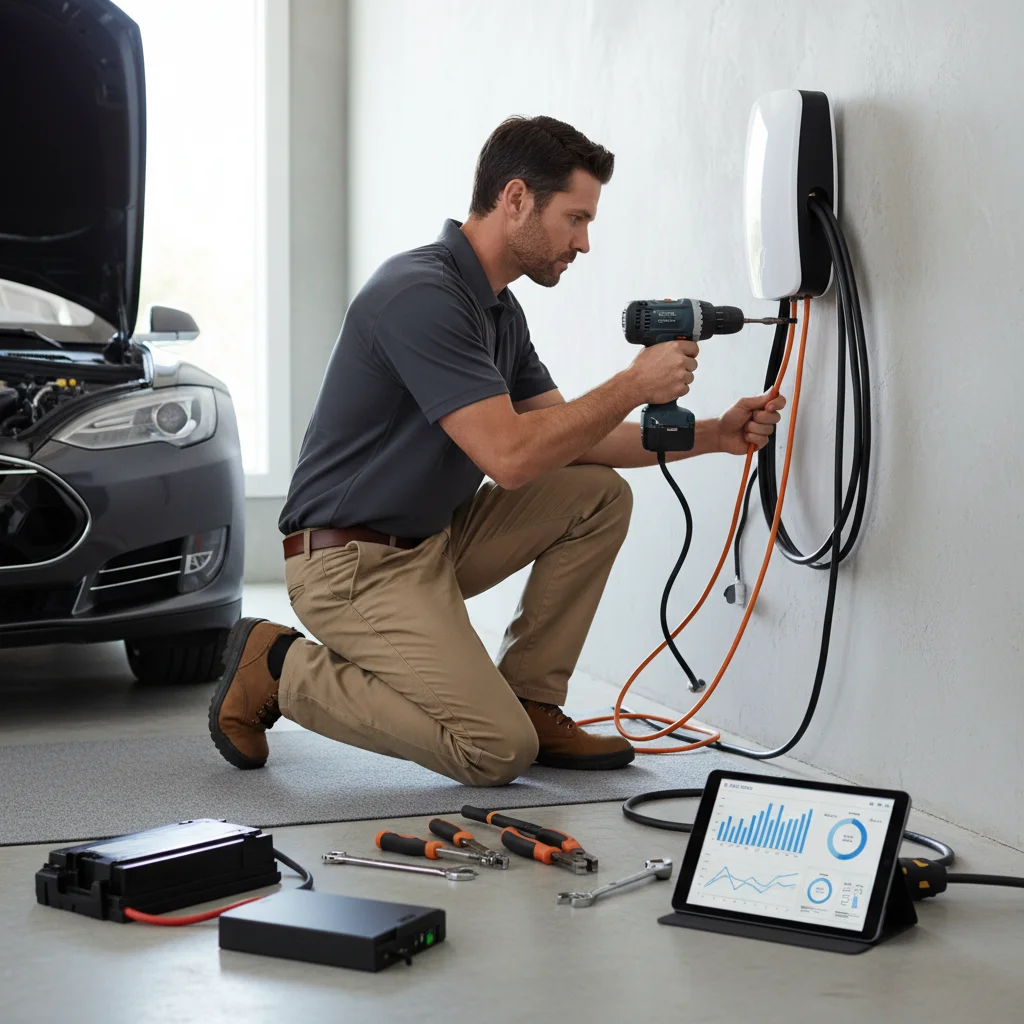
Heat still works overnight in this valley
Phoenix averages about 111 days a year at or above 100F. That’s from NOAA normals via NWS Phoenix. July highs average near 107F. Overnight summer lows still land in the mid-80s. The pack doesn’t cool off just because the sun is down.
Many cars then slow charging to protect a hot battery. You see a seated cable and a calm port light. The percentage barely moves. AAA’s 2026 study found about a 10% efficiency drop at 95F versus 75F. Range loss in that study sat near 8.5%. Recurrent reported EVs can lose 20 to 30% of range above about 95F. Loss sat near 31% at 100F. That dataset included 345,622 trips by 300 Phoenix-area EVs.
A forgotten off-peak window makes that worse. APS markets the R-EV residential EV rate plan as EV Overnight Charging. The window is 11pm to 5am on weekdays. SRP’s Electric Vehicle Price Plan closed to new enrollment after a February 2025 board decision. Existing SRP customers may stay through the November 2029 billing cycle. Mesa Municipal Electric publishes an Electric Vehicle Time-of-Use rate named E1EV. ED3’s EV TOU 2-10 covers Maricopa and much of northern Pinal. ED2 serves Casa Grande, Coolidge, and Florence. No EV-specific program showed on its site when we checked.
Those plans only cut the bill if the session actually ran inside the window. Service often splits a city block by block. Treat a city-level utility as directional and confirm your address. Tesla owners who want the billing side spelled out can start with How Tesla home charging bills work on APS and SRP.
Start with the schedule, not the hardware
Every major EV lets you set a departure time or an off-peak window. You set it once. Then life changes. A later plug-in or a new commute can shift the window. An app default can do the same. Then you’re gone before charging starts.
Open the car’s app or the center screen. Look for scheduled charging, charge on departure, or off-peak charging. If the window opened after you pulled out, the car waited on purpose. Nothing is broken.
Plug in at dinner with an 11pm start. The car can drop into a low-power sleep first. Some vehicles don’t wake cleanly enough to start on time. Opening a door often wakes it. So does unlocking with the fob. Starting climate from the app works too. If charging kicks in a few minutes later, sleep was the issue.
What the morning clues usually mean
Same percentage as last night, cable seated: the window likely started later than you thought.
Charging starts after you unplug and replug: the car slept through the start.
Charging stopped partway: you may have hit the charge limit, or the circuit dropped.
A green light on the unit and a blank car screen points to a loose plug. Reseat the cable until you hear or feel a click.
A tripped breaker or GFCI means the house lost power to the charger. Reset once, not over and over. Repeated trips belong in Why your EV charger keeps tripping the breaker.
When it really didn’t run
Reseat the plug fully. A wall-mounted cable under tension can back out a few millimeters and still look connected.
If the breaker tripped, one reset is reasonable. If it trips again, stop. That’s a circuit fault for a licensed electrician. Charge Pro PHX doesn’t repair panels or install chargers. It’s a referral line. It matches stranded drivers with independent mobile operators.
Check the EVSE status light. A fault color or blink pattern usually means the wall unit needs service. That’s separate from the car.
Then look at the 12-volt. That small battery has to run the charging computer. If it’s failing, a session can start and then drop. Heat is the usual villain here. Battery Council International work, via Battery University, timed starter batteries in heat. They last about 47 months in hot climates versus 59 in cool ones. A battery good for five years elsewhere can fail in two or three in the desert. AAA calls heat the number-one cause of battery failure.
In an EV, a dead 12-volt strands the car even with a full traction pack. The 12-volt runs the door handles, the screens, and the contactor that connects the main battery. A DC-DC converter only recharges it while the car is on or charging. Tesla features like Sentry Mode and Cabin Overheat Protection keep drawing power while you sleep. The lockout signs sit in What happens when an EV’s 12-volt dies in desert heat.
Housing stock changes the overnight picture too. Home charging is common in newer belts. Maricopa, Surprise, Sun City West, and Gilbert have some of the newest housing here. Census figures put pre-1980 housing under 3% in Surprise and Sun City West. Maricopa sits near 1.9%. Gilbert sits near 4.1%. Sun City is the opposite. About 88.9% of its housing was built before 1980. Youngtown sits at about 51.8%. On those older streets, a shared garage circuit can look connected all night. It can still add almost nothing. A Level 1 trickle can do the same. You’re not sure the cord did real work. Start with What a Level 1 EV charger is, and whether it’s enough here.
If you have to leave on what’s left
Skip the long diagnosis when the commute won’t wait. Arizona DPS Roadside Motorist Assistance will change a tire or bring gasoline or diesel. Its published materials don’t mention charging an EV. ADOT’s Incident Response Unit helps stranded motorists on Phoenix-area freeways from 5am to 8pm weekdays. It also doesn’t advertise an EV charge.
An independent mobile operator can bring a 240V Level 2 source to the driveway. Teslas take a native NACS plug. Other brands use a CCS or J1772 adapter. Typical charging time adds about 10 to 20 miles of range in 15 to 30 minutes. That is charging time on the cable, never an arrival time. The operator quotes you before starting and bills you directly.
Charge Pro PHX performs no work, owns no trucks, and employs no technicians. If you need a charge at the curb, start with mobile EV charging. The pack may already be thin in the heat. EV running low in Phoenix heat: what to do before you’re stranded covers how to stretch what’s left.
After a hot night that never charged, leftover range can feel thin on Loop 101, I-10, or the Superstition Freeway.
If you need to get matched with a local operator, call Charge Pro PHX at (602) 932-0920. The operator quotes before any cable goes in.
Frequently asked questions
Why did my EV say it was charging but the percentage never went up?
The scheduled window often hadn’t opened yet, or the charge limit was already met. Heat can also slow the rate so a short window barely moves the number. Check the app schedule and the set limit before you assume the hardware failed.
Can leaving an EV plugged in without charging hurt the battery?
No. Sitting plugged in without drawing power doesn’t stress the pack. The software is waiting on a schedule, a sleep wake, or a limit you already hit.
Should I reset the breaker if the charger has no power?
Once is reasonable. If it trips again, stop and call a licensed electrician. Repeated resets can hide a real circuit fault. Charge Pro PHX doesn’t repair home wiring.