Wickenburg sits at the northwest edge of the Phoenix area. US-60 Grand Avenue meets US-93 toward Las Vegas here. About 8,059 people live in ZIP 85390, across roughly 26.5 square miles. It’s a historic Western town. Downtown still holds Frontier Street, the Jail Tree, and the Desert Caballeros Western Museum. Dude ranches sit outside that core. Through-drivers treat town as the last real services before a long empty run north. If your EV is sitting still on those miles, you want help at the car. EV roadside assistance in Wickenburg is a mobile operator. It isn’t a brand with its own fleet.
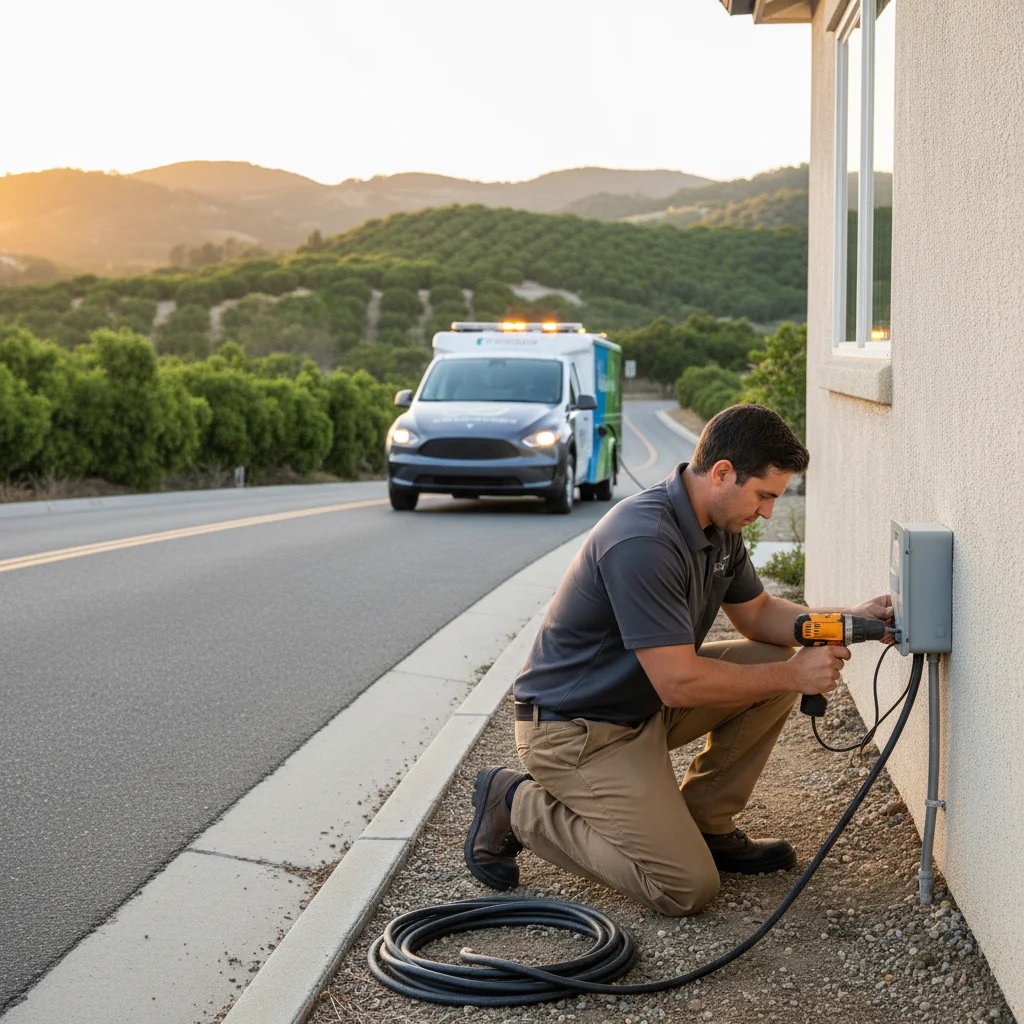
The southwest desert edge, not a Valley suburb
This isn’t Scottsdale traffic. Wickenburg is ranch country at the far northwest of the service area. Elevation sits above 2,200 feet. Summer heat still cooks the pack and the small 12-volt. Recurrent’s Phoenix-area EV dataset found 20 to 30 percent range loss above about 95F. Loss sat near 31 percent at 100F. AAA’s 2026 study found about a 10 percent efficiency drop at 95F versus 75F. Range loss in that study was about 8.5 percent. Cabin cooling is one of the bigger draws in NREL’s climate-control work.
A car that felt comfortable leaving central Phoenix can run lean by town. Headwinds on US-93 add more. So does air conditioning on a ranch transfer. The nav often undercounts that kind of day. Some drivers parked for a museum visit or a dude-ranch weekend. Then the car won’t wake. Others pointed north toward Las Vegas and watched the remaining miles shrink.
Charge Pro PHX is a referral line. We don’t own trucks, employ technicians, or set prices. We match you with independent local operators. They quote before they start. They bill you directly.
Grand Avenue, US-93, and SR-74
Three corridors shape almost every call.
US-60 into town is Grand Avenue. On the East Valley it’s the Superstition Freeway. Out here it’s the highway into a small historic downtown. You may be coming from the West Valley. You may be coming from Carefree on SR-74. You may be leaving a ranch gate off the highway.
US-93 is the northbound run toward Las Vegas. That stretch is a serious range-planning drive. Plan from the charge you already have before you commit to those miles. The display at a Wickenburg light won’t match twenty minutes later. Heat takes a bite.
SR-74, the Carefree Highway, is the northeast tie-in. It’s a long desert connector, not a city street. If you stall on it, say Carefree Highway and the nearest cross-road.
ARS 28-871 covers stops on a highway outside a business district. Get off the traveled part when you can. A vehicle disabled so badly it can’t move is exempt. Leave room for others to pass. Stay visible 200 feet in each direction. ARS 28-775 is Arizona’s Move Over law. Other drivers should change lanes or slow around a car with lights on. An operator working your bumper needs that buffer.
What the state will do, and what it will not
Arizona isn’t empty of motorist help. DPS Roadside Motorist Assistance is statewide. It changes tires, jump-starts 12-volt batteries, and adds water. It brings gasoline or diesel and calls tows. In 2018 it helped 75,235 motorists statewide. Its published materials name gasoline and diesel. They say nothing about charging an EV with an empty traction pack.
ADOT’s Incident Response Unit works Phoenix-area freeways from 5am to 8pm weekdays. It clears crashes and debris, changes tires, and helps stranded motorists. It also doesn’t advertise EV charging.
A 12-volt jump might be in the state’s toolkit. An on-site charge for an empty pack isn’t something those programs publish. That’s the job out-of-charge recovery is built for.
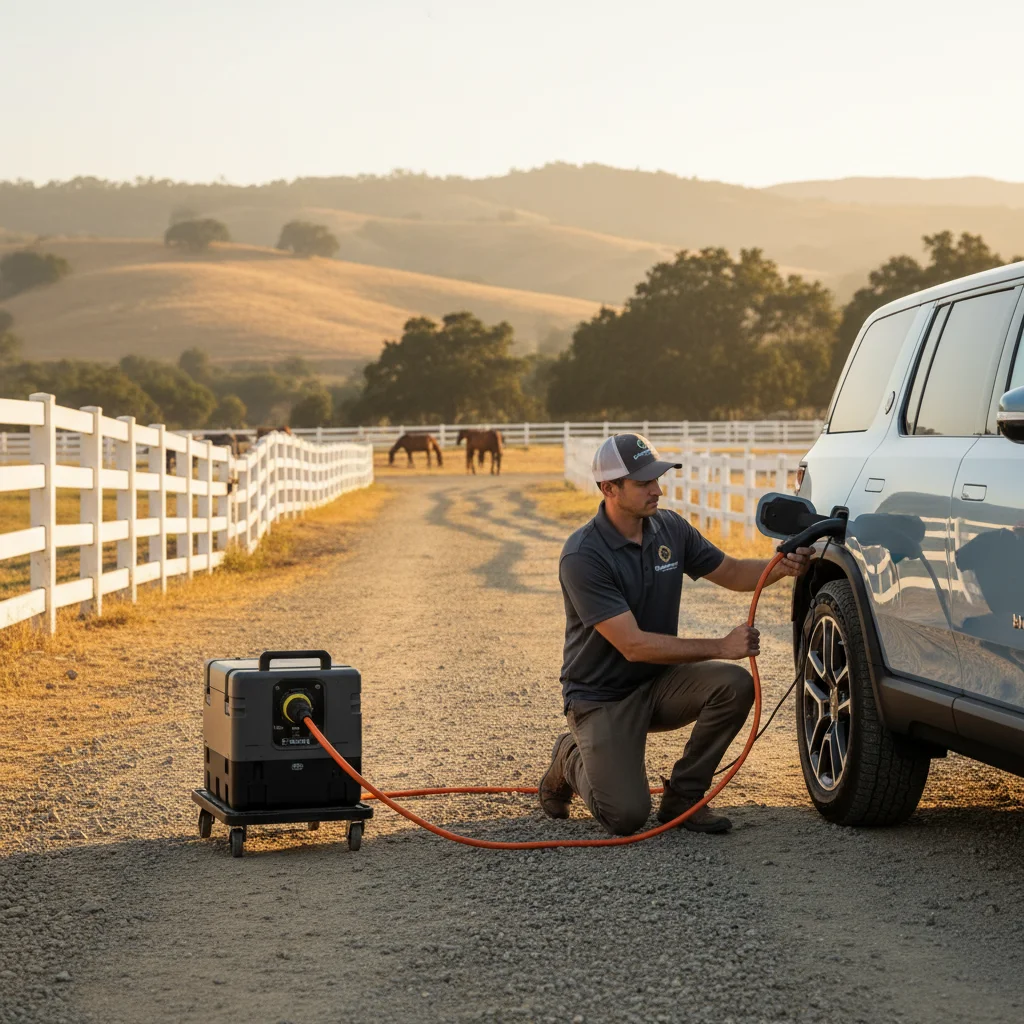
Empty pack, or a 12-volt that cooked in the lot
Name the failure when you call. They’re not the same rescue.
An empty traction pack is the through-driver and the heat-day problem. Mobile EV charging brings 240-volt Level 2 to the car. Tesla gets a native NACS plug. Other brands get CCS or J1772 adapters. Operators typically add 10 to 20 miles of range in 15 to 30 minutes of charging. That window is charging time. It isn’t how long anyone takes to arrive. Use those miles to reach a charger you confirm in an app. Or use them to get back into Wickenburg and sort the rest.
A dead 12-volt is the parked-car problem. You were on Frontier Street, at the museum, or at a ranch. The main pack may still be fine. The small battery isn’t. Battery Council International work, via Battery University, timed starter batteries in heat. They last about 47 months in hot climates versus 59 in cool ones. A battery can last five years in a mild city. Here it can fail in two or three. In an EV the 12-volt runs the door handles and the screens. It also runs the contactor that connects the high-voltage battery. A DC-DC converter only recharges it while the car is on or charging. Tesla Sentry Mode and Cabin Overheat Protection draw power while parked. The car looks dead. A jump or an on-site 12-volt replacement is often the whole job.
Tesla factory roadside, as Tesla publishes it, doesn’t charge you on the spot. It tows to a Supercharger or a service center. Ford tows to a charger, home, or dealer. If you want the car charged where it sits, that’s a local operator. It isn’t the factory script. Tesla rescue in Phoenix: AAA or a mobile charge walks through that fork.
Charge where you sit, or load the car
Towing still matters when the car can’t roll. It also matters when the park pawl is stuck. A peace officer can order a disabled vehicle moved under ARS 28-872. Owners pay reasonable tow and storage before release. Arizona sets no statewide private-tow rate cap. Cities and counties may.
An empty pack or a dead 12-volt doesn’t always need a tow. Charging or jumping on site skips the flatbed. You skip the load and a second wait. Not every tow operator is set up for a silent EV. You still have to charge after the ride. The mobile operator quotes the charge or the jump before work starts.
The same long-highway pattern shows up south of here on I-8. Stranded on I-8 toward Gila Bend is the sister call on that southwest desert belt.
What to do on the shoulder while you wait
Hazards on. Get fully off the travel lane if the car will still roll a few feet. Stay with the vehicle if it’s safe. Share a pin, a mile marker, a ranch name, or a downtown cross-street. Say downtown, Frontier Street, or the Rancho de los Caballeros area. Those are distinct enough.
Check your charging app before you assume you must sit there. Confirm a working stall yourself.
This is a long-haul dispatch. Ask about timing when you call. Charge Pro PHX doesn’t publish arrival times, business hours, or a crew count. We don’t run the trucks.
Call (602) 932-0920. We match you with an independent operator who quotes before starting.