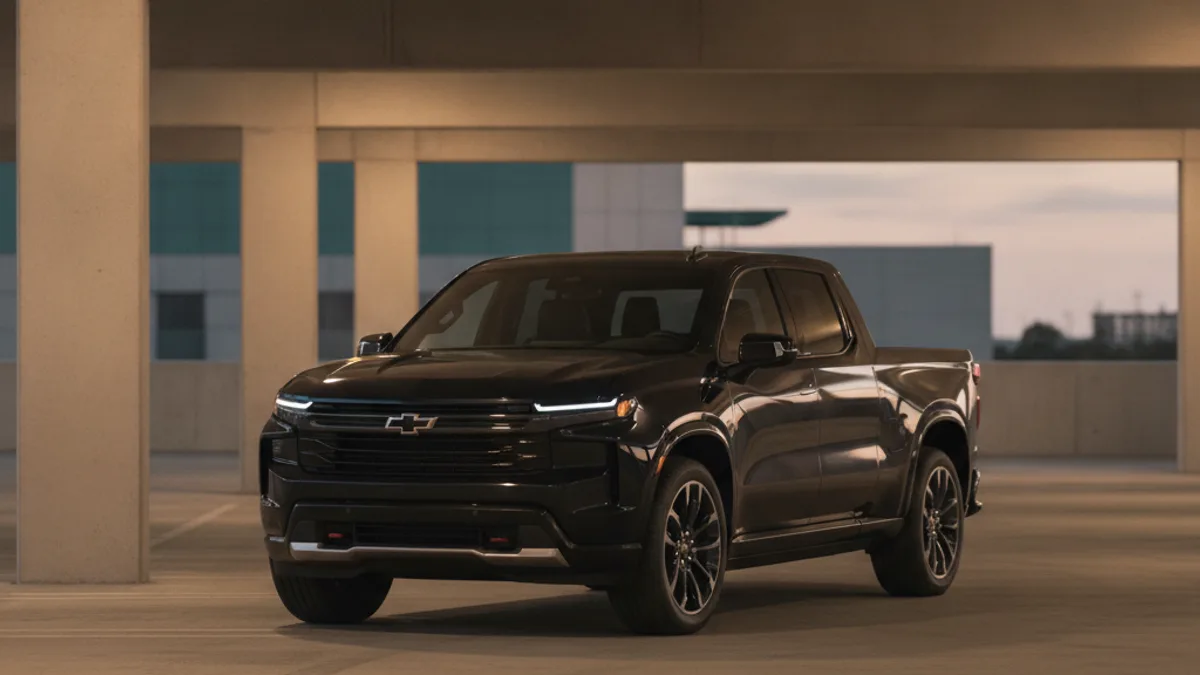
A Chevy Silverado EV often won’t start after a full day in Phoenix sun. The 12-volt is dead, not the Ultium pack. The big battery can still show plenty of range. That pack doesn’t wake the computers, handles, or contactors. The small 12-volt does. When it cooks in a jobsite lot, the whole truck goes quiet.
Why work trucks die after a Valley afternoon
Silverado EVs in this metro are work trucks first. They sit on unfinished pads in Mesa. They sit in warehouse lots off I-10. Staging yards in Gilbert and Chandler see the same pattern. The roof takes sun from mid-morning until the crew knocks off.
Phoenix averages about 111 days a year at or above 100F. About 21 days hit 110F or more, per NOAA 1991-2020 normals through NWS Phoenix. July highs average near 107F, and August sits near 105F. Overnight summer lows still land in the mid-80s. The truck never really cools on the lot.
Heat shortens a 12-volt’s life. Battery Council International studied starter-battery failure in heat. Via Battery University, those batteries last about 47 months in hot climates. In cool climates they last about 59 months. A battery good for five years elsewhere can fail in two or three here. AAA calls heat the number-one cause of battery failure.
The drive pack is a separate problem. AAA’s 2026 study found about a 10% efficiency drop at 95F versus 75F. Range loss in that study was about 8.5%. Recurrent reported EVs can lose 20 to 30% of range above about 95F. Loss was near 31% at 100F. That dataset included 345,622 trips by 300 Phoenix-area EVs. None of that is why the dash is black. A dead 12-volt strands the truck even with a full traction battery. The 12-volt runs the door handles and the screens. It also runs the contactor that connects the Ultium pack. A DC-DC converter only recharges the 12-volt while the truck is on or charging.
Home overnight charging doesn’t save a truck left at a job. APS markets the R-EV residential EV rate plan for overnight charging. That window is weekdays from 11 p.m. to 5 a.m. SRP still has an Electric Vehicle Price Plan for customers already on it. New enrollment closed after a February 2025 board decision. Those plans help a Silverado EV on a driveway in Surprise or Queen Creek. They do nothing for a truck that sat unplugged on a pad all day.
The 12-volt is the on switch, not the Ultium pack
A no-start Silverado EV is a 12-volt failure until you prove otherwise. The small battery feeds the electronics that boot the truck. Those modules then close the contactors to the high-voltage pack. If the 12-volt can’t hold voltage, that handshake never finishes. Nothing turns on, and the last range number you remember doesn’t matter.
The usual path is slow. The truck sat for days and parasitic draw ate the reserve. The 12-volt is worn out from summers here. Or the DC-DC converter no longer holds it near 12 to 14 volts. A jump can wake you. A 12-volt near the end of its life will strand you again within days.
Don’t mash the start button to clear a stack of warnings. The modules are confused because voltage sagged. Restoring the 12-volt is what settles them. Don’t yank terminals to force a reset unless a tech told you to. If you’re guessing, stop and get a diagnosis.
From the curb the pattern repeats. Doors stop unlocking and screens stay dark. The truck won’t shift into drive even though yesterday’s range looked fine. One small battery feeds many modules at once. You don’t get one clean error. You get unrelated warnings all together. That pile is the 12-volt talking, not three separate failures.
The eTrunk catch when the truck is already dark
The Silverado EV’s front trunk is GM’s eTrunk. It opens with the fob or a dash button. There’s also a button on the front fascia. All of those need 12-volt power. The 12-volt itself sits inside that eTrunk. It’s on the passenger side, under a plastic cover held by tabs. When the battery dies, you can’t reach it with the electric releases. Hummer EV owners hit the same lockout on the Ultium family. Our GMC Hummer EV 12-volt guide walks through that truck’s version of the stall.
GM left a mechanical backup for this. Sit in the driver’s seat and reach under the dash on the left. Go low, where a gas Silverado puts a hood latch. You’ll feel a looped cable. Two firm pulls release the eTrunk with no electrical power. It’s tucked up, so the first grab can take a moment. It still works when every screen is black.
Once the lid is up, lift the passenger-side cover slowly. Heat makes those tabs brittle. The 12-volt posts are under it. If a tab fights you, a flat screwdriver can help. Don’t crack the cover.
How a jump wakes the truck
Clamp the donor or jump pack to positive first. Then attach the negative clamp to the Silverado’s negative post. You can also use nearby unpainted metal. Wait before you try to start. A battery that sat dead through a 107F afternoon may need extra minutes. Leave it connected until it will hold the handshake. Don’t cycle the truck if the first try fails. Read the guide to jumping an EV in desert heat for clamp order.
An operator who does this work should also test whether the 12-volt is holding. Waking the truck once isn’t the same as a healthy battery. It still has to start tomorrow on the same lot.
Where Valley Silverado EVs actually go dark
The stall follows the work. A crew leaves the truck on a pad in Chandler or Queen Creek. Sun sits on the roof from morning on. By late afternoon the cabin is harsh. The 12-volt that started at dawn won’t wake at quitting time.
Trailering leans on the same small battery. Extra lights and trailer brakes pull accessory power the whole drive. A tired 12-volt may not bounce back at a yard in Goodyear or Buckeye. That’s after it barely recovered on the last job. US-60 east toward Apache Junction adds grade on top of heat. ADOT posts steep grades on that Superstition climb. The truck works harder uphill. The 12-volt still has to stay healthy after you park.
Airport parking is the slow version. Phoenix Sky Harbor International has Level 2 charging in the Terminal 3 garage. The Terminal 4 garage has stalls too. They’re at the Level 4 east end in zone B. The 24th St. station has charging as well. That doesn’t help a truck that sat a week in a hot garage. Modules still sip power the whole time. The PHX Sky Train links East Economy to the terminals. That link does nothing for a cooked 12-volt. Our Sky Harbor dead-EV guide covers charge versus jump when a work vehicle won’t wake.
Phoenix Raceway is in Avondale, not Phoenix, despite the name. A Silverado EV used as a support truck can sit in open sun all weekend. That’s another 12-volt death, not an empty Ultium pack.
West Valley yards in Glendale, Arizona, plus Surprise and Tolleson, see the parked-in-heat stall all summer. East Valley jobs in Tempe, along Loop 101 Price, and out the Superstition Freeway do too. Northbound I-17 toward Anthem and New River adds grade. Forum drivers report about 40% more energy going up I-17 than coming down. The nav often underestimates it. Range on arrival doesn’t matter if the truck won’t wake after it sits.
Charge Pro PHX serves the Phoenix area, including those cities. We match you with independent local operators. We don’t own the truck that shows up.
What Arizona’s free programs will do on the shoulder
Arizona does run free motorist help. Arizona DPS Roadside Motorist Assistance can change a tire. It can bring gasoline or diesel. It can jump-start a dead battery, add water, and call a tow. Its published materials name gasoline and diesel. They say nothing about EV charging or out-of-charge recovery.
ADOT’s Incident Response Unit works Phoenix-area freeways weekdays from 5 a.m. to 8 p.m. It clears crashes and debris, changes tires, and helps stranded drivers. No EV-specific mention appears in its materials.
A state jump may wake a 12-volt. It won’t add miles to the Ultium pack. If the truck is empty as well as dark, you still need a mobile charge. Independent operators we connect you with bring a 240V source to the vehicle. They use a native NACS plug. Non-Tesla EVs get a CCS or J1772 adapter. Typical on-site charging adds about 10 to 20 miles of range. That takes 15 to 30 minutes of charging time. That’s charging time, never an arrival time. If the Silverado EV is dark with range still showing, jump the 12-volt. Replacement is the job if it won’t hold.
GM’s other electric truck follows the same low-voltage pattern. The GMC Sierra EV emergency charging guide covers that platform in this heat.
If you’re on a freeway, ARS 28-871 applies outside a business or residence district. Don’t sit on the traveled part if you can get off it. A vehicle disabled so badly it can’t move is exempt. Leave room for traffic to pass. Stay visible 200 feet in each direction. ARS 28-775 is the Move Over law. Approach a stopped vehicle with warning lights, and move over a lane if you can. If you can’t move over, slow down. That’s why an operator on the shoulder needs other traffic to give space.
ARS 28-961 adds warning-device rules for disabled trucks and buses outside cities at night. A Silverado EV is a truck. If you’re outside town after dark, those rules can apply. Don’t walk in a live lane to set gear if it isn’t safe.
If police order the truck moved, ARS 28-872 lets them. Owners pay reasonable tow and storage costs before release. Arizona sets no statewide tow-rate cap. Cities and counties may set local maximums. Confirm the current price with the tow company before you sign. On an EV roadside assistance call, say whether the truck is dark or locked. Say if it’s just low on range. Those are different jobs.
When a jump is not the last step
One jump after a hard parked day can be enough. Two or three jumps in a couple of weeks isn’t a charging problem. It’s a 12-volt that’s done. Replace it. Don’t keep rolling the same battery through 110F afternoons.
If the truck wakes, then dies again the same evening, suspect the DC-DC converter. It may not be replenishing the 12-volt. That’s a shop diagnosis, not a shoulder guess. Operators we connect you with can jump or replace a dead 12-volt on site. They don’t do dealer-level Ultium repairs.
If you also need miles, a Silverado EV takes a CCS charge for the pack. Use non-Tesla EV rescue if the 12-volt is fine but range is not.
How Charge Pro PHX matching works
Charge Pro PHX is a referral line for the Phoenix area. We match stranded EV drivers with independent local mobile rescue operators. The pros we connect you with are licensed and insured. We don’t hold a trade license. We don’t own trucks, yards, or parts. We don’t employ technicians. We don’t set prices, and we don’t publish hours or arrival times. The operator quotes you before any work starts and bills you directly.
If your Chevy Silverado EV won’t start, call (602) 932-0920. We’ll match you with a local operator. Tell them the truck is dark and whether the eTrunk is stuck. Say whether the last range reading still looked fine. That’s enough to sort a 12-volt call from an empty-pack call.
Why won’t my Silverado EV start if the range still looks fine?
The number on the display comes from the Ultium pack. The 12-volt boots the truck and closes the contactors. If that small battery is dead, the handshake never happens. A jump on the 12-volt is usually what brings it back.
How do I open the eTrunk with a dead 12-volt?
Reach under the driver’s dash, low on the left. Find the looped mechanical cable. Pull it twice. The eTrunk releases with no power. The 12-volt sits on the passenger side under a tabbed plastic cover.
Should I keep jumping it if it dies again after the heat?
Don’t keep jumping it. A 12-volt that can’t hold a charge needs replacement. Repeat no-starts after a jump are the warning. Get it tested and swapped before the next jobsite afternoon.