A GMC Hummer EV that won’t start is almost never the Ultium pack. It’s the 12-volt battery that wakes the truck. The cabin goes dark even with miles still showing. Valley heat cooks that small battery faster than a mild climate.
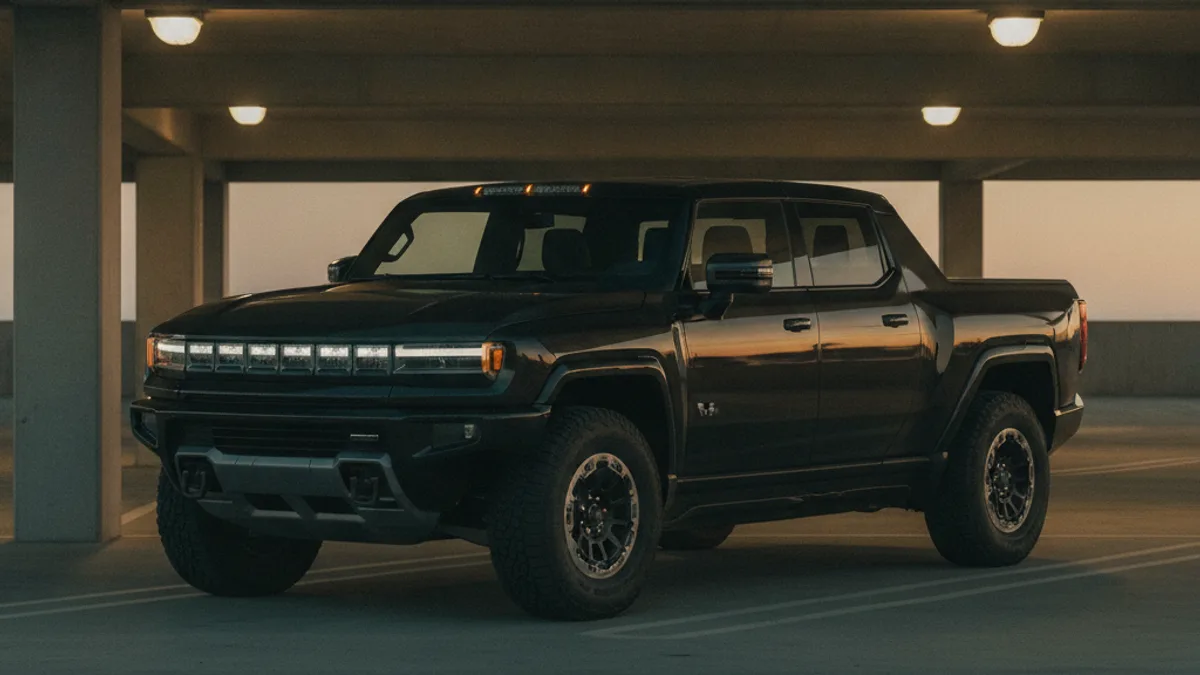
You land back at Sky Harbor after a week away. The fob does nothing. Terminal 3 and Terminal 4 garages have Level 2 stalls. East Economy still bakes through a July afternoon. Parked electronics keep sipping 12-volt power while you’re gone. The traction pack can sit at 80 percent. The truck still won’t boot.
Heat is why the small battery fails first
The Ultium pack moves the Hummer EV. The 12-volt system is what turns it on. Door handles, screens, and the high-voltage contactors all run on that small battery. If voltage falls too far, the handshake never happens. You get a black cabin. The key is ignored.
A DC-DC converter recharges the 12-volt. That only happens while the truck is on or charging. Parked in heat, that converter isn’t working. Tesla features like Sentry Mode and Cabin Overheat Protection show how parked loads add up. A Hummer EV has its own parked draws. Valley summer nights still sit in the mid-80s.
Battery Council International work, via Battery University, timed starter batteries in heat. They last about 47 months in hot climates versus 59 in cool ones. A battery good for five years elsewhere can fail sooner here. It can fail in two or three years in the desert. AAA names heat as the number-one cause of battery failure. It recommends AGM batteries for hot areas.
Phoenix averages about 111 days a year at or above 100F. About 21 of those reach 110F or more. Those are NOAA 1991-2020 normals via NWS Phoenix. July highs average near 107F. August sits near 105F. That air sits on the eTrunk the whole time the truck is parked.
Dark screens with miles still on the gauge
Treat a no-start as a 12-volt failure until you prove otherwise. The range number is the high-voltage pack. It doesn’t tell you whether the 12-volt can close the contactors.
Two patterns show up again and again. The truck sat for weeks and the 12-volt drained slowly. Or the 12-volt is worn out. You get the same dark interior either way. A jump can wake it once. It’ll strand you again within days if the battery is done.
That lockout is the same on every brand. See what happens when an EV’s 12-volt dies in desert heat. The Hummer EV isn’t special here. The small battery is still the gate.
The “conditions unable to shift” message
Hummer EV drivers often see “conditions unable to shift.” Other electrical warnings can stack with it. GMC’s spec puts a resting 12-volt at 12.4 to 12.8 volts. A running system sits at 14.4 to 14.8 volts. Below that resting band, modules get confused. Shifting errors show up. Screens fail to load. The truck refuses to wake.
Don’t keep cycling it through this. A weak battery can’t hold voltage under load. Bring the 12-volt back into range with a jump or a charge. Those errors usually clear once voltage is healthy.
Where Valley owners actually get stuck
This truck is huge, and it parks in huge, hot places.
After a week in a Sky Harbor garage
Phoenix Sky Harbor is the 12-volt trap people don’t plan for. Leave the truck in the Terminal 3 or Terminal 4 garage. The East Economy lots work the same way. Come back in August. Overnight lows never really cool the cabin. The 12-volt has been carrying parked loads the whole time.
Both airport garages have confirmed Level 2 charging. In Terminal 3, look on Level 1 west, Level 3, and Level 7. Terminal 4 stalls sit on Level 4 east, zone B. The 24th Street station has charging too. EVPassport installed that hardware in 2022. None of it helps a truck that won’t wake to accept a plug.
Desert miles north and east of town
People buy a Hummer EV to leave the pavement. Cave Creek and Carefree sit on long northeast valley roads. US-60 east toward Gold Canyon is a common weekend run. The Superstition Freeway climb is the same heat on a grade. Accessories and lighting pull on a weak 12-volt. A dark truck at a trailhead is worse than a dark truck in a driveway.
I-17 north toward Anthem, New River, and Black Canyon City adds grade. ADOT posts a 6% maximum on that northern stretch. Wickenburg is the long desert run on the northwest side. Same heat. Same parked drain. Same dark cabin if the small battery was already close to the edge.
Event lots and the West Valley
Chase Field and Mortgage Matchup Center mean hours in a hot garage. State Farm Stadium in Glendale, Arizona, does the same on Cardinals weekends. Phoenix Raceway sits in Avondale, not Phoenix, despite the name. The Ultium pack may still show a comfortable buffer. The 12-volt may not.
APS serves Goodyear, Buckeye, and Surprise. Surprise is in the newer-housing belt, where home charging is common. The stranded calls still happen after the truck sat through a game or a workday.
Don’t slam the doors while the truck is dead
The Hummer EV’s power doors index the glass. The window drops a little when you open the door. It rises again as the door shuts. That motion needs 12-volt power. With the battery dead, indexing doesn’t run.
Don’t close a door the usual way. The top of the glass can hit the sky panel or the A-pillar trim. The window chips. Sometimes it cracks. Treat every door as a slow, manual close until the 12-volt is alive again. Don’t let the door’s weight finish the swing.
The 12-volt is in the eTrunk
GMC put the Hummer EV 12-volt in the front trunk. That’s the eTrunk. It sits on the passenger side under a plastic cover held by three tabs. Easy to reach once the lid is open.
The eTrunk release is electric. A dead 12-volt means the button and the fob won’t pop it. GMC built a mechanical workaround. Look in the driver’s footwell, left of the brake pedal and up behind the wiring. You’ll find a silver wire with a loop. Pull that loop until it gives. You should hear the eTrunk release. No electrical power is required. It’s tucked behind other wiring, so the first try takes patience.
Once the lid is up, lift the cover by those three tabs. The battery and the jump terminals are under it.
Wake it from the terminals, in the right order
Two terminals sit under that cover. The positive terminal is behind a red sliding door. Flip that door and clamp on. The negative terminal is to the left, next to a green connector. Connect positive to positive first. Then put the negative clamp on the ground terminal. Wait a minute before you try to power the truck on.
A small jump pack may not wake a deeply discharged Hummer EV. Slow-charge the 12-volt instead. Leave an AGM-rated charger on the terminals for about an hour. That often brings enough voltage back. Then you can attempt a start. See the jump-start guide for desert heat for cable order.
Do this on a shoulder only if you can get fully off the travel lane. ARS 28-871 covers stopping on a highway outside a business or residence district. You may not stay on the traveled part when it’s practical to get off. A vehicle disabled so badly it can’t be moved is exempt. Leave room for traffic to pass. Stay visible 200 feet in each direction.
Arizona’s Move Over law is ARS 28-775. Other drivers must change lanes or slow for a stopped vehicle with warning lights. That’s why an operator working on the shoulder needs room.
Arizona DPS Roadside Motorist Assistance will change a tire and bring gasoline or diesel. It also jump-starts dead batteries. ADOT’s Incident Response Unit works Phoenix-area freeways weekdays from 5am to 8pm. Neither program’s published materials mention EV charging. Don’t assume they’ll treat a Hummer EV like a gas truck. Ask what they can actually do before you wait on them.
Symptom to likely cause
| Symptom | Likely cause |
|---|---|
| Dashboard completely dark, doors unresponsive | 12-volt fully discharged |
| ”Conditions unable to shift” message | 12-volt below GMC’s 12.4 to 12.8 volt resting range |
| eTrunk won’t open with fob or button | 12-volt too low to power the electric release |
| Window strikes trim when a door closes | 12-volt dead, window indexing not running |
| Repeated no-starts within days of a jump | 12-volt has failed and needs replacement |
Stop repeating the same jump if you’ve needed more than one in a short stretch. A 12-volt that won’t hold a charge needs replacement. Signs your EV 12-volt needs replacement before it strands you covers that pattern.
GM’s other Ultium truck fails the same way on low voltage. The GMC Sierra EV emergency charging guide walks through that platform when you’re stuck.
What a local operator can do on site
Charge Pro PHX is a referral line. It matches stranded EV drivers with independent local mobile rescue operators. The brand doesn’t own trucks. It doesn’t send its own technicians. The operator quotes you before starting and bills you directly.
On a non-Tesla EV rescue call, operators bring 12-volt jump gear. That’s the kit a large-pack truck like the Hummer EV needs. They also bring a 240V Level 2 source if the Ultium pack itself is empty. Operators use a native NACS plug. CCS or J1772 adapters cover non-Tesla EVs. They handle Tesla and every major EV brand. Level 2 on the shoulder typically adds 10 to 20 miles of range. That’s 15 to 30 minutes of charging, never an arrival time.
If the 12-volt is the only problem, the operator can jump it. They can use the manual eTrunk release if the button is dead. Then they can tell you whether it’s holding a charge. If the pack is empty too, they can add range. Enough to reach a charger you choose. Tesla tows to a Supercharger or service center. It doesn’t charge on site. An independent operator is the on-site option when you don’t want that tow.
EV roadside assistance in the Phoenix area covers this mix. Jump the 12-volt. Charge the pack. Or help you decide a tow is the safer call. Arizona sets no statewide tow-rate cap. Cities and counties may set local maximums. Confirm the current rate with the operator before anything is hooked.
If you’re already on I-10, Loop 101, or US-60, stay out of traffic. Put on hazards. Call for a match. Don’t keep cycling the truck. Don’t force the eTrunk. Don’t slam a door.
Call (602) 932-0920 when a GMC Hummer EV won’t start. Ask for an operator quote for your location. The person who shows up works for an independent outfit. They set the price. They tell you what they can do from where you’re parked.
Frequently asked questions
Why won’t my GMC Hummer EV start if the pack still shows range?
The range figure is the Ultium high-voltage battery. The 12-volt is a separate battery that boots the computers and closes the contactors. If that small battery is dead, the truck can’t start the sequence. Miles on the gauge won’t matter until the 12-volt is restored.
Where is the 12-volt, and how do I open a dead eTrunk?
The battery sits in the eTrunk on the passenger side. It’s under a plastic cover with three tabs. If the electric release is dead, use the mechanical loop in the driver’s footwell. It’s left of the brake pedal and up behind the wiring. Pull until it gives. The lid should pop with no power.
Can I close the doors while the Hummer EV is dark?
Close them slowly and by hand. The window-indexing feature needs 12-volt power to drop and raise the glass. Without it, a normal slam can chip or crack the glass. That’s the sky panel or the A-pillar trim. Jump the 12-volt first. Then use the doors as usual.