Allstate roadside assistance for EVs still treats a dead EV like a stalled sedan. You get a jump for the 12-volt, or a tow when nothing else works. You don’t get range added on the shoulder. In Phoenix heat, that gap is the whole problem.
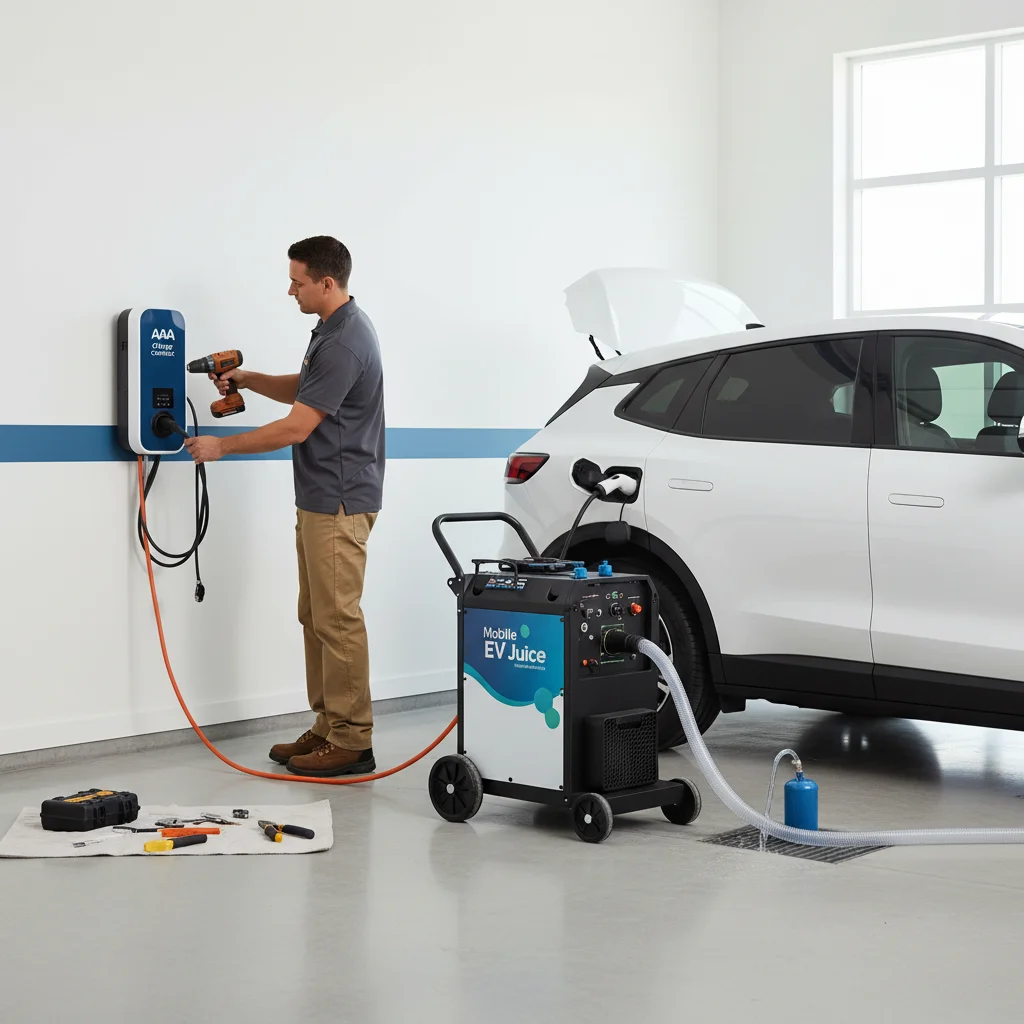
What Allstate actually sends when an EV dies
Allstate sells roadside as an add-on, not as an EV charging service. The menu matches a gas car: tires, lockouts, fuel, jumps, and tows. A contracted truck is who usually arrives, the same network they use for a gas car. Confirm that on your own declarations page, since tiers differ.
If the car won’t wake, start with the 12-volt. That small battery runs the screens, the handles, and the contactor for the main pack. Phoenix averages about 111 days at or above 100F. About 21 days hit 110F or more, per NOAA normals. AAA names heat as the top cause of battery failure. A jump can wake the car if the 12-volt is the only fault.
Jumping an empty traction pack doesn’t add miles. The usual Allstate path is a tow to a shop. They may tow you to a place you can plug in. Ask the dispatcher which one they mean, and whether a flatbed is coming. Most EVs need a flatbed so the drive unit stays off the pavement. Read towing a dead EV in the Phoenix area for why that detail matters here.
Your towing miles live in your policy, not here
Allstate uses more than one roadside tier. Towing distance and any per-call cap change with the tier you bought. No public figure is safe to quote here. Open the policy and call Allstate. Ask what towing distance your tier covers, and whether there’s a separate cap per tow. Get that answer on Wi-Fi, not from the I-10 shoulder.
Arizona sets no statewide private-tow rate cap. Cities and counties may set their own maximums. Miles past Allstate’s cover are between you and the tower. Confirm that before the hook goes on.
A tow doesn’t put miles back in Valley heat
The tow only moves the car. It doesn’t charge it. After the drop, you still wait for a session to finish. AAA’s 2026 testing found about a 10% efficiency drop at 95F versus 75F, and about 8.5% range loss. Recurrent used 345,622 trips from 300 Phoenix-area EVs. It reported 20 to 30% range loss above about 95F, and near 31% at 100F. July highs here average near 107F.
Northbound I-17 makes the math worse. Anthem sits near 1,860 feet. New River is near 2,140, before the posted 6% grade. Forum drivers have logged about 40% more energy going up than coming down. A tow after that climb is still a tow. Eastbound US-60 toward Apache Junction repeats it: grade, heat, then a wait.
A week in a Sky Harbor garage is a different failure. Level 2 charging is in the Terminal 3 and Terminal 4 garages. There’s charging at the 24th St. station. The car can still come back to a dead 12-volt after sitting in heat. Sentry Mode and Cabin Overheat Protection keep drawing while parked. Allstate can try a jump. They still won’t refill the traction pack at the stall.
Mortgage Matchup Center and Chase Field send cars home on a thin buffer. So does State Farm Stadium in Glendale AZ. The insurance tow still doesn’t add the miles you lost on Loop 101.
State trucks won’t charge you either
Arizona does run free motorist help, which many states don’t. DPS Roadside Motorist Assistance changes tires, jump-starts batteries, and brings gasoline or diesel. Its published materials don’t mention EV charging. ADOT’s Incident Response Unit works Phoenix-area freeways weekdays from 5am to 8pm. It helps stranded drivers, and it also doesn’t advertise an EV charge. ARS 28-871 says get a disabled car off the traveled way when you can. Stay visible 200 feet each way. None of that puts energy in the pack.
Tesla factory roadside follows the same tow logic. Tesla won’t charge on site. It tows to a Supercharger or a service center. See when Tesla roadside assistance won’t charge you on site for that same pattern. Geico roadside for a dead EV reads the same way.
What an on-site charge changes
A mobile EV charging call is built for an empty pack, not a broken car. Charge Pro PHX matches stranded drivers with independent local operators. The operator brings a 240-volt Level 2 source to the bumper. Teslas take a native NACS plug. Other brands use a CCS or J1772 adapter. Typical charging time is 15 to 30 minutes. That’s charging time, not a clock on arrival. Drivers often leave with about 10 to 20 miles of range. That’s enough to roll to a charger under your own power.
The operator quotes you before any work starts, and bills you directly. If the 12-volt is the real fault, they can jump it or replace it on site. That’s the opposite of a flatbed ride across Loop 101. It holds on the Agua Fria side or the Price side. Compare that with when AAA can’t charge you, a mobile EV operator can. Read when you need a charge, not a tow before you call for a hook.
Keep Allstate for the jobs it actually covers
Don’t cancel Allstate roadside over this. It’s the right call for a flat, a lockout, or a mechanical tow to a shop. Save the mobile charge for a healthy car with an empty pack.
If you’re already sitting with no miles, call (602) 932-0920. Charge Pro PHX will match you with a local operator who can quote an on-site charge. Confirm that quote before they start.
Frequently asked questions
Does Allstate copycharge an EV on the roadside?
No. The standard benefit is a jump or a tow. Confirm your own plan, because Allstate doesn’t sell that add-on as a mobile charge.
What should you ask the Allstate dispatcher?
Ask whether they’re sending a jump or a flatbed. Ask where they plan to tow you, and what towing distance your tier covers. If the pack is empty, say so.
Does a mobile charge replace Allstate roadside?
No. Keep Allstate for tires, lockouts, and shop tows. Use a mobile operator when you need range where you already stopped.