Your EV is stranded. The question on the call is whether you need a mobile operator to bring a Level 2 charge or a flatbed to take the car to a charger. The answer depends on what failed and where you sit. Here is how to pick the right call.
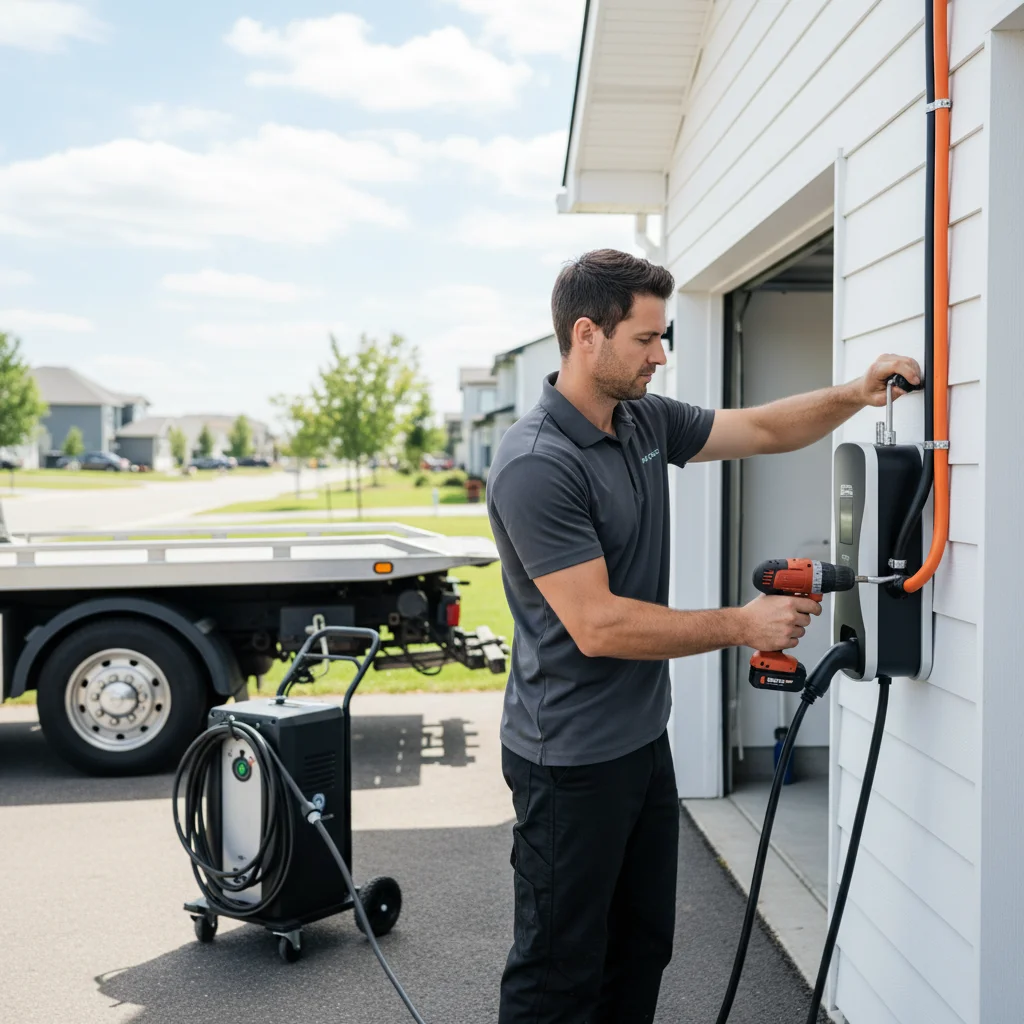
Three failure modes, three answers
Three things go wrong with a stranded EV, and each one has a different answer:
- Empty traction pack, car still wakes. A mobile Level 2 visit at the car adds 10 to 20 miles in 15 to 30 minutes of charging.
- Dead 12-volt, car will not wake. An operator with a jump pack or a replacement battery wakes the car. Charging is a separate question.
- Tesla factory call. Tesla tows to a Supercharger or service center, not a Level 2 visit.
The first is the mobile-charging call. The second is the 12-volt call. The third is the tow call, and Tesla drivers usually have it forced on them.
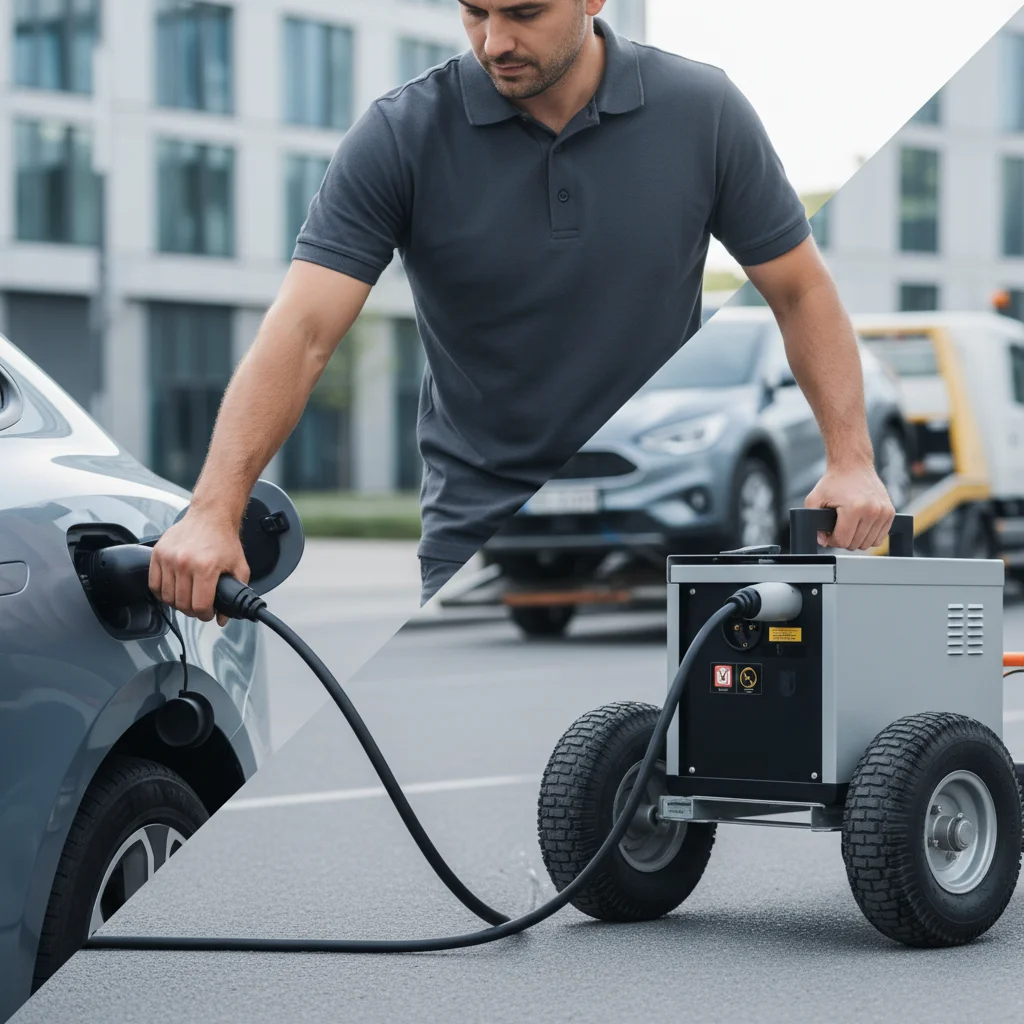
How to tell which failure you have
The screen tells the story. If the dashboard lights up and reports low range but the car will not move, that is the traction pack. If the dashboard stays dark and the door handles won’t present, that is the 12-volt. If the car throws a charging-system warning and won’t take a charge at any stall, that is the traction pack with a fault, and a tow is the answer.
For the wider view on what a hot parked day does to the 12-volt, see what happens when an EV 12-volt dies in heat.
When mobile charging is the right call
A mobile Level 2 visit is the right move when the traction pack is empty but the car will wake and roll, and the next charger is further than your current range will go. The operator plugs in, monitors the session, and unplugs when you have enough range to reach the next charger.
That covers most Phoenix-area stalls: a commuter who ran out on the Loop 202, a weekend run to the McDowells that came up short, a sit-and-drain after a Suns game, a long I-17 climb past Anthem.
For the broader picture on what mobile Level 2 adds at the car, see roadside Level 2 charging for stranded drivers.
When a tow is the right call
A tow is the right move when:
- The traction battery has a physical fault and won’t take a charge
- The car will not wake after a 12-volt jump
- The charge port is damaged or stuck
- The car is in a tight indoor parking structure where a generator is unsafe
- The car has been in a crash, even a low-speed one, because the high-voltage system needs a dealer inspection before any charging happens
- You called Tesla and they dispatched a tow
Tesla factory roadside does not bring a Level 2 charge to the car. It tows to the nearest Supercharger or service center. That tow can be billable depending on the situation. For the wider principle of when a tow beats a charge in Arizona, see mobile EV charging or a tow in Arizona.
What the state agencies will and won’t do
Arizona DPS Roadside Motorist Assistance and ADOT’s Incident Response Unit are the two free motorist-help programs in the Valley. They change tires, bring gasoline or diesel, jump conventional batteries, and clear debris. Neither program advertises bringing an EV a charge. That gap is exactly what an independent mobile operator fills.
For the wider rundown on what DPS will and won’t do for a stranded EV, see Tesla flat tire coverage and the Arizona motorist help gap (the principles apply to every EV, not just Teslas).
What the operator quotes and how the bill works
The operator quotes a price before any work starts. That quote covers the visit, the Level 2 charge session at the car, and any additional mileage if you ask for it. The operator bills you directly at the end of the visit. We do not set the price. The operator does.
Charge Pro PHX is the referral line that matches you with the operator. We do not own trucks, employ technicians, or set prices. We connect you with an independent local operator who has the gear for your car.
For the matching model, see mobile EV charging near me in the Phoenix area.
What to do if your EV is stranded right now
Get the car as far off the travel lane as you can. Keep hazards on. ARS 28-871 says to leave the traveled part of a highway when you can. A vehicle that cannot be moved is exempt.
Have a location ready: nearest cross street, exit number, or landmark. The closer the pin, the faster an operator can find you.
Call (602) 932-0920. The operator confirms whether a mobile Level 2 visit or a tow is the right answer, quotes before any work starts, and bills you directly.
Frequently asked questions
How do I tell if my EV needs a charge or a tow?
If the screens wake and the car reports low range, that is the traction pack and a mobile Level 2 visit works. If the screens are dark and the doors won’t unlock, that is the 12-volt and a jump is the first move.
Does Tesla roadside bring a charge to my car?
No. Tesla tows to the nearest Supercharger or service center for a fee in most cases. An independent mobile operator can bring a Level 2 charge to your car.
Will Arizona DPS bring my EV a charge?
No. DPS Roadside Motorist Assistance changes tires, brings gasoline or diesel, jumps conventional batteries, and clears debris. It does not advertise bringing an EV a charge.
How much does a mobile EV charging visit cost?
The operator quotes the price before any work starts. The cost depends on how much range you need, the time of day, and the location. We do not set prices. The operator does.