The northbound I-17 climb from Anthem burns more energy than the nav shows. Forum reports put that extra cost at about 40 percent. Drivers have logged roughly 481 watt-hours per mile going up. The return run sits near 293 watt-hours per mile. If your gauge is already thin at Anthem Way, the grade can empty the pack early. New River and Black Canyon City sit on that same climb.
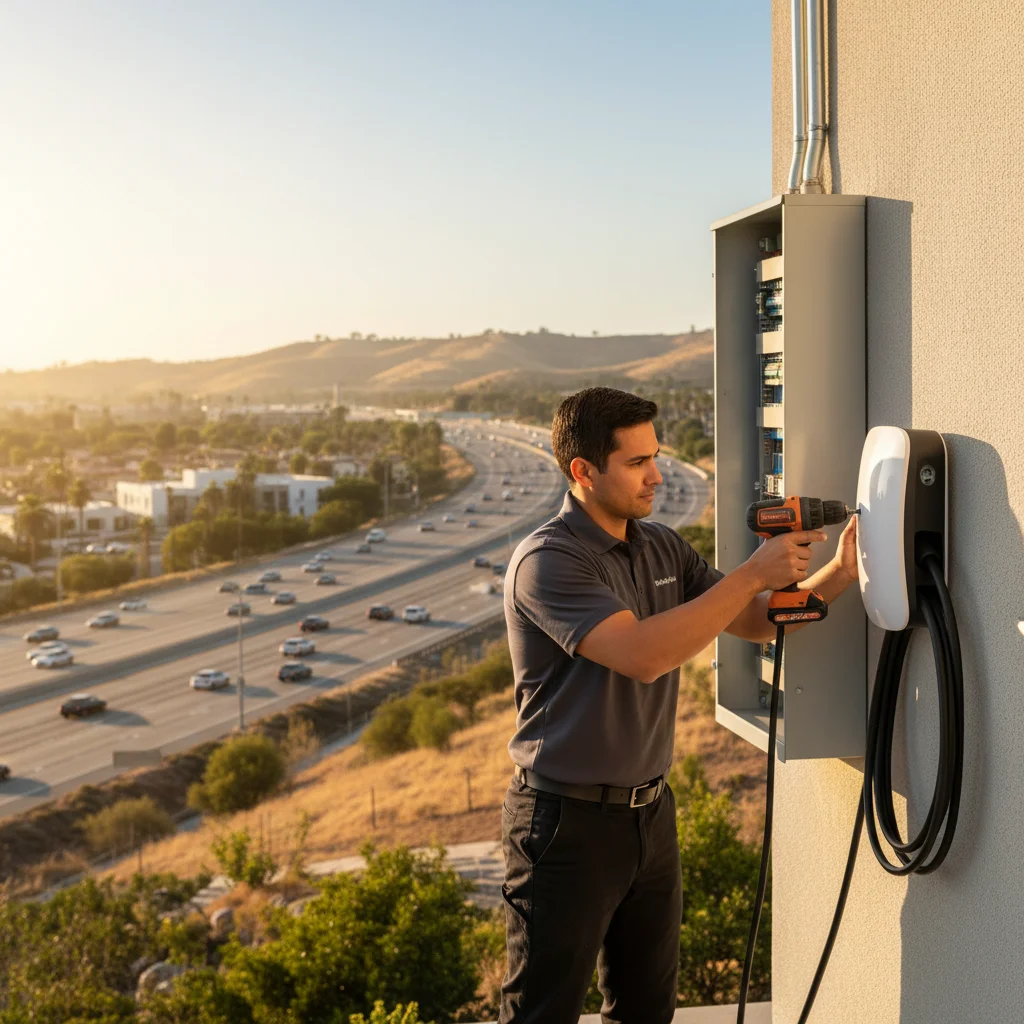
The Black Canyon Freeway is a climb, not a flat interstate
I-17 north of Phoenix is the Black Canyon Freeway. It’s the metro’s hardest range problem. You’re not repeating a Loop 101 errand. You’re gaining thousands of feet toward Flagstaff.
Anthem sits about 1,860 feet. That’s already above the Valley floor near 1,135 feet at Sky Harbor. New River sits about 2,140 feet. Black Canyon City sits near 2,000 feet on the sustained grade. The road then keeps rising toward Sunset Point at about 3,410 feet. Cordes Junction sits about 3,800 feet. After that it drops into Camp Verde around 3,150 feet.
ADOT posts a 6 percent maximum grade on the northern I-17. That’s not a short hill after an exit. It’s a long northbound pull through desert grades. The nav often underestimates it. Drivers who set their range on I-10 or Loop 202 walk into different math here. Flat streets in Phoenix don’t prepare you for this.
Southbound is easier on energy. The same logs that show 481 watt-hours per mile uphill show about 293 coming down. That gap is why a buffer at Daisy Mountain Drive can vanish before Rock Springs. Plan the northbound run as a climb. Don’t treat it like a flat freeway with a pretty estimate.
Heat makes the same miles cost more
Phoenix averages about 111 days a year at or above 100F. About 21 days hit 110F or more. July highs average near 107F. AAA’s 2026 study found about a 10 percent efficiency drop at 95F versus 75F. Range loss in that study was about 8.5 percent. Recurrent used 345,622 trips from 300 Phoenix-area EVs. It reports 20 to 30 percent range loss above about 95F. Loss sits near 31 percent at 100F. Cabin cooling is one of the bigger draws.
Stack that heat on a 6 percent grade. The car is climbing and cooling at once. A Tesla, Rivian, Hyundai, Ford, or Chevy can look fine leaving the Valley. It can look tight by New River Road. Anthem is only about 30 miles north of downtown Phoenix. It’s already the foot of that climb.
Many Anthem homes sit on APS service. APS markets the R-EV residential plan as EV Overnight Charging. That’s 11pm to 5am on weekdays. It’s useful in the driveway. It doesn’t help if you roll onto I-17 with a thin buffer.
Anthem, New River, and Black Canyon City sit on one grade
Anthem is a master-planned census-designated place, not an incorporated city. About 22,584 people live there. It straddles I-17 at Daisy Mountain Drive and Anthem Way. Neighborhoods include Anthem Country Club, Parkside, and the Anthem townsite. It’s the last big stop before the northbound grade steepens. If you’re heading toward Flagstaff, top up in the Valley first. A thin pack starts to fail the climb here. Local notes live on our Anthem I-17 rescue page.
New River is next. It’s a spread-out desert community of about 18,240 people. It’s hot in summer and remote compared with the Valley grid. Exits feel farther apart than they do on Loop 101. By the time you’re on New River Road, you’re already paying the climb. The desert grades toward Black Canyon City keep going up. See stranded in New River before the I-17 grade.
Black Canyon City is small, about 2,181 people, in ZIP 85324. It sits on the heart of the Black Canyon climb. Rock Springs and the Rock Springs Cafe sit on this stretch. This is where northbound EVs most often run short of the remaining miles. Sunset Point, Cordes Junction, and the later drop toward Camp Verde still sit ahead. An operator can add enough range to reach Camp Verde. The same charge can turn you back toward the Valley. That’s a long-haul dispatch, so ask about timing when you call. The local companion is EV help in Black Canyon City on the I-17 north climb.
Charge Pro PHX doesn’t own trucks or send employees. It matches you with independent local mobile rescue operators. Those operators bring a 240-volt Level 2 source to the car.
Get off the travel lanes before you call anyone
If the car won’t make the next exit, leave the traveled lanes. ARS 28-871 covers stops on a highway outside a business or residence district. You can’t stop on the traveled part when it’s practical to get off it. A vehicle disabled so badly it can’t be moved is exempt. When you’re stopped, leave room for other traffic to pass. Stay visible 200 feet in each direction.
Arizona has no toll roads and no toll express lanes. You’re not hunting a plaza. You’re hunting a wide shoulder, a ramp, or a safe turnout. Pull as far right as you can. Turn the hazards on. If you can, get out on the passenger side. Don’t stand between the car and live traffic.
Stay with the vehicle. Don’t walk the shoulder looking for a signal or a better mile marker. I-17 traffic is fast. ARS 28-775 is the Move Over law. Approaching drivers must move over a lane if they safely can, or slow down. That rule exists because people get hit next to stopped cars. Keep your lights on so the next driver can see you.
Arizona DPS Roadside Motorist Assistance will change a tire. It can bring gasoline or diesel, jump a 12-volt, add water, and call a tow. Its published materials name gasoline and diesel. They say nothing about charging an empty EV pack. ADOT’s Incident Response Unit works Phoenix-area freeways from 5am to 8pm weekdays. It clears crashes and debris, changes tires, and helps stranded motorists. It also doesn’t advertise an EV charge.
If a peace officer orders the car moved, ARS 28-872 lets them do it. Owners pay reasonable tow and storage costs before release. ADOT mails notice to owners. Getting a charge into the car keeps you out of that process. Rolling to an exit does the same.
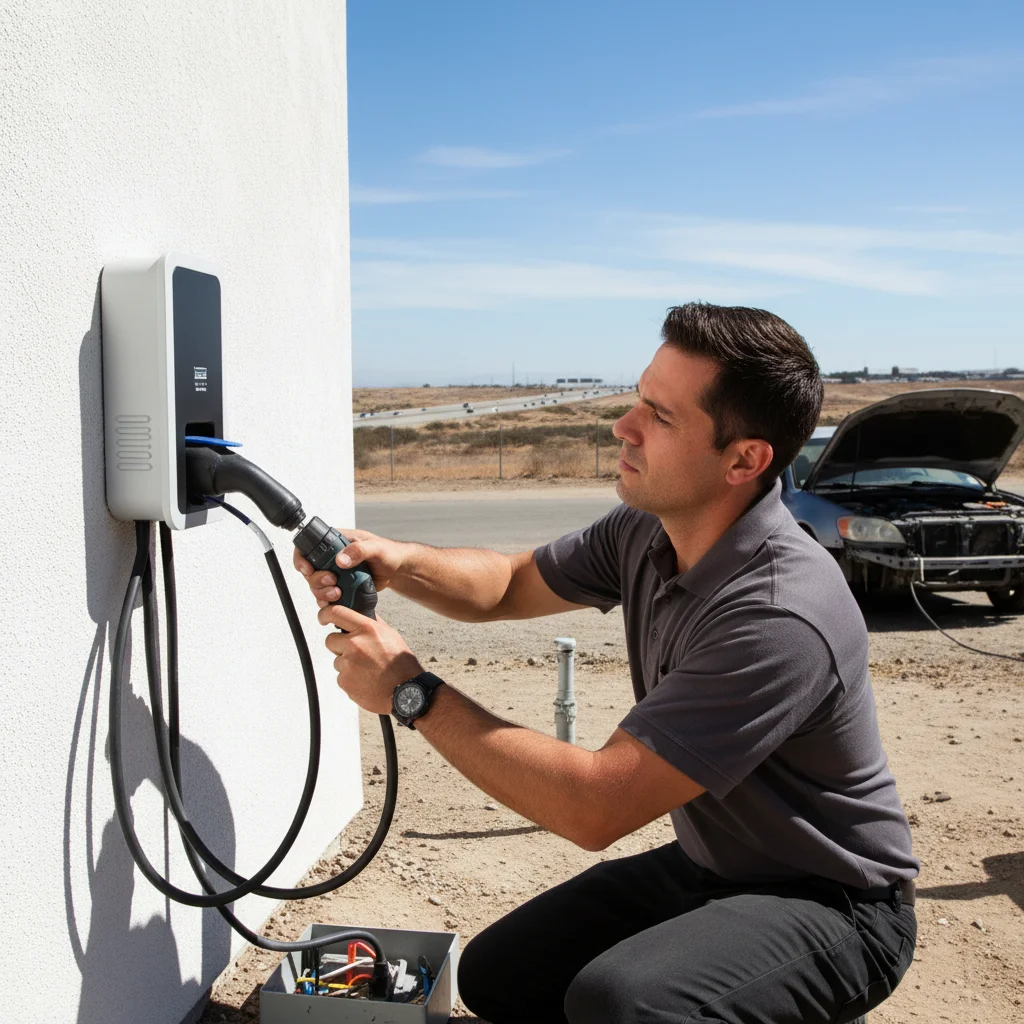
Factory roadside tows. Local operators can charge the car.
Tesla won’t charge you on the shoulder. Factory roadside tows to the nearest Supercharger or service center. Ford tows to the nearest charger, home, or dealer within 50 miles. Rivian and Hyundai or Kia owners should specifically request a tow. None of that puts energy into the pack where you already are.
The operators in this referral network bring a 240-volt Level 2 source. Teslas take a native NACS plug. CCS or J1772 adapters cover non-Tesla EVs. Typical charging time adds about 10 to 20 miles of range in 15 to 30 minutes. That’s plug time, never an arrival time. For most I-17 stalls, that extra range is what gets you moving again. You can reach Camp Verde or turn back toward Anthem. You can also continue to a public stall you already planned. Confirm live stall status in the car’s nav before you roll again.
If the car is fully dark, you may have a 12-volt failure. That’s not the same as an empty traction pack. Heat is hard on the small battery. Battery Council International work, via Battery University, found starter batteries last about 47 months in hot climates. That’s versus 59 months in cool ones. In an EV, the 12-volt runs the door handles and screens. It also runs the contactor that connects the main pack. A DC-DC converter only recharges it while the car is on or charging. Operators can jump or replace that 12-volt on site. Tell the matcher which problem you have.
More on the truck itself is in how a mobile EV charging truck actually helps you. The job type is out-of-charge recovery.
Give a real location, then ask about timing
Charge Pro PHX is a referral line. It holds no license, owns no equipment, and employs no technicians. It sets no prices and publishes no hours. The operator quotes you before starting and bills you directly.
When you call, give direction first: northbound or southbound I-17. Name the last exit you passed. Anthem Way, Daisy Mountain Drive, New River Road, and the Rock Springs stretch are all usable. A mile marker is better. Nav coordinates work. Give year, make, model, and color. A Model Y and an Ioniq 5 don’t use the same inlet. Say whether you’re at a low percent with the car still on. Say if you’re fully shut down. Say whether you’re fully on the shoulder or crowding a lane. Say if DPS or ADOT is already on scene.
Anthem, New River, and Black Canyon City are long-haul from the Valley. Ask about timing. Don’t wait on a guessed clock. Get the quote, then choose a charge or a tow.
Mobile EV charging is the on-site Level 2 stop. Tesla owners comparing factory help with a local charge have a separate guide. See what to do if your Tesla runs out of battery on Valley roads.
If you can still move, take the next exit you know you’ll make. Sit in a lot, not in a travel lane. A few miles of predicted range is not a few miles of climb. Don’t bet the rest of the grade on hope.
When you need a match, call (602) 932-0920. Charge Pro PHX connects you with a local operator. The operator quotes the job before any cable goes on.