The I-17 north of Anthem starts burning range before the hill looks steep. You can leave Daisy Mountain Drive with a number that still looks fine. Then the Black Canyon Freeway eats it faster than the nav predicted. That’s the stall this climb produces.
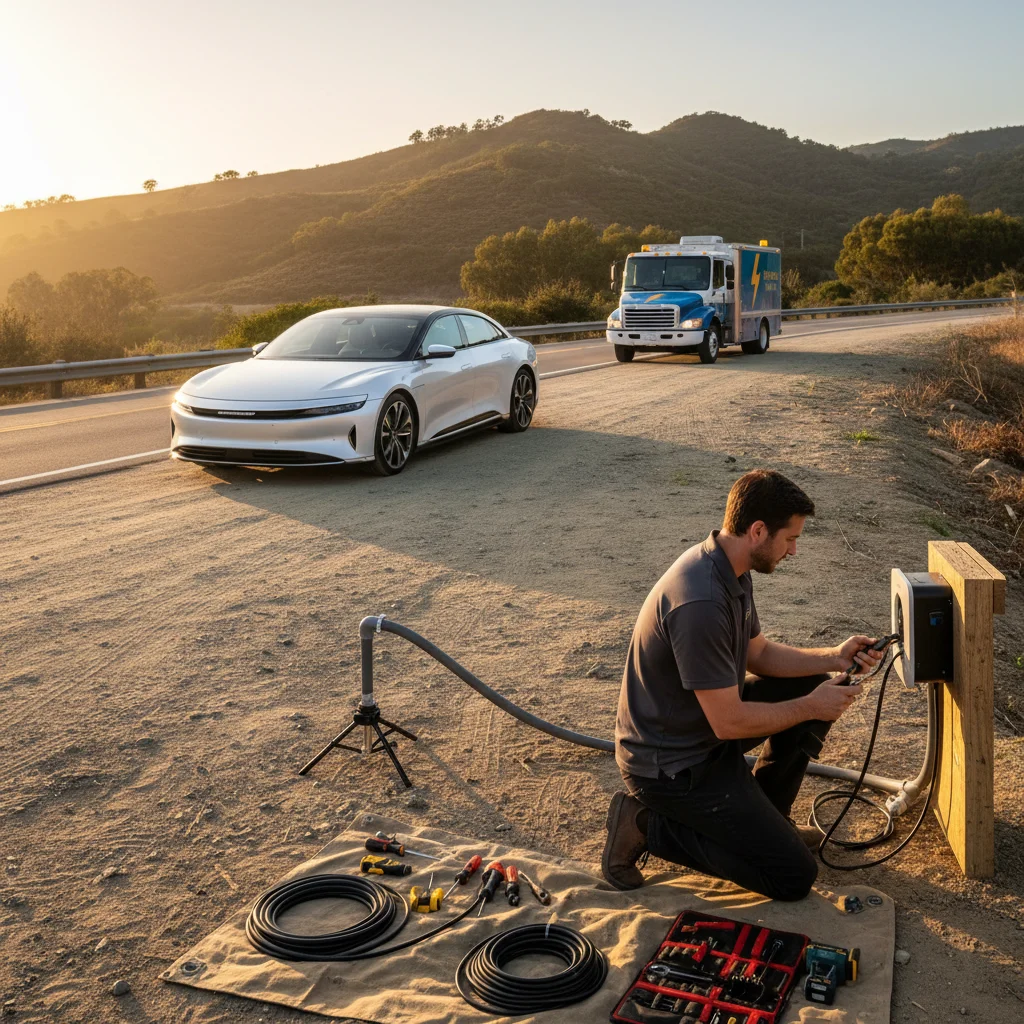
Anthem sits at the start of the long northbound grade
Anthem is a census-designated place, not a city with its own government. About 22,584 people live here across roughly 7.9 square miles. The ZIP is 85086. The community straddles I-17 about 30 miles north of downtown Phoenix.
You’re already at about 1,860 feet here. That’s well above the Valley floor near Sky Harbor, around 1,135 feet. From Anthem the freeway keeps climbing toward Sunset Point at about 3,410 feet. Cordes Junction sits around 3,800 feet after that. ADOT posts a 6% maximum grade on the northern I-17. The car’s trip planner sees miles. It doesn’t always see a grade held for a long stretch. Sunset Point sits near 3,410 feet. Anthem sits near 1,860. That rise is the bill the pack pays. A southbound return later in the day can look generous. The northbound leg is the one that strands people.
This is a master-planned community on both sides of the interstate. Anthem Country Club, Parkside, and the original townsite are the names locals use. New River is the next community north. Black Canyon City is farther up the same climb. For streets and the freeway tie-in, use the Anthem EV charging page.
Homes here are new. Only about 1.6% of housing was built before 1980. APS serves Anthem. Plenty of garages have Level 2 on the R-EV overnight plan. APS also publishes a Level 2 smart-charger rebate, APS Smart Charge, and Take Charge AZ. Confirm the program against your own address. Service territories in the Valley can split block by block. The weekday pattern is a full pack at breakfast. The failure is the run that keeps going north. A full pack at home in 85086 is normal. The R-EV window is built for that overnight fill. What it doesn’t do is rescue a car that left for Flagstaff and then ran AC across the grade. Local loops on Daisy Mountain Drive rarely empty a healthy pack. The I-17 north merge is where the math breaks.
Weekend traffic toward Flagstaff funnels through here. Anthem is the last large community many of those cars pass before the grade steepens. Daisy Mountain Drive and the I-17 ramps take that mix of residents and through traffic. A resident running an errand and a northbound traveler can stall in the same merge.
The climb costs more than a flat Valley mile
Uphill I-17 isn’t the same work as Loop 101. Forum drivers on this grade have reported about 481 Wh/mi going up. Coming down they’ve reported about 293 Wh/mi. That’s roughly 40% more energy on the climb. The display often treats the next stretch like the last one. It isn’t.
Heat stacks on top of grade. Phoenix averages about 111 days a year at or above 100F. AAA’s 2026 study found about a 10% efficiency drop at 95F versus 75F. Range loss in that study was about 8.5%. Recurrent looked at 345,622 trips from 300 Phoenix-area EVs. It reported 20 to 30% range loss above about 95F. Loss was near 31% at 100F. Cabin cooling is a real draw on a summer northbound run.
Skip a top-up in Phoenix and you can still roll into Anthem looking legal. The grade toward Flagstaff doesn’t use Valley math. This is the metro’s hardest single northbound range problem once you leave the floor. If you’re already on the shoulder, read out of charge on I-17 for the same corridor in more depth.
Daisy Mountain Drive, Anthem Way, and the I-17 shoulder
Most stops aren’t random. They’re the ramps, the freeway shoulder, and the two surface roads that feed them.
Daisy Mountain Drive moves Country Club and Parkside traffic toward I-17. Anthem Way does the same from the townsite side. A low pack in that stop-and-go can die in a turn lane. It doesn’t have to reach the interstate first.
Northbound I-17 is the merge you can’t casually undo. The next exit is the next exit. Get the car as far right as it will go. Leave room for traffic to pass. ARS 28-871 says you shouldn’t sit in the traveled lanes when you can get off them. That applies outside a business or residence district. A vehicle that can’t move is exempt. You still need to be visible about 200 feet each way.
If the pack is dying and you’re still in town, pull into a lot. A side street works too. The freeway shoulder is legal when you’re disabled. It’s also faster traffic.
Drivers who push past Anthem meet a steeper road. EV roadside assistance in New River covers the next community. Black Canyon City is farther up the same grade.
Empty pack or a 12-volt that won’t wake the car
Two failures look identical from the curb. One is a traction battery that hit zero on the climb. The other is a 12-volt that won’t close the contactors. That second car is a brick even with miles left in the pack.
Heat is hard on the small battery. Battery Council International work, via Battery University, found starter batteries last about 47 months in hot climates. In cool climates the same work found about 59 months. AAA calls heat the top cause of battery failure. In an EV the 12-volt runs handles, screens, and the contactor for the main pack. The DC-DC converter only recharges it while the car is on or charging. Sentry Mode and cabin overheat features keep drawing while you park. Most EVs still need that small 12-volt, or a lithium pack that does the same job. Features that stay on in a hot lot drain it. Anthem’s elevation doesn’t cancel Valley heat. A car that sat in a Country Club driveway can fail to wake even though the traction battery is fine. That’s a jump or a replacement on site, not a tow to a Supercharger.
Dark screens and handles that won’t present point at the 12-volt. An awake car at 0% on I-17 needs energy in the pack. The operator on scene sorts that. You shouldn’t have to guess from the shoulder.
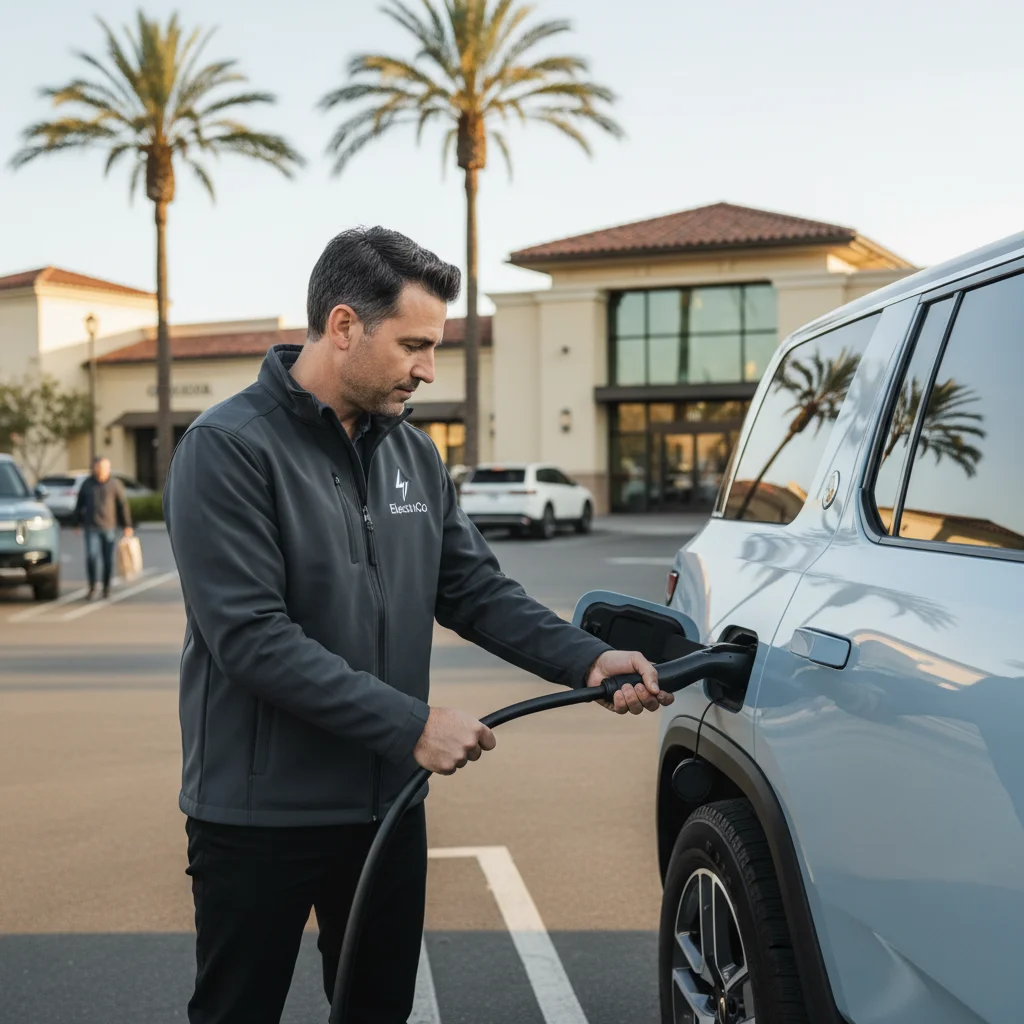
What a mobile operator can do on the car
Charge Pro PHX is a referral line. It matches stranded drivers with independent local operators. It doesn’t own trucks. It doesn’t employ technicians. It doesn’t set prices or promise an arrival time. The operator quotes you before work starts and bills you directly.
Those operators bring a 240-volt Level 2 source to the car. Teslas use a native NACS plug. CCS and J1772 adapters cover the other common brands. Typical charging time, never travel time, adds about 10 to 20 miles in 15 to 30 minutes. That’s usually enough to leave the Black Canyon Freeway and finish charging on your own plan.
They can also jump or replace a dead 12-volt on site. That’s the call when the car is silent and the main pack isn’t empty. How a mobile EV charging truck works explains the gear. Mobile EV charging is the service when the pack is empty. EV roadside assistance covers the wider on-site mix, including 12-volt work.
I-17 North Corridor dispatch is long-haul by nature. Ask the operator about timing when they quote. This page won’t invent a window.
People looking up ev roadside assistance Anthem are usually already stopped. The useful split is charge versus 12-volt, not a generic tow.
Charge on the shoulder, or wait for a flatbed
A dead EV on this freeway often gets a tow offer first. Factory programs lean that way. Tesla’s published roadside policy doesn’t charge you on site. It tows to a Supercharger or a service center, and that tow is billed. Ford’s published pattern is a tow to the nearest charger, home, or dealer. That help is limited to 50 miles. None of that puts energy into the car where it sits.
Most modern EVs shouldn’t roll on their own driven wheels. You want a flatbed if you’re towing. Waiting for that truck on a live I-17 shoulder takes longer. A Level 2 session on the plug is the shorter path.
Arizona DPS Roadside Motorist Assistance will change a tire. It will bring gasoline or diesel. It will jump a conventional battery. Its published materials don’t mention charging an EV. ADOT’s Incident Response Unit works Phoenix-area freeways weekdays from 5am to 8pm. It also doesn’t advertise an EV charge. Those crews can still help with a tire or debris. They’re not a mobile charger.
If the car is damaged or blocking, you may not have a choice. ARS 28-872 lets officers order a disabled or obstructing vehicle removed. Owners pay reasonable tow and storage before release. If the car is intact and you only need miles, 240 volts at the plug is the cleaner path.
Move Over still applies while anyone works the shoulder. ARS 28-775 says approaching drivers must move over a lane when they can, or slow down. That protects you and the operator.
A full garage in 85086 doesn’t save a northbound run
Most Anthem garages can charge overnight. APS markets the R-EV plan as EV Overnight Charging, 11pm to 5am on weekdays. That home setup is why local errands rarely strand people. The strand is the Flagstaff run or a weekend north. It’s also the driver who treated Anthem like the Valley floor.
You can’t fix a climb mistake from a garage you already left. You fix it with range added where the car stopped. Then you finish charging once you’re off the grade.
Arizona has no tolls on I-17. ADOT confirms the state has no toll roads. Neither DPS nor ADOT advertises bringing an EV a charge. The difference between a full garage in Parkside and an empty car on the Black Canyon Freeway is the job independent operators take.
If you’re already stuck in Anthem
Get the car as far off the traveled lanes as you can. Hazards on. Stay out of the travel lane. Stay with the car if it’s safe.
Tell the operator you’re in Anthem. Say I-17 or the named local road. Say northbound or southbound. Say whether the car is silent or just at zero percent. That split decides a charge versus 12-volt work.
Charge Pro PHX matches you with a local operator. Call (602) 932-0920 when you want that match. The operator confirms the price with you before they start.