Your EV is out of charge on the I-10 in Phoenix heat, and you are on the shoulder. Phoenix summer heat, haboobs, and a long stretch of black asphalt are what you are dealing with. Here is the safe sequence, the state law, and how an operator gets to you on the freeway.
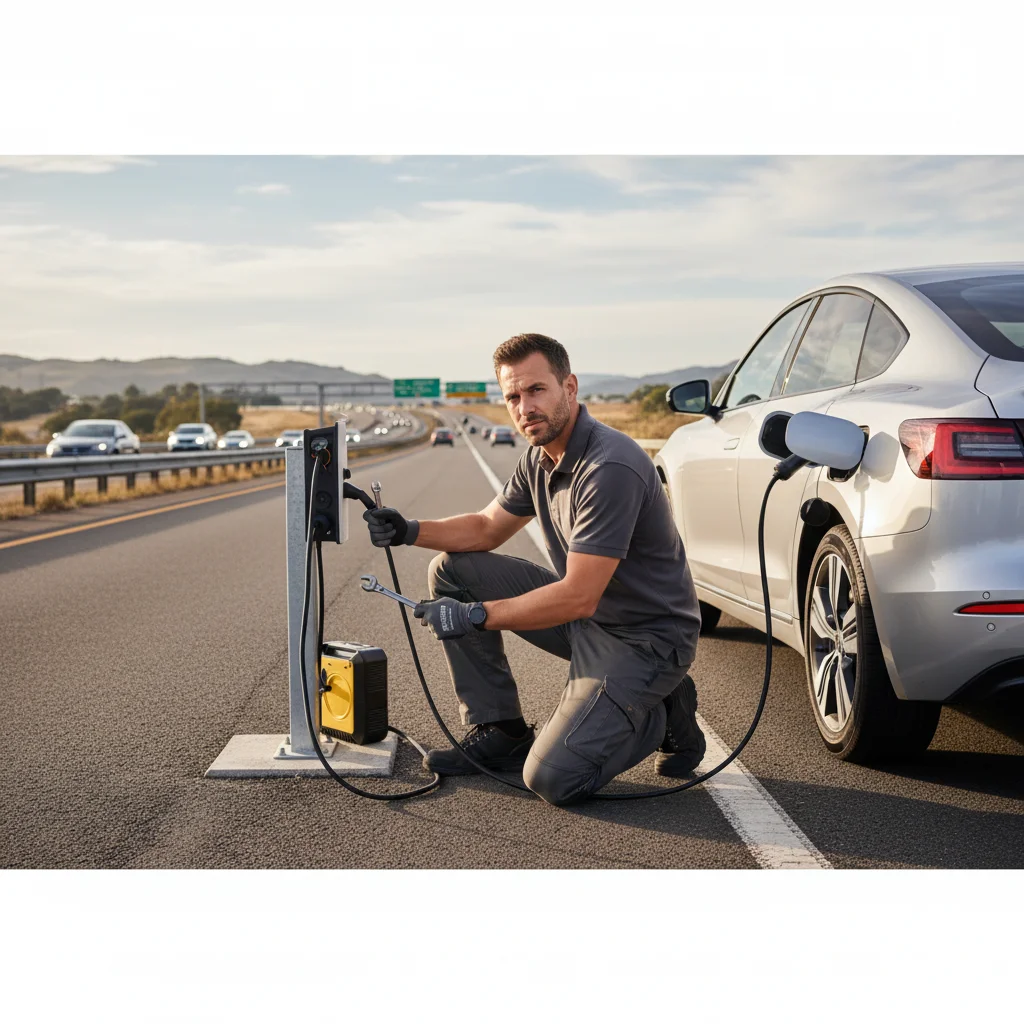
What to do first on the shoulder
Get the car as far off the travel lane as you can. Keep hazards on. ARS 28-871 says you may not stop or park on the traveled part of a highway outside a business or residence district if it is practical to get off it. A vehicle disabled so badly it cannot be moved is exempt. When stopped, leave room for other traffic to pass and be visible 200 feet in each direction.
Stay in the car if that is safer. Freeway shoulders are dangerous places, especially in summer heat where the asphalt is 150 degrees. ARS 28-775 is the Move Over law. Approaching a stopped vehicle with flashing or warning lights, drivers must move over a lane if they safely can or slow down. Fines run $275, then $500, then $1,000 for repeats within five years.
If you can safely exit and pull into a side street or shopping center, do that. Off-freeway stops are easier for the operator and safer for you.
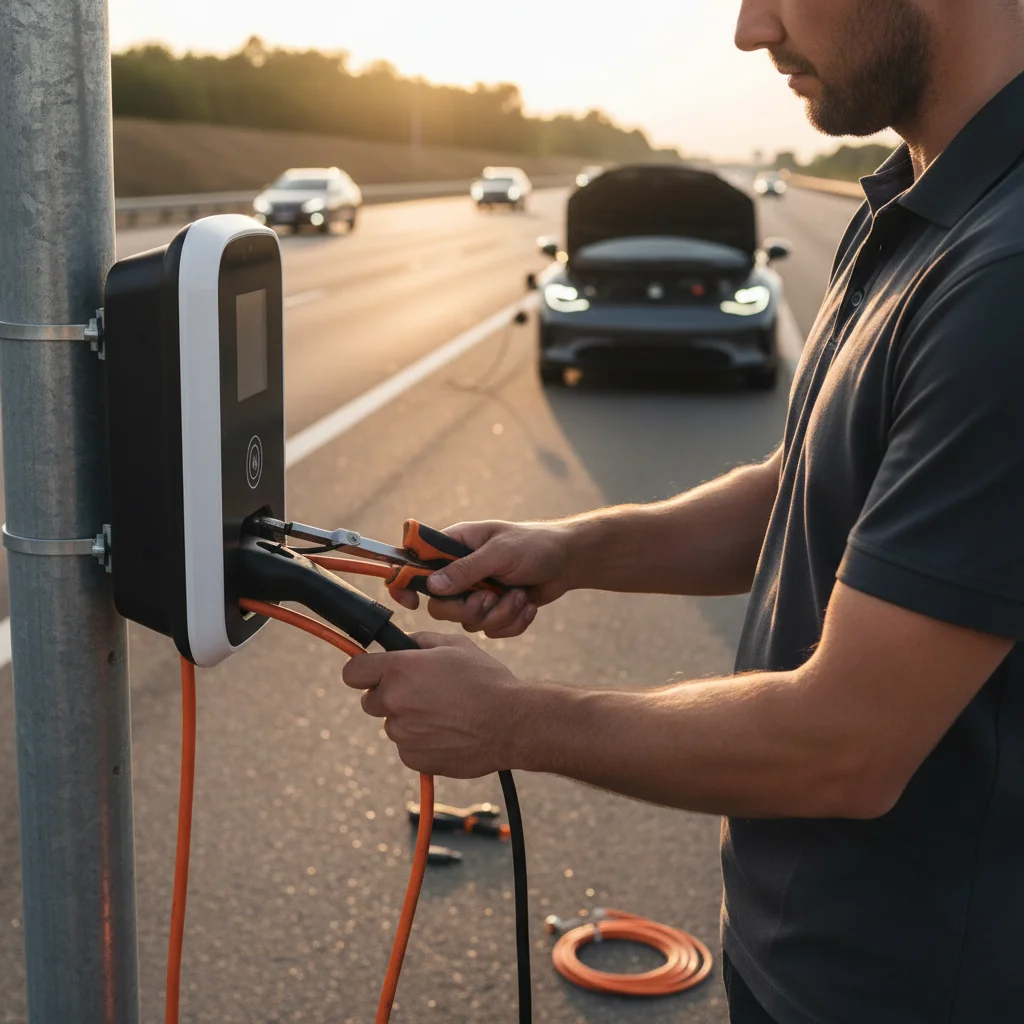
What to do during a haboob
Phoenix monsoon season runs June 15 to September 30 and brings haboobs (dust walls that drop visibility to near zero). If a haboob hits while you are on the shoulder, ADOT’s guidance is “Pull Aside, Stay Alive”: pull off the road as far as you can, turn off the lights, set the parking brake, and take your foot off the brake pedal so your lights are not the only thing visible.
Do not stop in a travel lane. Stop on the shoulder as far right as possible, turn off the lights, and wait for visibility to return. Keep your seatbelt on.
ARS 28-910 is the “Stupid Motorist Law.” Drive around a barricade into a flooded area and you can be billed up to $2,000 for the emergency response. Do not drive into standing water on or near the freeway.
What an operator does at the car
A mobile operator brings a portable 240-volt Level 2 source to where the car sits, plugs in with the right connector, and adds real miles while you wait. A typical session adds about 10 to 20 miles of range in 15 to 30 minutes of charging. That is enough to reach the next charger you already meant to use.
The truck carries a native NACS plug for Teslas and CCS or J1772 adapters for other major brands. The session is real Level 2 charging at the car, not a fast-charge detour.
For the broader picture, see roadside Level 2 charging for stranded drivers.
How the matching works on the I-10
Charge Pro PHX is the referral line that matches you with an independent local operator. We do not own trucks, employ technicians, or set prices. The operator quotes before any work starts and bills you directly.
The I-10 runs through the heart of the Valley, so the dispatch is short and the match is usually quick. The match happens by location and connector. You tell us the nearest cross street or exit number, and we connect you with an operator who can reach you.
For the matching model in detail, see mobile EV charging near me in the Phoenix area.
What DPS and ADOT will not do
Arizona DPS Roadside Motorist Assistance and ADOT’s Incident Response Unit are the two free motorist-help programs in the Valley. They change tires, bring gasoline or diesel, jump conventional batteries, and clear debris. Neither program advertises bringing an EV a charge. That gap is exactly what an independent mobile operator fills.
For the wider rundown on what DPS will and won’t do for a stranded EV, see Tesla flat tire coverage and the Arizona motorist help gap (the principles apply to every EV, not just Teslas).
When a tow beats a charge on the I-10
A tow is the right move when the traction battery has a physical fault, when the car will not wake after a 12-volt jump, when the charge port is damaged, or when the operator cannot safely run a generator on the freeway shoulder.
For the wider principle, see mobile EV charging vs a tow.
What to do if you are stuck on the I-10 now
If your EV is dead on the I-10 right now, get the car as far off the travel lane as you can and keep hazards on. Have the nearest exit number or cross street ready.
Call (602) 932-0920. The operator quotes before any work starts and bills you directly.
Frequently asked questions
What should I do if my EV runs out of charge on the I-10 in Phoenix heat?
Get the car as far off the travel lane as you can. Keep hazards on. Stay in the car if that is safer. Call a mobile operator who can reach you on the freeway shoulder.
Will Arizona DPS bring my EV a charge on the I-10?
No. DPS Roadside Motorist Assistance and ADOT’s Incident Response Unit change tires, bring gasoline or diesel, jump conventional batteries, and clear debris. Neither program advertises bringing an EV a charge.
What happens during a haboob while I am on the shoulder?
ADOT’s guidance is “Pull Aside, Stay Alive”: pull off the road as far as you can, turn off the lights, set the parking brake, and take your foot off the brake pedal so your lights are not the only thing visible.
Does Charge Pro PHX cover the I-10 in Phoenix?
Yes. We match you with an operator who serves the corridor. The I-10 runs through the heart of the Valley, so dispatch is short and the match is usually quick.