The handles won’t pop and the screen stays black. In Phoenix heat, that’s usually the 12-volt, not the pack under the floor. Sentry Mode and Cabin Overheat Protection keep drawing power while the car sits. On a Model 3 or Model Y, you don’t start under the frunk. The jump point sits behind the tow-hook cover on the front bumper.
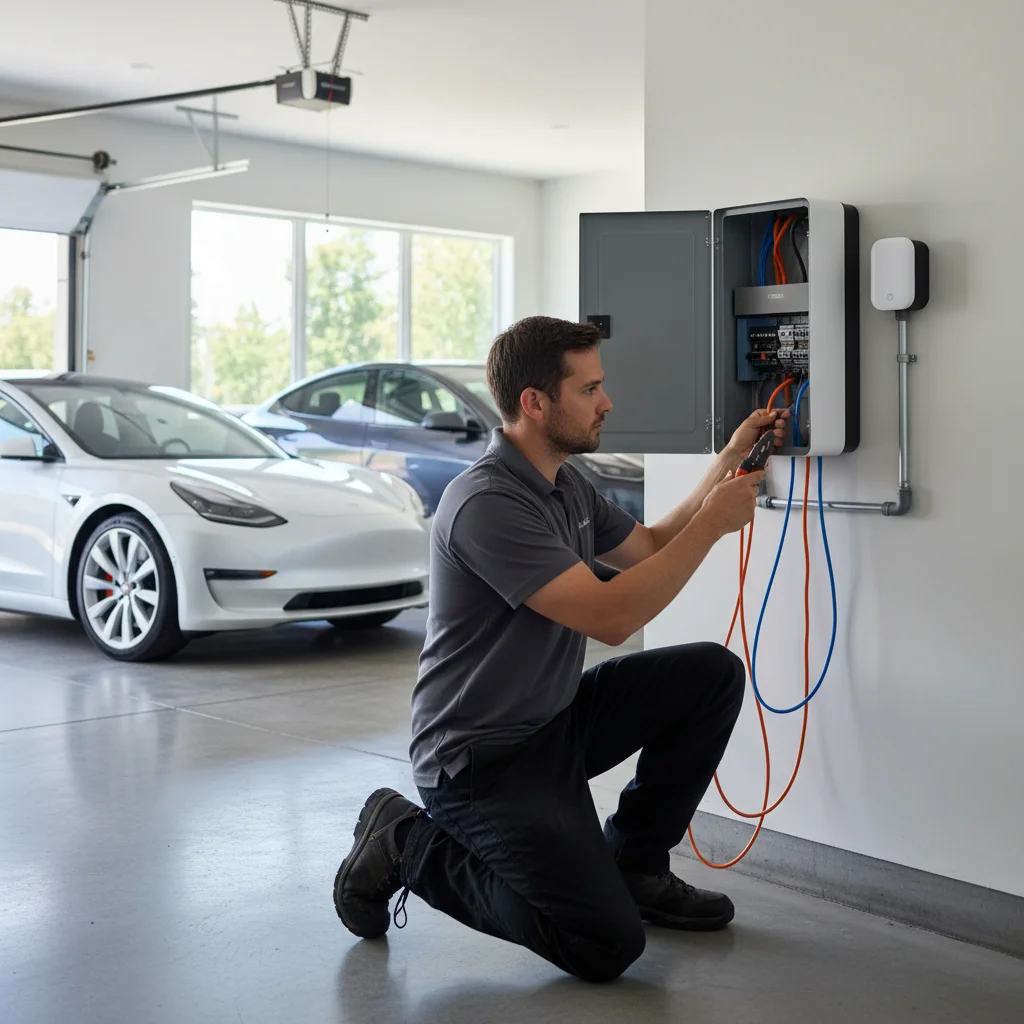
Phoenix heat is what drains that small battery
Phoenix averages about 111 days a year at or above 100F. About 21 of those days hit 110F or more. July highs average near 107F. August sits near 105F. Overnight summer lows still land in the mid-80s. The battery never gets a real cool-down.
Heat is the main killer of small batteries. Battery Council International work, cited by Battery University, tracked starter-battery life by climate. Those batteries last about 47 months in hot climates. They last about 59 months in cool ones. A battery that lasts five years elsewhere can fail in two or three here. AAA calls heat the number-one cause of battery failure.
Tesla features add a parked load on top of that. Sentry Mode runs the cameras. Cabin Overheat Protection tries to keep the cabin livable. Both draw power while the car is off. The DC-DC converter recharges the 12-volt from the traction pack. It only runs when the car is on or charging.
Park a Model Y at Sky Harbor for a week. Leave it in the Terminal 3 or Terminal 4 garage. You can walk back to a car that won’t wake. The big pack can still be full.
That’s the trap. The high-voltage pack moves the wheels. The 12-volt runs the computers, handles, and lights. It also runs the contactor that connects the big pack. Kill the 12-volt and the car acts dead. You can’t jump the traction pack with a consumer tool. You’re only waking the small battery.
Confirm it’s the 12-volt before you clip on
A black screen and a key card that does nothing usually mean the 12-volt. So does an app that won’t unlock. Dim exterior lights point the same way. A flickering cabin lamp does too. If the car still locks and unlocks but warns about low range, that’s the high-voltage pack. Leave the jump pack in the trunk.
Our guide to a dead Tesla 12-volt in Phoenix lays out the signs in more detail. Slow boots and random warning lights are early tells. So is a car that wakes itself at night. The battery was already on its way out. A jump may get you home. It’s not a repair. Tesla 12-volt failures in desert heat show up across Phoenix, Mesa, Tempe, and Scottsdale for the same reason. Parked load plus heat.
The bumper tow hook is the Model 3 and Y path
Tesla put dedicated jump posts behind a small rectangular cover on the front bumper. Look at the driver’s side, low, near the corner. That cover hides the tow-eye opening. Pop it and you can jump without opening the frunk. When the 12-volt is dead, the frunk latch motor has no power. The bumper posts exist for that exact failure.
Work the cover from the notch. A plastic trim tool is kinder than a metal screwdriver. Inside you’ll see a red positive post. A chassis ground sits close by. Those two points are how to jump start a Tesla when the hood won’t lift.
The 12-volt battery still lives under the frunk floor. If someone already has the frunk open, you can clip to the battery there. Positive wears a red cover. Negative is black. Use the bumper posts first when you’re locked out. Don’t pry the frunk against a dead latch.
Learn that cover before you need it. Sit in a Chandler office lot with Sentry on, and the wake-up battery fails first. Tempe stalls and Scottsdale garages see the same pattern.
Model S and Model X need the frunk first
Older Model S cars, before the 2021 refresh, and Model X keep the 12-volt under the frunk mat. Lift the floor. Pull the foam. The terminals are labeled.
On refreshed Model S and Model X from 2021 on, Tesla moved the jump posts. Look for a red positive post behind a small cover on the driver’s side of the frunk, near the firewall. The ground is on the same side.
If that frunk won’t open, you have to release it by hand before you can jump. Pull loops sit in the front wheel wells, behind flaps in the liner. On many Model S cars the loop is yellow or orange on the driver’s side. You may need two pulls. One frees the primary latch. The next frees the secondary. On Model X the loop is often orange, a short way behind the front edge of the liner. Pull firmly. The lid should rise a little.
Tesla has moved those loops across model years. If what you see doesn’t match, open the owner’s manual on your phone. Don’t yank a cable that feels seized. A snapped release is a tow, not a parking-lot fix.
How to jump start a Tesla with a portable pack
Use a portable lithium jump pack. You don’t need a running gas car next to yours. You also shouldn’t use another Tesla as a donor. Tesla advises against that. You can damage the donor car’s electronics. We laid out why a Tesla shouldn’t jump another car if you want the longer reason.
Have the pack, clean gloves, and your key card.
- Set the pack by the bumper and confirm it has charge.
- Pop the tow-hook cover on a Model 3 or Y. On S and X, open the frunk first if you can.
- Clip red to the red positive post. Seat it so it doesn’t spark.
- Clip black to an unpainted chassis ground, not a painted bolt.
- Turn the pack on if it has a switch. Give the computers a short wait to see voltage.
- Try the key card or the door handle. The screen should start to come up.
- When the car is awake, pull black first, then red.
- Plug in or drive so the DC-DC converter can recharge the 12-volt.
Don’t leave the clamps on and walk into a store. Once it wakes, disconnect. Then get it charging.
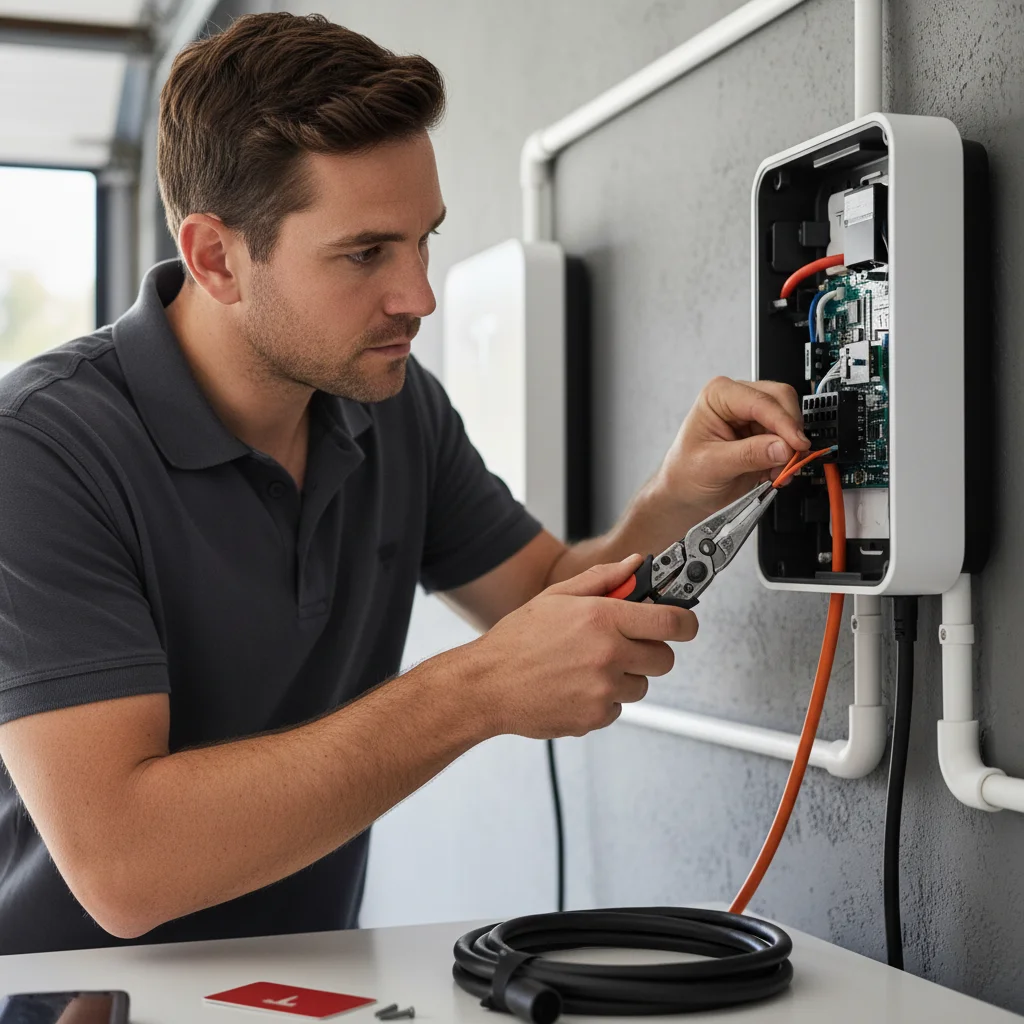
Waking the car is only half the job
A jump doesn’t fill a Tesla 12-volt the way a long drive fills a gas car’s battery. The DC-DC converter pulls from the high-voltage pack to recharge the small one. That only happens while the car is on or plugged in. Wake it, then shut it down in the heat. You can strand yourself again in the same lot.
If you’re at home, plug into your wall unit. APS markets overnight EV charging on its R-EV plan. SRP still has an Electric Vehicle Price Plan for customers who enrolled before it closed to new sign-ups. Confirm which plan your address is on. The Valley splits APS and SRP block by block. The point is simple. Get the car on a charger so the converter can work.
If you’re in a Sky Harbor garage, use Level 2 charging if a stall is open. Stalls are in the Terminal 3 and Terminal 4 garages and at the 24th St. station. Then drive out.
The car dying again within minutes isn’t a loose clamp. That’s a 12-volt that can’t hold a charge. Stop jumping it. Get it tested and replaced.
A Valley shoulder is the wrong classroom
A driveway or a quiet lot is where DIY belongs. The right lane of I-10 isn’t. Neither is the Stack, Loop 101, or US-60 through Mesa.
Arizona law is plain. Under ARS 28-871, you shouldn’t sit on the traveled part of a highway if you can get off it. A vehicle disabled so badly it can’t move is exempt. You still need to leave room for traffic. Stay visible 200 feet each way. ARS 28-775, the Move Over law, tells other drivers to change lanes or slow. That rule is for the people passing you. It doesn’t make the shoulder a workshop.
Arizona DPS Roadside Motorist Assistance will change a tire, bring gasoline or diesel, and jump-start a dead battery. Its published materials don’t mention EV charging or an empty traction pack. ADOT’s Incident Response Unit works Phoenix-area freeways weekdays from 5am to 8pm. It helps stranded motorists. It also doesn’t advertise bringing an EV a charge. A 12-volt jump is closer to what those programs already do for gas cars. Filling the traction pack isn’t.
If you’re locked out entirely, the bumper posts still help on a 3 or Y. For the rest of that problem, read Tesla dead and locked out. Jumping an EV in desert heat covers the same 12-volt idea on other brands. The bumper-hook path is Tesla-specific.
When to stop and call a local operator
Put the pack down if any of this is true.
The bumper cover is smashed or blocked. You can’t reach the posts. The frunk loops won’t release on an S or X. You jumped it and it died again in the lot. You’re on a freeway, in a structure, or anywhere you can’t plug in after it wakes. You’re not sure which post is which. A wrong clip on a Tesla can damage the body computers.
Charge Pro PHX is a referral line. We match stranded drivers with independent mobile operators in the Phoenix area. The operators we connect you with jump or replace a dead 12-volt on site. They also bring a 240-volt Level 2 source to the car when the pack itself is empty. They quote you before they start and bill you directly. We don’t own the trucks. We don’t do the work.
The Tesla 12-volt jump service is the right request when the small battery is the problem. Operators in the network handle Tesla and every major EV brand.
Call (602) 932-0920 when you’re stuck and you need a local operator, not another guess at the bumper.