Your Tesla is sitting on the I-10 shoulder with an empty pack. You open the app and hunt for Tesla roadside. Factory help is free only when a covered warranty defect left you stuck. An empty pack isn’t treated as a defect. Tesla’s program will arrange a tow to a Supercharger. It won’t put energy in the battery where you sit.
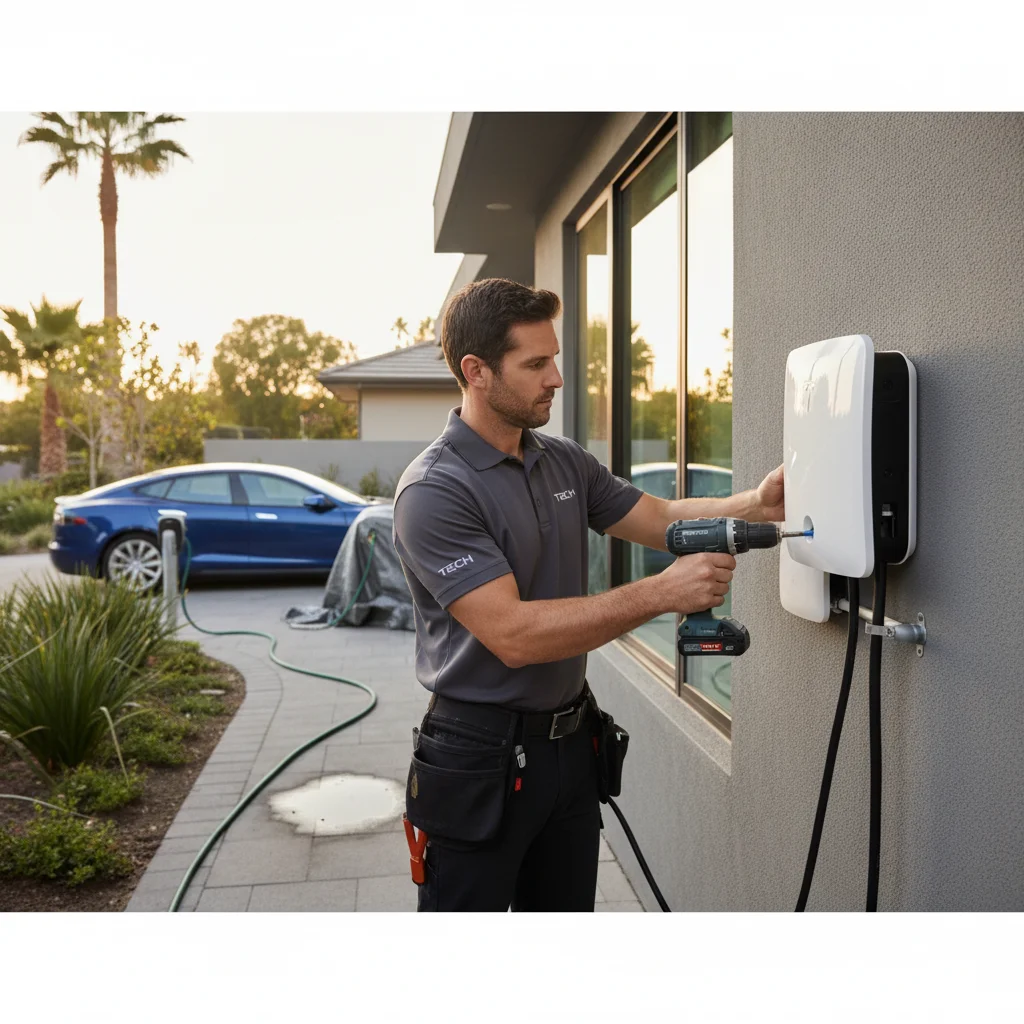
Free only means a covered defect, not a dead commute
Tesla includes roadside help with the car you already bought. There’s no separate membership to join or renew. Coverage rides with the New Vehicle Limited Warranty. On most models that window is four years or 50,000 miles, whichever comes first. Confirm the current terms on Tesla’s support pages before you assume coverage.
A genuine mechanical defect can bring a mobile tech at no charge. An electrical fault that leaves the car undriveable can too. Outside that definition, Tesla bills you for the visit. An empty pack on Loop 101 is a driver call, not a factory fault. A flat tire on the Superstition Freeway is billed the same way. So is a lockout in a Sky Harbor garage after a trip.
That split is what most Valley owners miss on the first call. They hear that roadside is included and expect a charge at the curb. The included part is warranty rescue for a covered defect. It isn’t a tank of electrons delivered to the car. See what Tesla roadside covers when you stall in heat for the Valley version.
What Tesla will handle without billing you
A covered defect can bring a Tesla mobile tech or a tow. A 12-volt battery that won’t wake the car can fall in that bucket. So can a drive-unit fault that leaves you undriveable.
A dead 12-volt is common in this climate. Phoenix averages about 111 days a year at or above 100F. About 21 of those days hit 110F or more. Heat is hard on the small battery that runs the car’s computers. It powers the handles, the screens, and the contactor for the main pack. A full traction battery doesn’t help if the 12-volt is gone. Sentry Mode and Cabin Overheat Protection keep drawing power while you park. That happens at Chase Field and in a Tempe garage.
In an EV, a dead 12-volt strands you even with range on the display. If it’s a covered 12-volt failure, factory help may jump or replace it. If the car still won’t move, they tow it. That’s different from an empty high-voltage pack on the freeway. Don’t mix those two failures up when you place the call. Our note on Tesla 12-volt failure in desert heat walks through the signs.
What they bill even while the warranty is live
Tesla’s roadside terms are blunt on billed work. Some calls cost you whether the car is new or not.
An empty pack is the call that surprises people on I-17 and I-10. Tesla treats an energy service as driver error. They won’t roll a charger to you on the way to Anthem. They won’t do it on SR-347 toward Maricopa in Pinal County either. A Chandler office lot gets the same answer. They tow toward a Supercharger or a service center, and that visit is billed. See When Tesla roadside assistance won’t charge you on site for that limit in writing.
Most Teslas don’t ship with a spare tire. A puncture, a loaner wheel, or a roadside change is a separate billed event. Your phone is dead and the key card is inside the car. Tesla can unlock the car, and that visit isn’t free. Collision damage isn’t treated as a warranty event. They can help arrange a tow after a crash. You or your insurer pay for that tow.
Off-roading, flood water, or charge-port damage from third-party gear sits outside coverage. Monsoon season here runs June 15 to September 30. Don’t drive around a barricade into standing water.
Arizona’s free freeway help won’t charge the pack either
People also assume the state will cover an empty Tesla. Arizona does run free motorist help across this metro. Two programs serve the Phoenix area, and neither advertises EV charging.
Arizona DPS Roadside Motorist Assistance changes tires and brings gasoline or diesel. It jump-starts 12-volt batteries, adds water, and calls tows. Its published materials name gasoline and diesel only. They don’t mention charging an EV or recovering an out-of-charge Tesla.
ADOT’s Incident Response Unit works Phoenix-area freeways on weekdays. The unit clears crashes and debris, changes tires, and helps stranded drivers. No EV-specific charging is advertised on ADOT’s pages.
So the state will help with a flat or a gas can on I-10. It still won’t put range in a Tesla. ARS 28-871 says get off the traveled highway when you can. A disabled car that can’t move is exempt. Leave room for other traffic, and stay visible both ways.
After the basic warranty, almost every call is billed
Once you pass four years or 50,000 miles, the no-charge window for ordinary breakdowns closes. From then on Tesla treats roadside as pay-per-use. There’s no annual roadside-only plan the way a club membership works. You call, they dispatch, and you pay for the visit.
The Battery and Drive Unit warranty lasts eight years. Mileage caps on that coverage vary by model. A clear pack or drive-unit fault in that window can still be a covered repair. Whether Tesla also covers the roadside dispatch in that period isn’t always spelled out. Confirm it with them before you count on a free tow.
Tesla roadside in 2026: included help vs billed tows maps the two columns.
Heat, grade, and why Valley owners hit empty more often
This Valley metro isn’t a mild coastal commute. July highs across Phoenix average near 107F most years. August highs sit near 105F through the heart of summer. AAA’s 2026 study found about a 10% efficiency drop at 95F versus 75F.
Northbound I-17 adds grade on top of that heat. ADOT posts a 6% maximum grade toward Anthem and Black Canyon City. The in-car nav often underestimates that uphill burn. Home charging on APS or SRP doesn’t help once you’re already on the road. Those overnight plans help in Gilbert, Chandler, and Mesa driveways. They don’t rescue a stalled car on the Price Loop or the Agua Fria. A week in a Sky Harbor garage can kill the 12-volt with range still showing. The Phoenix area charging hub is the map of cities we serve.
What a local operator does that factory help won’t
Charge Pro PHX is a referral line, not a shop. We match stranded Tesla drivers with independent local mobile rescue operators. We don’t own trucks, and we don’t set prices. We don’t employ technicians or promise when someone will arrive. The operator quotes you before any work starts and bills you directly.
What those operators can do is the thing Tesla’s program skips. They bring a 240-volt Level 2 source to the car. Tesla owners get a native NACS plug on that truck. That charge window adds about 10 to 20 miles in 15 to 30 minutes. That’s charging time, not a promise of when someone arrives. It’s often enough to reach a Supercharger or to get home. See Tesla roadside rescue for the local path. Compare that with need a charge on the spot, or a Tesla tow.
They can also jump or replace a dead 12-volt on site. That matters when the car won’t unlock in a Tempe lot or a Scottsdale garage. Factory help still makes sense for a covered drive-unit failure. You want Tesla’s own path for a warranty defect. You want a local charge when the pack is empty.
How to choose the call from the shoulder
Start with what actually failed, not with who you wish would show up. Dark screens and dead handles usually mean the 12-volt failed first. A jump may restore the car from there. If the car wakes, shows zero range, and won’t move, that’s an empty pack. Tesla will want to tow that empty pack. A mobile Level 2 visit puts miles in where you sit.
If you can roll, get off the travel lane and hit the hazards. Stay with the car if the shoulder is safe. Don’t walk a freeway shoulder when a haboob drops visibility to near zero.
Then make the call on that basis. A warranty defect still belongs on Tesla’s channel. An empty pack or a curb 12-volt belongs with a local operator. The operators we connect you with handle Tesla and every major EV brand. They work Phoenix, Mesa, Gilbert, the West Valley, and the I-17 and Pinal commutes.
If you need energy in the pack, not a tow
If your Tesla is empty anywhere in the Phoenix area, we can connect you. A dead 12-volt lockout is the same call. The operator quotes before starting and bills you directly. Call (602) 932-0920 and we’ll match you with a local operator.