Town of Paradise Valley EV drivers charge at home on large-lot streets. Summer heat can cut range 20 to 30 percent. A car can die on Lincoln Drive or Tatum Boulevard. The same stall happens in a resort valet row. An independent operator then comes to the bumper. This town sits between Phoenix and Scottsdale under Camelback and Mummy Mountain. It’s a separate incorporated town, not the Phoenix urban village with the same name.
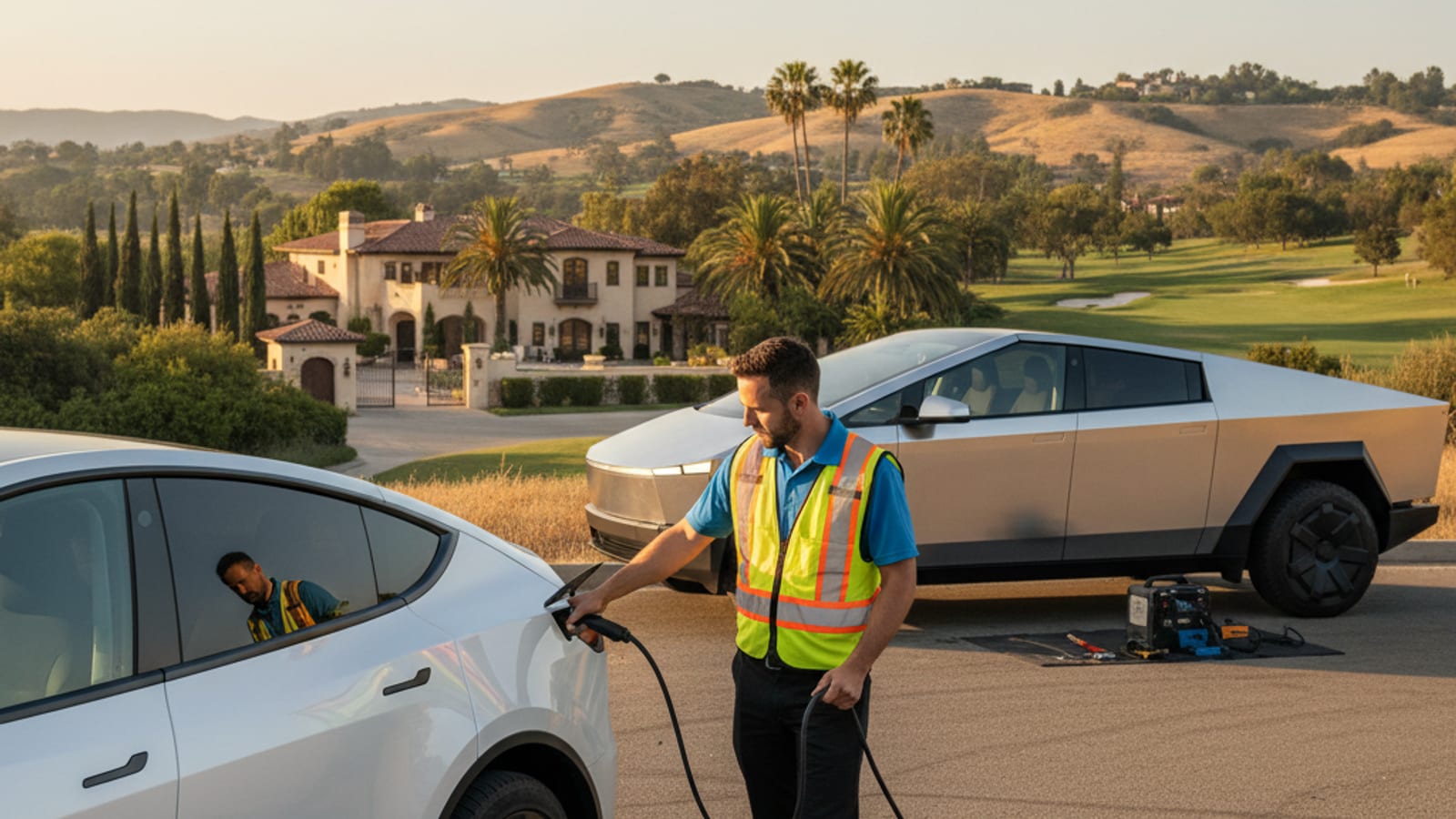
The incorporated town covers about 15.4 square miles. About 12,611 people live here, per ACS 2020-2024. ZIP codes 85253 and 85250 cover most addresses. Lincoln Drive, Tatum Boulevard, and McDonald Drive carry through traffic. Clearwater Hills, Cheney Estates, and Casas de Camelback sit behind gates. Camelback Country Club and Mummy Mountain streets wind with the slope. This EV charging guide for Paradise Valley town drivers starts there.
Home 240-volt charging is how most days work on these lots. Heat still cuts range on every summer errand. A 12-volt can die while the traction pack still reads full. Charge Pro PHX only matches you with independent operators in the Phoenix area. It doesn’t roll a truck, set a price, or do the work.
The town under Camelback is its own place
Search results mix two Paradise Valleys all the time. One is a Phoenix urban village. The other is this incorporated town. This page is only the incorporated town. Police and street rules follow the town limits. The winding grades under the mountain belong here too.
You’re in the Northeast Valley, pressed against Scottsdale. Fountain Hills, Cave Creek, and Carefree sit farther out on desert roads. Residents already know that map, and resort guests often don’t. A valet ticket isn’t a charging plan. A week at a resort in July is a 12-volt test. The traction pack can still read healthy. The small battery can already be cooked.
Paradise Valley runs full Valley heat. There’s no milder pocket under the mountain. Phoenix averages about 111 days a year at or above 100F. That’s from NOAA 1991-2020 normals via NWS Phoenix. About 21 days reach 110F or more. July highs average near 107F, and August sits near 105F. Overnight summer lows linger in the mid-80s. Annual rainfall is about 7.2 inches. Official monsoon season runs June 15 to September 30. Haboobs can drop visibility to near zero. Flash floods follow the same storms.
This town posts the metro’s highest median household income. EV ownership on these lots runs high. Arizona doesn’t publish a town-by-town EV registration count. Plan from the streets and the heat, not from a missing DMV table.
Range on Lincoln, Tatum, and the next grade
Advertised miles are a lab number. Recurrent reports a hard summer cut above about 95F. EVs can lose 20 to 30 percent of range. Loss ran near 31 percent at 100F. That finding used 345,622 trips from 300 Phoenix-area EVs. The town profile applies that 20 to 30 percent summer cut here. AAA’s 2026 study found about a 10 percent efficiency drop at 95F. Range loss in that study was about 8.5 percent. That’s milder than AAA’s 2019 figure of 17 percent. Plan summer days on the harsher Phoenix-area number.
Cabin cooling is a large draw. NREL reports climate-control loads can cut range in a real way. Precondition while the car is still on the house circuit. Rolling onto Tatum with a hot cabin spends pack energy. You wanted that energy for Scottsdale, not for the first mile.
Town streets aren’t I-10, but they still spend range. They still have grades, gates, and short hops. Those hops never let the pack settle. A morning school run and a Scottsdale lunch add up. A late climb toward Mummy Mountain adds more. Air conditioning stays on between stops. That’s the local pattern in July.
Arizona has no toll roads and no toll express lanes, and ADOT confirms it. Texts about unpaid Arizona tolls are scams. HOV-lane occupancy rules still apply on weekday rush hours. Solo HOV access for alternative-fuel plates ended September 30, 2025. The federal exemption expired that day. Drive those lanes as a regular car now.
Leave the town and the grades get serious. Northbound I-17 climbs toward Anthem, New River, and Black Canyon City. ADOT posts a 6 percent maximum grade on the northern I-17. SR-87, the Beeline, runs toward Payson and Fountain Hills. It posts a 7 percent grade into Slate Creek Canyon. US-60 east climbs from Apache Junction toward Superior. Forum drivers on the I-17 climb report roughly 481 Wh/mi going up. They report about 293 Wh/mi coming down. That’s about 40 percent more energy uphill. The nav often underestimates that climb. Fill at home before those runs.
Home charging on estate lots
Most charging here happens on the property. That’s the estate pattern, not a slogan. A Level 1 cord plugs into a 120V outlet. It adds about 2 to 5 miles per hour. On a large luxury pack, a deep discharge can take days to recover. Use Level 1 to hold a charge, not to rebuild one.
A 240V Level 2 circuit is the daily tool. Typical add is about 20 to 60 miles of range per hour at home. That depends on the car and the breaker. Overnight covers most owners on a 240V circuit. About 41.8 percent of housing here was built before 1980. Older panels may need work before a 240V circuit is safe. Hire a licensed electrician for that assessment. Charge Pro PHX doesn’t install chargers or own parts inventory. It doesn’t hold a contractor license. It’s a referral line for stranded drivers.
Electric service in Paradise Valley splits between APS and SRP. Block-by-block maps can be wrong. Confirm your address with the utility. APS names the R-EV residential EV rate plan. It’s marketed as EV Overnight Charging from 11pm to 5am on weekdays. APS also names a Level 2 smart-charger rebate. The APS Smart Charge program is on the same list. Take Charge AZ covers public and workplace charging.
SRP’s Electric Vehicle Price Plan closed to new enrollment. That followed a February 2025 board decision. Existing customers on that plan may remain until the November 2029 billing cycle. SRP also names an Electric Vehicle Export Price Plan for solar customers. There’s a Level 2 EV charger rebate through the SRP Marketplace. EV Smart Charge and Business EV Charging, or BizEV, are named too.
Ask the utility for today’s rebate and per-kWh figures. This page won’t invent them. Program names are stable enough to cite. Dollar amounts change. Don’t copy an old blog.
Arizona has no state EV rebate or tax credit. The federal clean-vehicle credits ended after September 30, 2025. That covers the old 30D and 25E credits. Arizona’s reduced alt-fuel vehicle license tax closed after December 31, 2022. Cars registered before then keep the reduced rate only while that registration stays unchanged. Arizona has no annual EV registration surcharge in 2026. EVs are exempt from Arizona emissions testing, and hybrids aren’t. Maricopa County is Area A. The state has no annual safety inspection.
Solar on a large lot changes the bill more than it changes the plug. If you export, ask SRP whether the Electric Vehicle Export Price Plan still fits. If you’re on APS, ask how R-EV works with your solar rider. How Tesla home charging bills work on APS and SRP is the local walkthrough. Home 240-volt charging versus a mobile 240-volt rescue is the curb-versus-wall comparison.
The 12-volt problem at estates and resorts
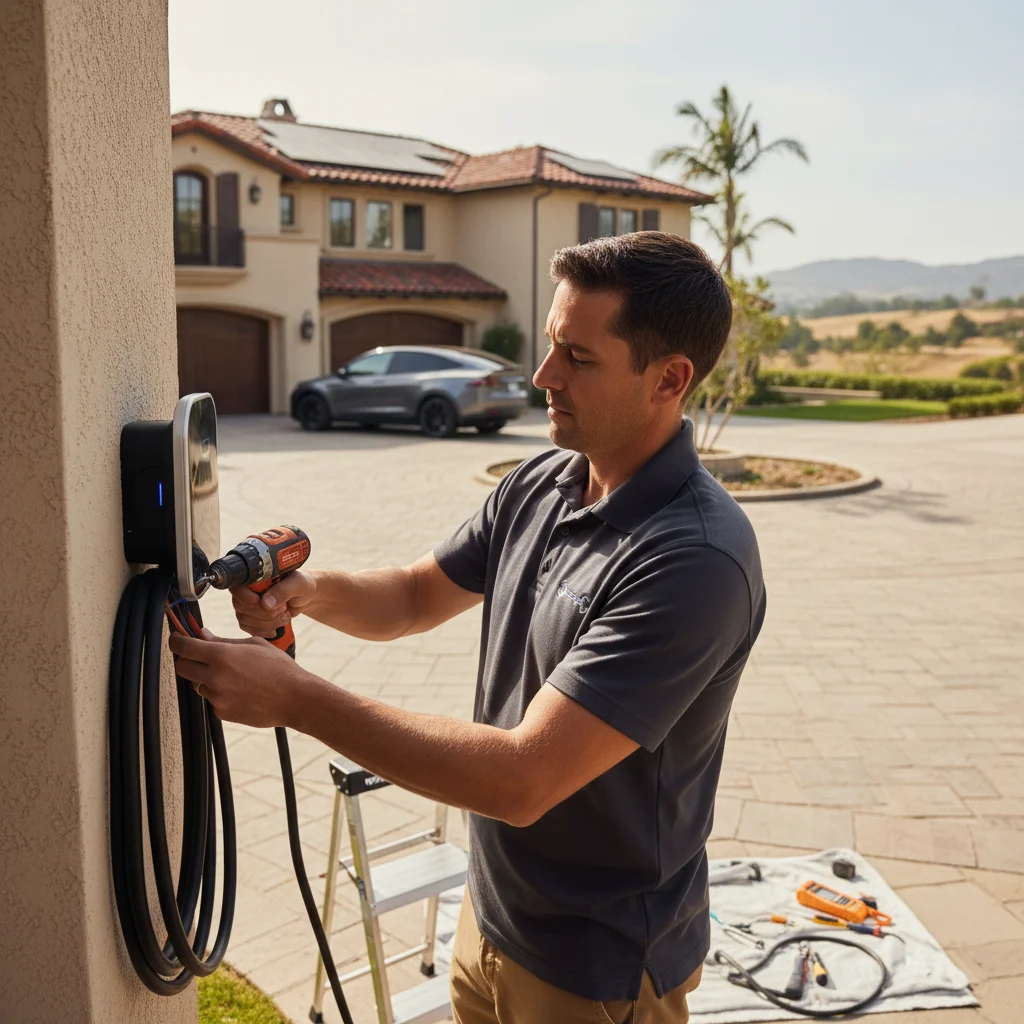
A silent EV with a full traction pack is usually a 12-volt failure. The small battery runs the handles, the screens, and the contactor. That contactor connects the main pack. The DC-DC converter recharges that 12-volt only while the car is on. It also charges while the car is plugged in. Park for days with Sentry Mode running and the small battery can go flat. Cabin Overheat Protection in July does the same thing.
Battery Council International work, via Battery University, found a hard climate split. Starter batteries last about 47 months in hot climates. They last about 59 months in cool ones. A battery that lasts five years elsewhere can fail faster here. Two or three years is common in this heat. AAA calls heat the number-one cause of battery failure. It recommends AGM batteries for hot areas.
Town research describes two common calls. A resort guest returns to a valet stall and the car won’t wake. A resident is caught on a winding road under Camelback. The car sat in a hot garage first. Both are 12-volt stories as often as they’re empty-pack stories. How Phoenix heat changes EV battery care covers parked-car habits.
The pros we send jump or replace a dead 12-volt on site. They also bring a 240V Level 2 source. Teslas get a native NACS plug. Non-Tesla EVs get a CCS or J1772 adapter. They typically add 10 to 20 miles of range. That takes 15 to 30 minutes of charging. That window is charging time. It isn’t an arrival time. The operator quotes before starting and bills you directly.
Public charging: confirm live stalls, don’t guess
This page won’t name a Paradise Valley station that wasn’t verified. It won’t guess miles to the next plug. The DOE AFDC station API couldn’t be reached when this page was researched. No specific public stall in town was confirmed by name. The City of Phoenix cited about 1,065 public charging locations statewide as of July 2023. It cited about 2,966 ports, most in Maricopa County. Those counts are old, so use them only as background.
Open a live app before you leave the gate. Confirm plug type, power, and whether the stall is actually free. Tesla Superchargers are Tesla’s published DC network. Many non-Tesla cars can use NACS Superchargers with an adapter. That only works when Tesla opens that stall. CCS remains the common DC plug for other brands. J1772 remains the common Level 2 plug.
Sky Harbor has confirmed Level 2 charging in the Terminal 3 garage. Look on Level 1 west, Level 3, and Level 7. The Terminal 4 garage has charging on Level 4 east end, zone B. The 24th St. station has charging too. EVPassport installed that PHX hardware in 2022. A week in a hot garage can still kill the 12-volt. That can happen even if you plugged in. Phoenix-Mesa Gateway’s official amenities list didn’t show on-site EV charging. Sources for AZA conflict, so confirm before you leave a car there.
Factory Tesla roadside doesn’t charge on site. Tesla’s published pattern is a tow to the nearest Supercharger or service center. Ford tows to the nearest charger, home, or dealer within 50 miles. Rivian and Hyundai/Kia owners are often told to request a tow in plain words. If you want energy at the bumper, that’s a mobile operator.
ADOT’s National Electric Vehicle Infrastructure plan is adding DC fast sites along designated corridors. Those corridors include I-10, I-17, I-8, and I-19. They also include I-40 and parts of US-60 and SR-347. Construction is underway in 2026. Those sites are highway tools. They don’t replace the wall circuit on a Paradise Valley lot.
Arizona DPS Roadside Motorist Assistance changes tires and brings gasoline or diesel. It jump-starts batteries, adds water, and calls tows. In 2018 it assisted 75,235 motorists statewide. Its published materials name gasoline and diesel. They say nothing about charging an EV. ADOT’s Incident Response Unit works Phoenix-area freeways from 5am to 8pm weekdays. It also doesn’t advertise an EV charge. That’s the gap independent operators fill.
When you’re stopped on a town road
If you can get off Lincoln or Tatum, do it. ARS 28-871 limits stopping on the traveled part of a highway. That applies outside a business or residence district. Get off the lane when it’s practical. A vehicle disabled so badly it can’t be moved is exempt. Leave room for other traffic. Be visible 200 feet in each direction.
Keep your hazard lights on and stay with the car if it’s safe. On a winding street under the mountain, visibility is the whole safety job. ARS 28-775 is Arizona’s Move Over law. Other drivers should change lanes or slow down when they see your lights. Give the operator room to work the bumper.
Monsoon water isn’t a shortcut. ARS 28-910 is the so-called Stupid Motorist Law. Don’t drive around a barricade into flood water. The state can bill you for the emergency response. Don’t nose through a brown dip on McDonald Drive.
Police may order a disabled or obstructing vehicle removed under ARS 28-872. Owners pay reasonable tow and storage before release. Arizona sets no statewide tow-rate cap. Cities and counties may set local maximums. Private-property tows need the property owner’s written authorization or a police request. A resort lot is private property. Get that authorization straight before a tow starts.
Mobile EV charging is the empty-pack call. Stranded Tesla in Paradise Valley: mobile charging on desert roads is the town companion. The town hub is EV charging in Paradise Valley. Scottsdale is the next city over: EV charging in Scottsdale.
Charge Pro PHX matches stranded EV drivers with independent local operators. It doesn’t perform the work or own trucks. It doesn’t employ technicians or set prices. It doesn’t promise an arrival time or publish hours. It holds no contractor license, and the operator quotes you, then bills you. The pros the network connects you with are licensed and insured.
They handle Tesla and every major EV brand. Rivian, Lucid, Porsche, Mercedes, Hyundai, and Kia show up on these streets. Ford, Chevy, BMW, Audi, and Cadillac do too. Plug type matters more than the badge.
Neighbors, hospitals, and a parked week
Fountain Hills sits east on the Beeline. Cave Creek and Carefree sit north, and Scottsdale wraps the edge. A low-battery warning on Tatum can become a grade problem. That happens once you leave the town grid. Mayo Clinic Hospital is in northeast Phoenix. HonorHealth’s Shea, Osborn, and Thompson Peak campuses are in Scottsdale. A hospital garage in July is the same 12-volt story as a resort valet.
Keep tires at the door-sticker pressure. Hot asphalt and underinflation waste miles. Most makers still prefer daily charging around 80 to 90 percent. Save 100 percent for a long day. That’s maker guidance, not a town rule.
If the screens are dark, say so on the call. If the pack reads zero, say that. If you’re behind a gate, have the code ready. If the charge port won’t release, don’t yank it in heat. Tell the operator the latch is stuck.
Factory roadside remains available if you want a tow to a charger. A local operator remains the path if you want 240 volts at the bumper. For the match line, call Charge Pro PHX at (602) 932-0920. That number reaches the referral desk. It isn’t a promise that a truck is already around the corner.
Frequently asked questions
Does a Paradise Valley town home still need Level 2 if I barely leave the lot?
Level 1 can hold a small daily loop. A large pack that sits low still needs 240 volts. About 41.8 percent of town housing predates 1980, so confirm the panel first. Ask APS or SRP which EV rate you actually qualify for. Then size the circuit to the car you park.
What should I do if the EV dies on Lincoln Drive or Tatum Boulevard?
Get off the traveled lane if you can. Keep the lights on and stay visible. Arizona DPS can help with a tire or a gas-car jump. It doesn’t advertise an EV charge. Share your pin, brand, plug type, and whether the 12-volt looks dead. An independent operator can bring Level 2 to the bumper. The same operator can jump the small battery on site.
Why do resort and estate EVs fail to start after a hot parked day?
Heat shortens 12-volt life. Features that run while parked drain that small battery. They do it even when the traction pack is full. The car needs the 12-volt to close the contactor. A jump or a replacement on site is the usual first fix. An empty pack is a different call. That’s a 240-volt charge, not a jump.