EV roadside assistance in Tolleson is usually a 12-volt jump or a Level 2 top-up. It isn’t a tow across the West Valley. The shift ends in a warehouse lot, and the car won’t wake. Heat has cooked the small battery even though the traction pack still shows miles. Charge Pro PHX matches stranded drivers with independent operators who come to the car.
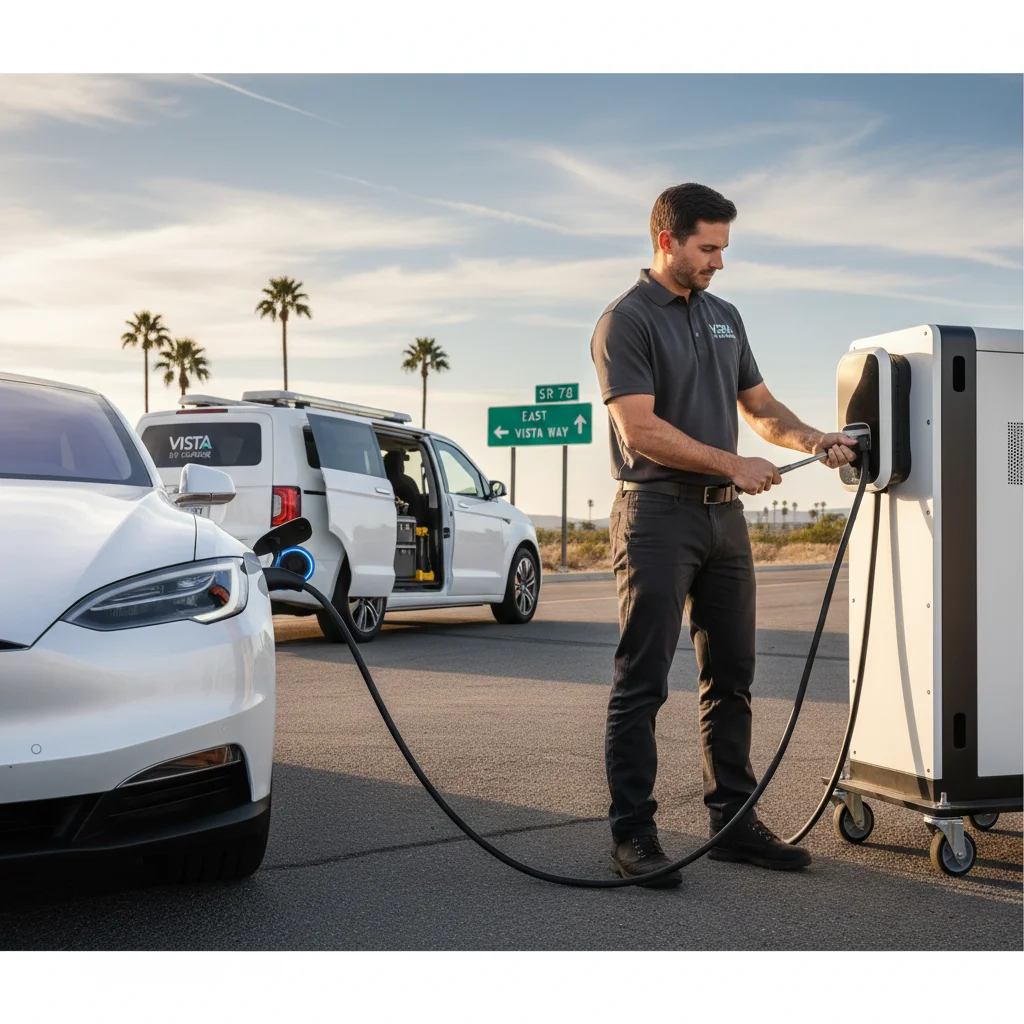
A full pack still leaves you locked out
Tolleson covers about 5.7 square miles on the West Valley industrial belt. Census figures list 7,668 residents in this logistics hub. Food processing and warehousing sit here, ringed by west Phoenix. About 33.2 percent of housing was built before 1980. Workforce commuting and older rentals shape the calls. Drivers need a top-up, or a 12-volt jump after a hot park.
The 12-volt runs the handles, the display, and the contactor that connects the main battery. The DC-DC converter only recharges it while the car is on or charging. Park it through a Phoenix afternoon and it can die on its own. Tesla Sentry Mode and Cabin Overheat Protection keep drawing power in the lot. You can sit on a full pack and still be locked out.
Phoenix averages about 111 days at or above 100F. About 21 of those days reach 110F or more. July highs average near 107F, and August sits near 105F. Overnight summer lows stay in the mid-80s. Recurrent found EVs can lose 20 to 30 percent of range above about 95F. Loss ran near 31 percent at 100F in that Phoenix-area set. AAA’s 2026 study found about a 10 percent efficiency drop at 95F versus 75F. Range loss in that study was about 8.5 percent. Cabin cooling is a real draw on those warehouse-to-home miles.
Hot-climate starter batteries last about 47 months, per Battery Council International. Cool climates see about 59 months, via Battery University. A battery good for five years elsewhere can fail in two or three here. AAA calls heat the number-one cause of battery failure. That’s why Tesla 12-volt failures in desert heat show up in Tolleson lots. They aren’t only a freeway-shoulder problem.
If the car is silent after work, start with the small battery. Our EV roadside assistance page covers a dead 12-volt and an empty pack.
I-10, Loop 101, and the industrial west side
Tolleson strandings sit on commute and freight corridors. The I-10 Papago Freeway cuts the south edge. Loop 101, the Agua Fria Freeway, sits to the west. 91st Avenue and 99th Avenue feed the warehouses. A range number that looked fine at dawn can shrink by the last gate. Afternoon A/C, idling, and ramp traffic eat the buffer.
If you stall on the Papago shoulder, get off the traveled lanes when you can. ARS 28-871 requires that when it’s practical. A vehicle that can’t move is exempt. Stay visible 200 feet in each direction and leave room to pass. ARS 28-775 is the Move Over law. Other drivers must change lanes or slow down around a stopped vehicle with lights on.
Arizona DPS Roadside Motorist Assistance will change a tire and bring gasoline or diesel. It can jump a conventional battery, add water, and call a tow. Its published materials don’t mention charging an EV. ADOT’s Incident Response Unit works Phoenix-area freeways from 5 a.m. to 8 p.m. weekdays. It’s a 14-member unit, sponsored by State Farm since 2020. It clears debris, changes tires, and helps stranded motorists. It also doesn’t advertise an EV charge. If the pack is empty, a mobile Level 2 top-up fills that gap.
Arizona has no toll roads and no toll express lanes. A text about an unpaid Arizona toll is a scam. HOV occupancy rules still apply at weekday rush hours. Solo HOV access for alternative-fuel plates ended on September 30, 2025.
For a Papago shoulder stop, read out of charge on I-10 in the heat.
Townsite streets and the 91st Avenue corridor
Tolleson townsite is compact, and calls there often come from older streets and rental lots. The car sits in heat between shifts, then it might not unlock.
The 91st Avenue corridor is the warehouse pattern. Food plants and distribution yards line that run. Crews leave Teslas, Chevys, Fords, and Hyundais in the same lot all shift. The traction pack can still hold a commute, but the 12-volt often doesn’t. A jump on site, or a 12-volt swap the operator can handle, wakes the car. Then you drive off the lot. You don’t wait for a flatbed to thread a loading dock.
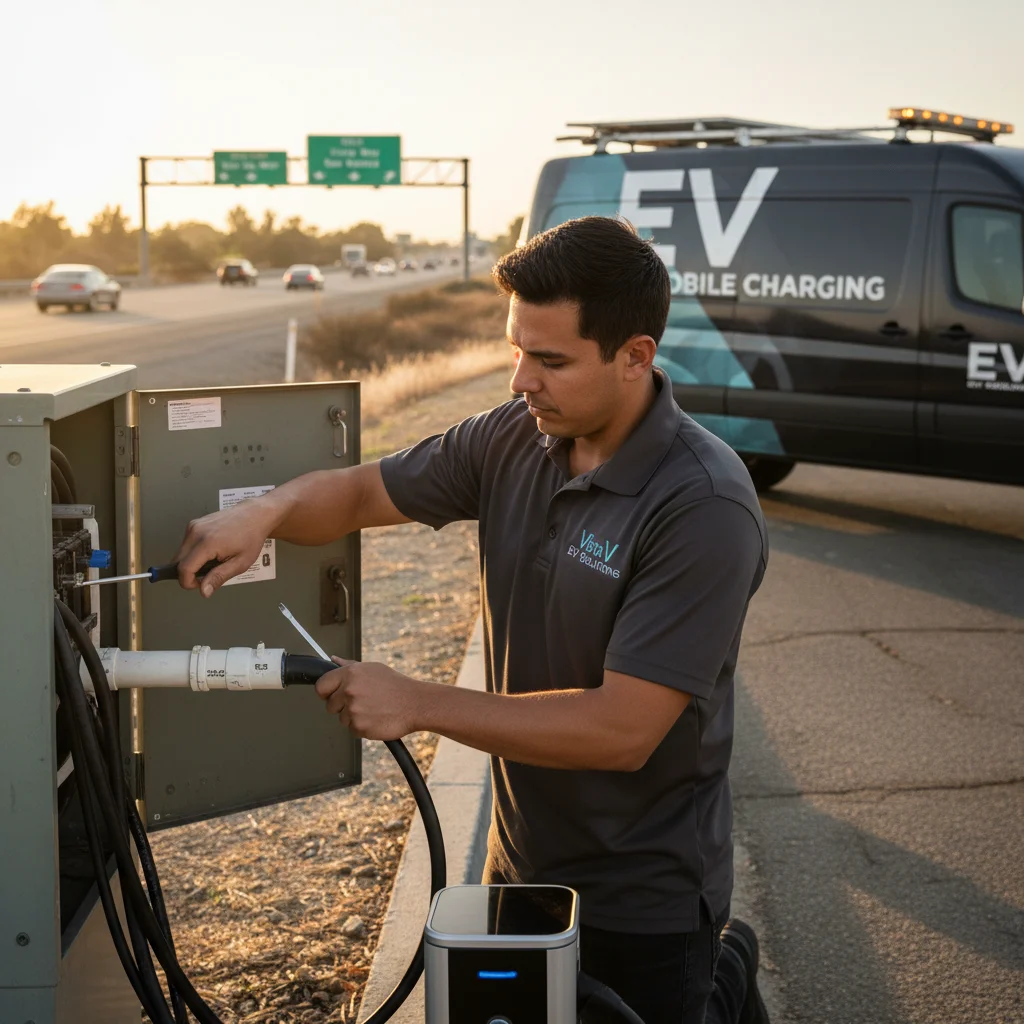
Nearby West Valley cities share this heat. Goodyear mobile EV charging covers the next industrial stretch west. Glendale, Peoria, and Surprise sit around this pocket too. Avondale is next door, including race weekends at Phoenix Raceway. Tolleson stays the small logistics hub in the middle.
We keep a Tolleson charging and rescue page for this corner of the Valley.
What the operator can do on site
Charge Pro PHX doesn’t own trucks, yards, or a fleet. We don’t employ technicians, and we refer you to independent mobile rescue operators. The operator quotes you before starting and bills you directly. The pros we connect you with are licensed and insured.
Those operators bring a 240-volt Level 2 source to the car. Teslas take a native NACS plug. Other EVs use a CCS or J1772 adapter. Typical charging time adds 10 to 20 miles of range. That takes 15 to 30 minutes of charging. It isn’t a promise of when someone arrives. Arrival depends on where you are. The operator confirms timing when you call.
They can also jump or replace a dead 12-volt on site. That’s the Tolleson warehouse call more often than a pack at zero. Tesla and every major EV brand are in the mix. If the car won’t accept charge, the operator should say so and stop. A charging-system fault is a shop problem, not a roadside top-up.
A Tesla 12-volt jump is the usual unlock path when the pack is fine. If the pack is empty, the Level 2 session moves you off the lot.
On-site charge versus a tow
A tow still has a place. If the car can’t accept charge, or a panel is damaged, you need a flatbed. Police can order a disabled vehicle moved under ARS 28-872. Owners pay tow and storage before release. Arizona sets no statewide tow-rate cap. Cities and counties may set local maximums. Confirm the current rate with the yard before you pay. No verifiable Tolleson-specific tow cap turned up in city or county materials we checked. The city or county is who would set one.
When the car will take energy, an on-site charge skips extra steps. You skip the wait at a public stall after a drop. You skip a second ride back to the car. The operator works the lot or the shoulder, then you drive.
Don’t treat a map pin as a free stall. Check your charging app before you limp toward one. If you can’t reach a stall, stay with the car. Then call for a mobile unit.
Factory roadside is a different product. Tesla tows to a Supercharger or service center. It isn’t an on-site charge. Ford tows to a charger, home, or dealer within 50 miles. Independent operators exist because those policies leave you sitting.
The Valley’s electric service splits among APS, SRP, and other utilities. It can change block by block. Tolleson’s provider isn’t a fact we could confirm at the city level. Confirm your own address with the utility.
How to get matched from Tolleson
Call when the car won’t unlock after a hot shift. Call when the pack is empty on I-10 or Loop 101. Call when a workplace stall failed and you can’t make the next stop. Those are referral calls, not a shop visit.
Have the year, make, and connector ready, and say whether the doors work. Say what the dash showed before it died. The operator uses that to quote the job.
Monsoon season runs June 15 to September 30. Haboobs can drop visibility to near zero. If dust or flood water is moving, stay out of the travel lanes. ARS 28-910 can bill you if you drive around a barricade into floodwater. Don’t drive around a barricade into floodwater. Wait for the wall to pass, then deal with the car.
We serve Tolleson and every city in the Phoenix area. Call (602) 932-0920 to get matched. The operator sets the price and the timing when they take the call.