If your EV dies in Coolidge on SR-87, you need charge at the car. EV roadside assistance in Coolidge is a mobile operator at the bumper. Charge Pro PHX matches you with independent local rescue operators. We don’t own trucks, and we don’t do the work. The operator quotes you before starting, then bills you directly.
Coolidge is a Pinal County town between Casa Grande and Florence. The Census count is 16,636 people on 83.1 square miles. The town sits near the Casa Grande Ruins, off the main freeways. SR-87 here is the Pinal County stretch, not the Beeline toward Payson. SR-287 and the Casa Grande-Florence roads are the other daily routes. Downtown Coolidge, Heartland Ranch, and the Coolidge townsite are the named pockets. ZIPs you’ll see on mail are 85128, 85194, 85131, and 85132.
Coolidge sits on the Pinal belt, not Loop 101
Phoenix-area EV tips often assume dense infill and short hops. Coolidge doesn’t drive like Chandler or Tempe. It’s a southeast Pinal city on rural state routes. Dispatch treats it as long-haul, so ask about timing when you call. We don’t promise an arrival window from this line. The operator on the call is the one who can speak to the clock.
Local and short-hop calls dominate here because towns sit far apart. A run from San Tan Valley can empty a pack in summer heat. The same is true from Maricopa or Apache Junction. About 35.7 percent of housing was built before 1980. That’s older downtown and townsite stock mixed with later streets. If the car left home low, treat the stall as an on-road problem. Don’t sit in a travel lane while you figure out the next plug. Pull off first, then call.
Electrical District No. 2 has no EV program on file
Coolidge power comes from Electrical District No. 2. ED2 also serves Casa Grande and Florence. We looked for an EV-specific rate or charger program on the district site. Nothing verifiable turned up on ED2’s published pages.
Valley utilities do publish named EV programs. Confirm yours at your own address. Service can split block by block in this metro. APS lists the R-EV overnight plan and a Level 2 smart-charger rebate. It also names APS Smart Charge and Take Charge AZ. SRP still has the Electric Vehicle Price Plan for customers already enrolled. New enrollment closed after a February 2025 board decision. Existing customers may stay through the November 2029 billing cycle. SRP also lists EV Smart Charge and a Marketplace Level 2 rebate. ED3 in Maricopa publishes EV TOU 2-10 and on-bill smart-charger financing.
ED2 is the outlier on this belt. Check ED2 directly before you assume an EV plan exists. That absence is about home billing, not about a stall on SR-87. When the driveway plug didn’t save you, mobile EV charging is the on-road backup. For planning a home plug later, start with EV charging in Coolidge.
Heat on SR-87 and SR-287 cuts displayed range
Coolidge runs full desert heat on those rural state routes. Phoenix averages about 111 days a year at or above 100F. About 21 days hit 110F or more. July highs average near 107F, and August sits near 105F. Overnight summer lows still hang in the mid-80s. Coolidge shares that desert pattern. Cabin cooling isn’t optional on SR-87 in July.
Recurrent looked at 345,622 trips from 300 Phoenix-area EVs. Above about 95F, range loss ran 20 to 30 percent. Near 100F, loss sat around 31 percent. AAA’s 2026 study found about a 10 percent efficiency drop at 95F versus 75F. Range loss in that study was about 8.5 percent. NREL reports climate-control loads can cut EV range. Cabin cooling is one of the biggest draws.
A driver can leave Casa Grande with a comfortable estimate. They can still stall on the Coolidge side of SR-287. Heat soak plus A/C plus rural miles stack. This isn’t a Tesla-only pattern. Hyundai, Ford, Chevy, Rivian, and Kia packs see it too.
Monsoon season runs from June 15 to September 30. Haboobs can drop visibility to near zero. Flash floods follow the dust. ARS 28-910 lets the state bill you if you drive around a barricade into floodwater. Don’t drive around the barricade. A car sitting in a wash is a recovery job, not a charge job.
Empty pack, or a 12-volt that cooked in the lot
Not every Coolidge stall is a zero on the range gauge. Desert heat kills the small 12-volt first. Battery Council International work, via Battery University, found starter batteries last about 47 months in hot climates. In cool climates the figure is about 59 months. A battery that lasts five years elsewhere can fail in two or three here. AAA calls heat the number-one cause of battery failure.
In an EV, that 12-volt runs the door handles, the screens, and the contactor that connects the main battery. A full traction pack still leaves you locked out if the 12-volt is dead. The DC-DC converter only replenishes it while the car is on or charging. Tesla features like Sentry Mode and Cabin Overheat Protection keep drawing while parked. If the car is dark and the handles don’t work, ask for a Tesla 12-volt battery jump before anyone talks about adding miles.
If the screens work and you simply have no range, you want out-of-charge recovery. That’s a Level 2 charge at the bumper. It’s not a jump. Tell the matcher which one you’re looking at. Make, model, and whether the car unlocks will get the right operator.
What an operator can do on a Coolidge shoulder
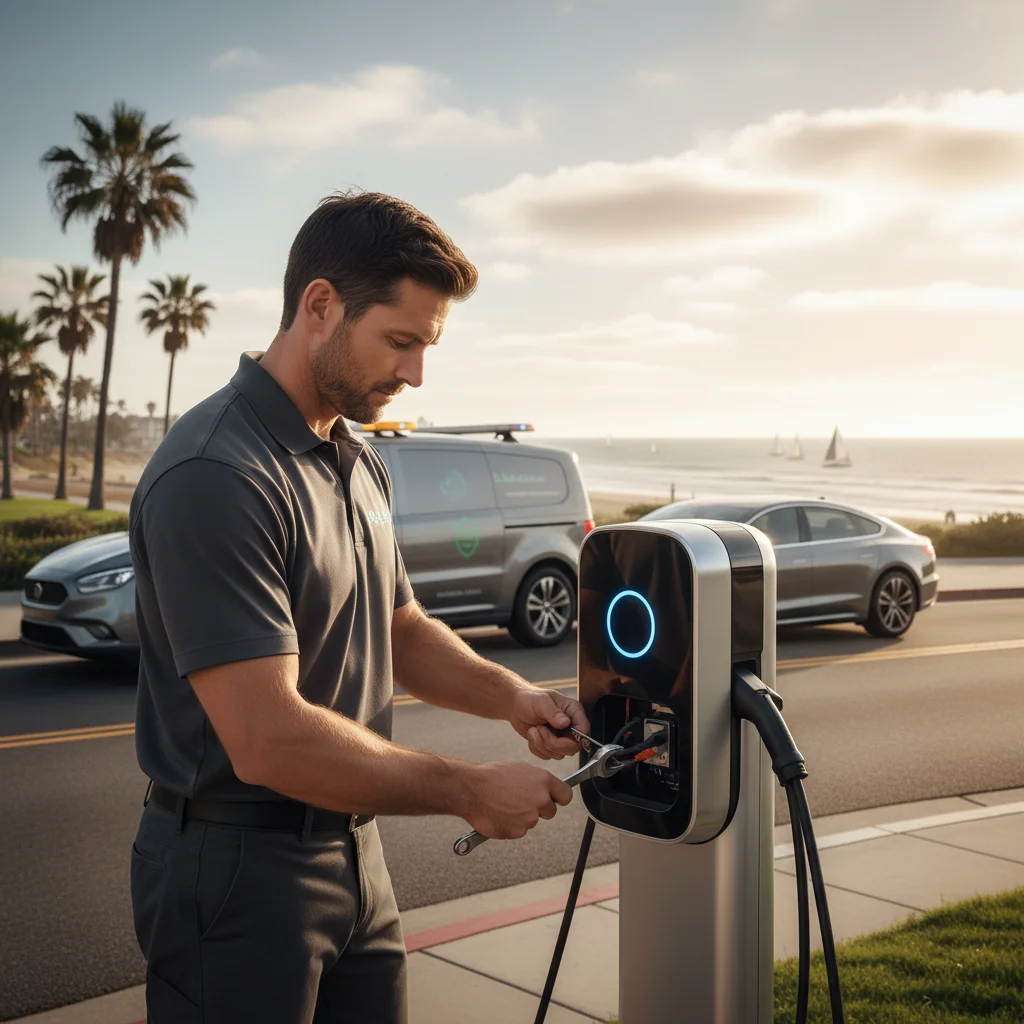
The pros we connect you with are licensed and insured. They bring a 240-volt Level 2 source to the car. Teslas take a native NACS plug. Other makes use a CCS or J1772 adapter. Operators handle Tesla and every major EV brand. Charge time is typically 15 to 30 minutes once they’re plugged in. That window is charging time, never an arrival time. You usually pick up 10 to 20 miles of range. That’s enough to get off the route and finish the trip.
Arizona does run free motorist help. Arizona DPS Roadside Motorist Assistance changes tires and brings gasoline or diesel. It jump-starts batteries, adds water, and calls tows. Its published materials name gasoline and diesel. They say nothing about charging an EV. ADOT’s Incident Response Unit works Phoenix-area freeways weekdays from 5am to 8pm. It clears crashes and debris and helps stranded motorists. It also doesn’t advertise EV charging. If you’re on SR-87 through Coolidge, don’t wait for a patrol truck to plug you in. That work is what EV roadside assistance is for.
Tesla’s own roadside won’t charge you on site. It tows toward a Supercharger or a service center, and that tow is billed. Ford’s program tows to a charger, home, or dealer within 50 miles. Rivian and Hyundai owners have reported trouble getting a dead EV towed. Those owners are told to request a tow by name. If you want the Coolidge stall to move under its own power, you want an on-site charge from a local operator.
How to sit the car while you wait
ARS 28-871 is the highway rule that matters here. You may not stop on the traveled part of a highway outside a business or residence district. That’s if it’s practical to get off it. A vehicle disabled so badly it can’t move is exempt. When you’re stopped, leave room for other traffic to pass. You also need to be visible 200 feet in each direction. Put the hazards on. If you can creep into a downtown Coolidge lot, do that instead of the SR-87 shoulder.
ARS 28-775 is Move Over. Drivers approaching a stopped vehicle with warning lights must change lanes when they can. If they can’t, they have to slow down. Keep your flashers on so they can see you. That’s for you and for the operator working at the bumper.
Police may order a disabled or obstructing vehicle removed under ARS 28-872. Owners pay reasonable tow and storage costs before release. ADOT mails notice to owners. If the car still rolls, get it out of the lane. If it doesn’t, stay visible and call for help. Don’t assume a gasoline patrol can charge an EV.
If you stalled on the way in from another Pinal town
Coolidge is one point on the belt, not the only town on these roads. Casa Grande sits toward I-10. Florence sits east on the same rural connectors. San Tan Valley and Maricopa sit toward the Valley commute. Apache Junction is farther north. If the car died on the Casa Grande side, read stranded in Casa Grande. If you’re closer to Florence, use mobile EV rescue in Florence. Same referral line. Same kind of independent operator. Different pavement.
Short hops between these towns add up in summer. A grocery run plus A/C plus a wrong turn on SR-287 is a common empty-pack call. Give the operator a pin or a cross street. Say the make. Say whether you’re on SR-87, on SR-287, or in Heartland Ranch. Dispatch needs that more than a ZIP code.
Frequently asked questions
Does Charge Pro PHX cover Coolidge on the Pinal belt
Yes, Coolidge is in the service area. We connect you with independent operators who work this southeast Pinal belt. Downtown Coolidge, Heartland Ranch, and the townsite are all in play. We don’t perform the work. The operator on scene does.
How much range does a mobile charge add in Coolidge
Once the truck is plugged in, a Level 2 session typically adds 10 to 20 miles. That takes 15 to 30 minutes of charging. It isn’t an arrival promise. Ask the operator for a quote and a timing estimate when they take the call.
What if my EV won’t unlock after sitting in the heat
Start with the 12-volt. A dead auxiliary battery will black out the car even with a full main pack. Tell the matcher the doors are dead and the screens are dark. They’ll connect you with an operator set up to jump or replace that 12-volt on site. Then the same operator can charge the pack if you still need miles.
If you’re stuck in Coolidge now, call Charge Pro PHX at (602) 932-0920. We’ll match you with a local mobile rescue operator. They quote before they start, and they bill you directly.