A Dodge Charger Daytona EV that won’t start after heat is usually the 12-volt. Software is the first theory owners reach for. The dash stays dark, and the fob won’t unlock. The app can still show a healthy traction pack. That’s the accessory battery, not a bricked module.
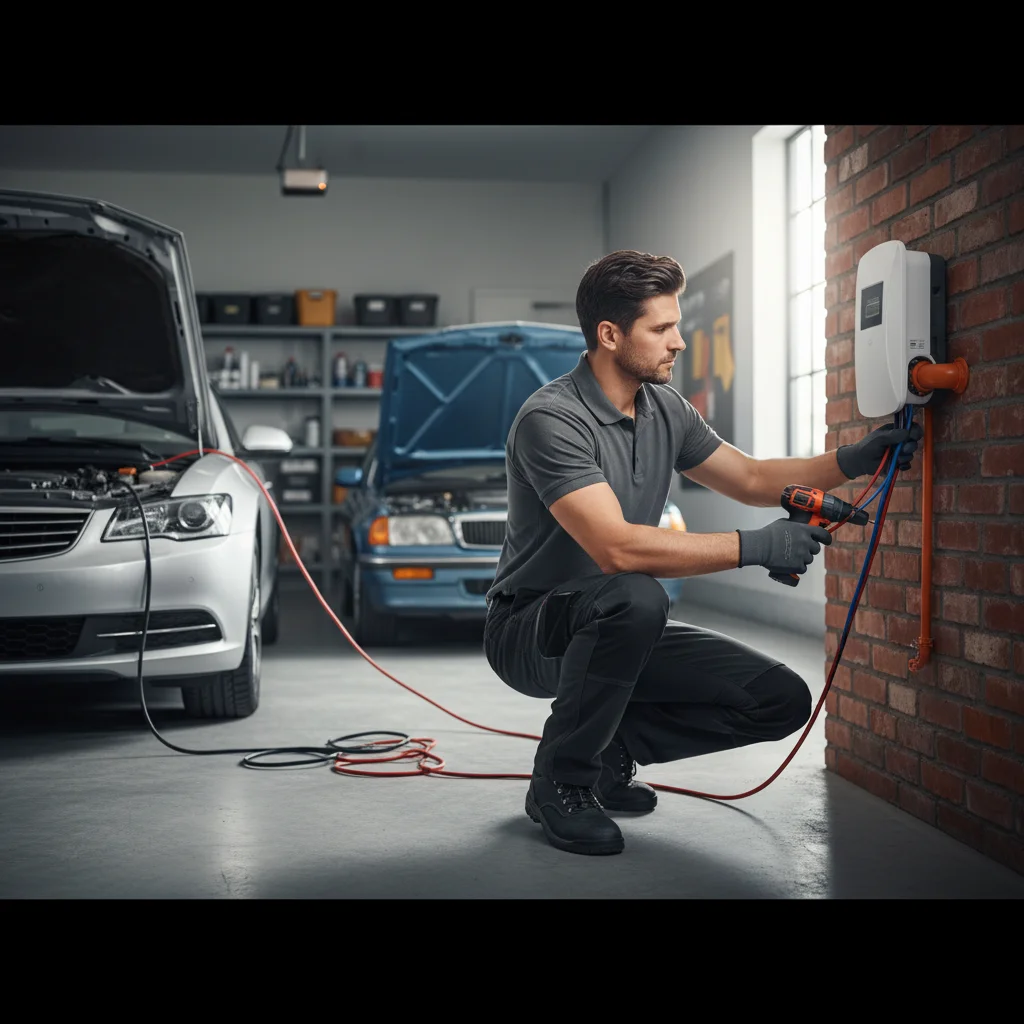
Heat takes the 12-volt before any software stall
Phoenix averages about 111 days a year at or above 100 degrees. About 21 of those days reach 110 or more. July highs sit near 107 degrees, and August is near 105. Overnight summer lows often stay in the mid-80s, so the small battery never cools.
Battery Council International work, via Battery University, tracked starter-battery life in heat. Those batteries last about 47 months in hot climates. AAA names heat as the top cause of battery failure. A 12-volt might last five years in a mild city. In the desert it can fail in two or three.
The Daytona still needs that accessory battery to boot. It runs the door locks, the screens, and the modules that close the high-voltage contactors. A DC-DC converter only tops the 12-volt up while the car is on or charging. Parked in a Mesa lot, it just sits and bleeds. How Phoenix heat changes EV battery care is the same story on every brand.
A true software freeze usually leaves some cabin life. You might still get a light or a chime. A dead 12-volt gives you nothing at all.
Dark dash, full pack: it’s the small battery
New EV owners expect the big battery to run everything, and it doesn’t. The traction pack can read near full, and the car still won’t go to Ready. The 12-volt doesn’t move the wheels. It only authorizes the high-voltage system. No 12-volt power means the contactors stay open. The Daytona can’t start, and the electric trunk often won’t open. If the dash lights up and range is near zero, you need miles, not a jump.
| What you see | What it usually means |
|---|---|
| Cabin dark, no chime, trunk won’t open | 12-volt is fully down |
| App shows range, but the car never wakes | 12-volt is the problem, not the pack |
| Dim lights, fob only works up close | 12-volt is weak. Start with a jump. |
| Car starts, then dies within a day or two | 12-volt is near the end of its life |
Arizona DPS Roadside Motorist Assistance will jump a conventional battery. It can add gasoline or diesel and change a tire. ADOT’s Incident Response Unit covers Phoenix-area freeways from 5am to 8pm on weekdays. Neither program advertises bringing an EV a charge.
Jump the under-hood posts before you chase the trunk
The Daytona’s 12-volt sits in the trunk on the driver’s side, behind or under a side trim panel. Remote jump posts live under the hood so you don’t need that trunk first. Covers and labels can vary by model year and trim. Confirm the map in your owner’s manual before you clamp anything.
The trunk release on this car is electric. With a fully dead 12-volt, that release has no power, so don’t pry the lid. Jump at the under-hood posts first. Connect a jump pack’s positive clamp to the positive post. Put the negative clamp on the negative post. Give the electronics a minute, then try start. Once low-voltage power is back, the normal trunk release can work again.
You’re waking the low-voltage system, not the drive pack. Never clamp onto the orange high-voltage cables. How to jump start an electric car in desert heat covers the same idea. If a jump works once and the car dies again, replace that 12-volt. Independent operators we match can swap it on site.
Valley sits that finish a weak Daytona battery
The East Valley and the West Valley don’t fail for the same reasons. Newer housing in Gilbert, Surprise, and Maricopa in Pinal County often has home charging. The call still happens on the road after a work-lot sit. Sun City housing is mostly from before 1980. Parked cars there sit through hot afternoons with no charge session.
A week in the Sky Harbor garage. You leave the Daytona in Terminal 3, Terminal 4, or East Economy while you fly. Level 2 charging is confirmed in those terminal garages and at the 24th Street station. Plug in if you can. That still won’t save a 12-volt already on its last cells. You come back, and the fob won’t unlock.
Race day in Avondale. Phoenix Raceway is in Avondale, not Phoenix, despite the name. A Daytona EV can sit for hours in that lot heat with accessories on. A weak 12-volt often fails when it’s time to leave. Dead EV in Avondale, including race day at Phoenix Raceway is that exact sit. Hours at Chase Field cook a parked Daytona the same way.
A commute that looked fine at dawn. Overnight lows in the mid-80s don’t save a weak battery. APS serves large parts of Phoenix, plus Surprise, Goodyear, and Buckeye. SRP covers much of Mesa and shares other cities block by block, so confirm your own address. APS R-EV is the overnight plan, 11pm to 5am on weekdays. An overnight charge keeps the DC-DC working.
If you’re stuck on a Valley shoulder
On a freeway shoulder, ARS 28-871 says get off the traveled lanes when you can. A vehicle that truly can’t move is exempt. Leave room for other traffic to pass, and stay visible from 200 feet in each direction. Put the hazards on, and don’t stand in the lane. Other drivers must move over under ARS 28-775.
If the dash is alive and the pack is empty, a jump won’t help. Independent operators in the non-Tesla EV rescue network bring a 240-volt Level 2 source. They use CCS or J1772 adapters on a Daytona. Don’t point a low car up I-17 toward Anthem and hope. Northbound I-17 posts a 6 percent maximum grade.
What happens when an EV’s 12-volt dies in desert heat is the same lockout across brands.
What a local operator can do on site
Charge Pro PHX is a referral line for the Phoenix area. We don’t own trucks, and we don’t send our own technicians. We match you with an independent mobile rescue operator. The pros we connect you with are licensed and insured. They bring a 240-volt Level 2 source for CCS and J1772 cars. They also jump or replace a dead 12-volt on site.
The operator quotes you before starting, and you pay that operator directly. Nobody here can promise when a truck appears. If the pack is empty, on-car charging time is typically 15 to 30 minutes. That usually adds about 10 to 20 miles of range.
Why won’t a Daytona EV start after heat with a full pack?
The traction pack doesn’t wake the car by itself. The 12-volt powers the modules that close the high-voltage contactors. After a Phoenix day above 100, that small battery is usually first to fail. A jump on the under-hood posts is the first move. If the dash is alive and range reads empty, you need a charge instead.
Why won’t the trunk open when the Daytona is dead?
The trunk release is electric, and the 12-volt itself lives in the trunk. With no low-voltage power, the release doesn’t fire. Jump at the under-hood remote posts first, then use the normal release once the car responds. Confirm the post locations in your owner’s manual.
Can I jump a Daytona EV like a gas Charger?
You’re jumping the 12-volt, not the traction pack. Use the labeled under-hood posts until the car wakes. Stay off the orange high-voltage cables. If the jump holds and the car dies again, that 12-volt needs replacement.
If your Dodge Charger Daytona EV won’t start in the Phoenix area, call Charge Pro PHX at (602) 932-0920. Describe the dash so the operator brings a jump pack or a Level 2 source.