You want to know whether Teslas come with run-flat tires. The short answer is no, not from the factory on most models. A Valley shoulder with a flat still needs Move Over space around you. Here is what Tesla ships with and what changes after the dealer.
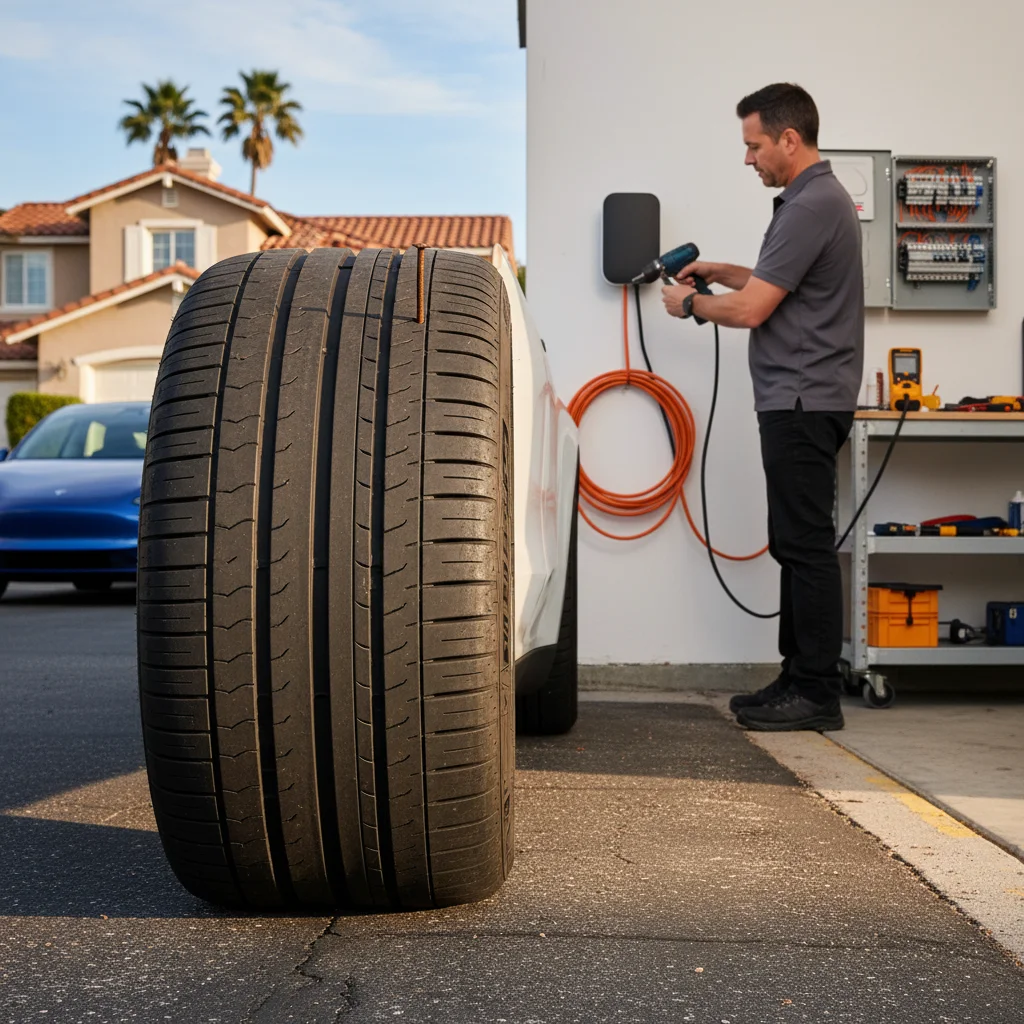
What Tesla ships from the factory
Tesla does not fit run-flat tires from the factory on most models. The Model S, Model 3, Model X, and Model Y all ship with conventional tires that go flat immediately when punctured. The Cybertruck ships with conventional tires too.
Tesla’s published roadside program covers a tire change in most cases when the car has a spare or a sealant kit. Most Teslas do not have a spare. They have a sealant kit and an air compressor in the trunk or frunk.
For the broader view, see Tesla tire repair on roadside: what they fix and what they don’t and Tesla flat tire coverage and the Arizona motorist help gap.
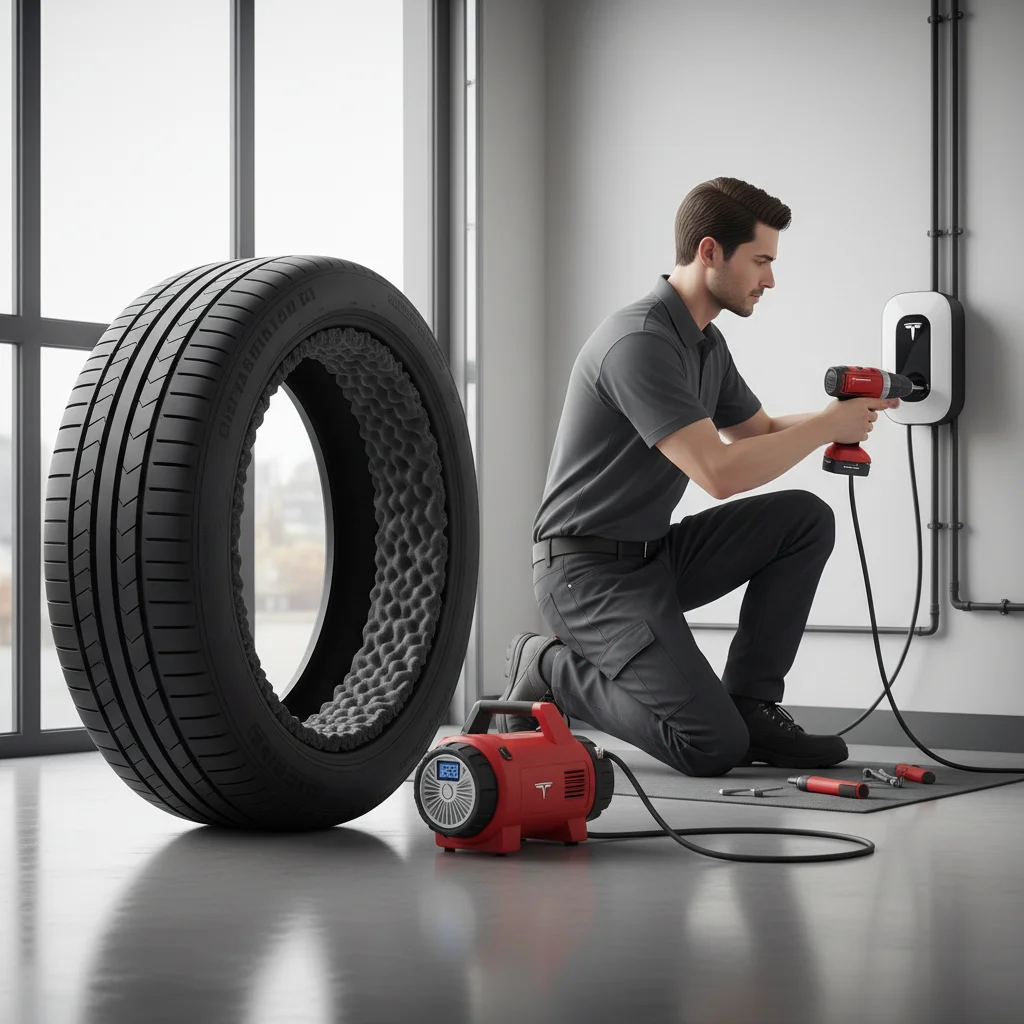
What owners sometimes add
Some Tesla owners swap to run-flat tires through a third-party tire shop. That is a real option for drivers who want the ability to drive a short distance at low speed on a flat, but it is not a Tesla factory setup.
The trade-offs are real. Run-flats are heavier, which reduces range slightly. They are stiffer, which can affect ride quality. They cost more than conventional tires. And not every Tesla wheel accepts a run-flat without a change in tire pressure monitoring.
For most Phoenix-area Tesla drivers, the practical answer is to keep a sealant kit and an air compressor in the car, and to call Tesla roadside or a local mobile operator for the EV-specific failures (12-volt, empty pack, stuck port).
What Move Over requires in Arizona
ARS 28-775 is the Move Over law. Approaching a stopped vehicle with flashing or warning lights, drivers must move over a lane if they safely can or slow down. Fines run $275, then $500, then $1,000 for repeats within five years.
A Tesla with a flat on a Valley shoulder needs Move Over space around it. Whether the tire is a run-flat or not, the car is stopped, and approaching traffic must move over or slow down.
For the broader view, see the live breakdown at AAA versus mobile EV charging.
What to do if your Tesla has a flat right now
Get the car as far off the travel lane as you can. Keep hazards on. ARS 28-871 says to leave the traveled part of a highway when you can. A vehicle that cannot be moved is exempt.
Have a location ready: nearest exit number or mile marker.
If you have a sealant kit and the puncture is small, seal the tire and drive to a tire shop at low speed. If the tire is not sealable, call Tesla roadside for a tow.
If the stranded situation is the EV itself (dead 12-volt or empty pack), call (602) 932-0920 for a local mobile operator. The operator quotes before any work starts and bills you directly.
For the broader picture on what mobile Level 2 adds at the car, see roadside Level 2 charging for stranded drivers.
Frequently asked questions
Do Teslas come with run-flat tires from the factory?
No, not on most models. Tesla ships with conventional tires that go flat immediately when punctured. Most Teslas have a sealant kit and an air compressor in the trunk or frunk.
Can I put run-flat tires on a Tesla?
Yes, through a third-party tire shop. The trade-offs are weight, range, ride quality, and cost. Not every Tesla wheel accepts a run-flat without a change in tire pressure monitoring.
What does Tesla roadside cover for a flat tire?
Tesla covers a tire change with spare or sealant in most cases. It covers a tow when the car has no spare or the tire is not drivable. It does not cover the actual tire repair or replacement.
Will a local mobile operator change my Tesla tire?
No. A mobile operator handles EV-specific failures: 12-volt jumps, Level 2 charging, and stuck charge ports. A tire change is a tire-shop job or a tow.