Your EV dies on the US-60 Superstition Freeway through Mesa. You need charge on the shoulder, not a tow to a yard. Charge Pro PHX is a referral line for Mesa drivers. It matches you with an independent local operator. That operator can plug a 240-volt Level 2 source into the car. They typically add 10 to 20 miles of range. That takes 15 to 30 minutes of charging, not travel. That’s charging time, never an arrival promise. They can also jump or replace a dead 12-volt on site.
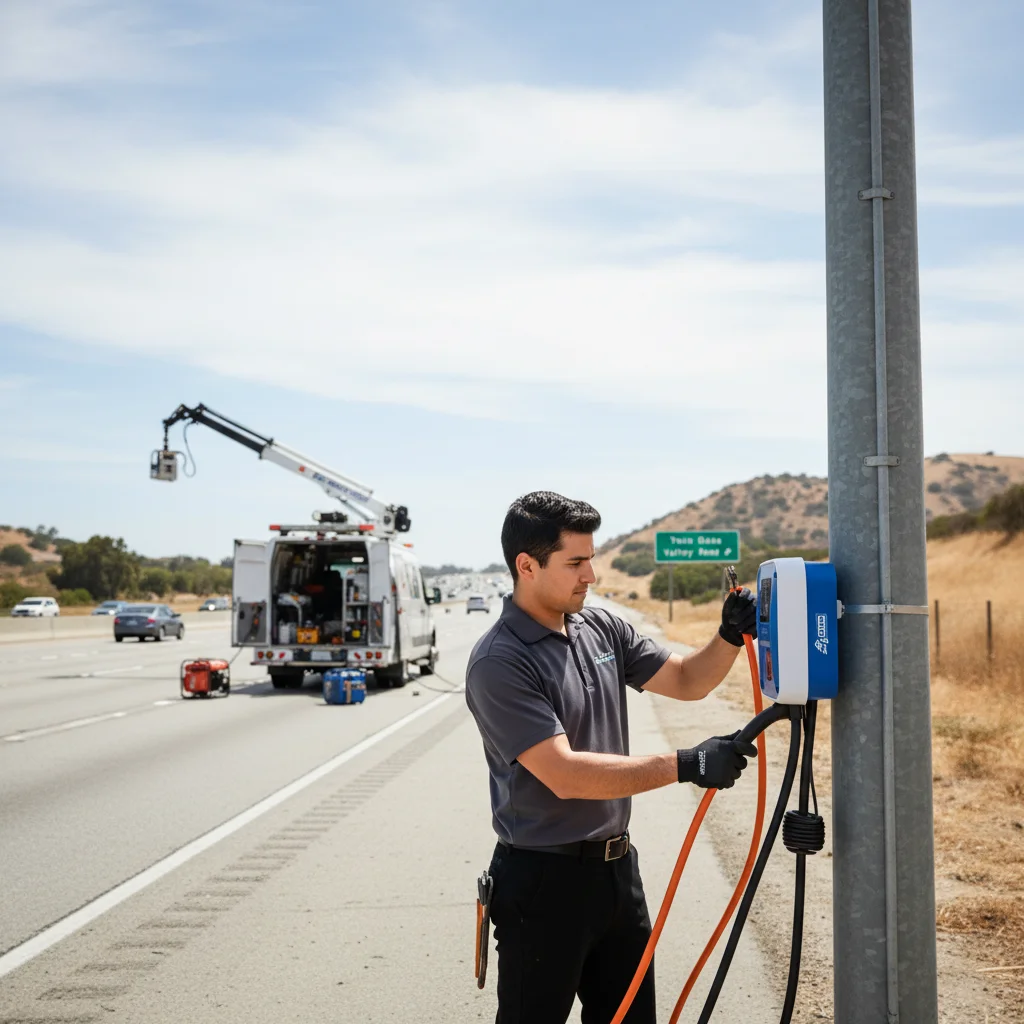
US-60 through Mesa isn’t Grand Avenue
Mesa sits in the East Valley, and it’s huge. ACS 2020-2024 figures put the population at 511,764. Census Gazetteer land area is 141.4 square miles. This is the largest city in the service area after Phoenix. The east-west commute is long on purpose. US-60 through Mesa is the Superstition Freeway. Grand Avenue is a different segment of US-60. That northwest run isn’t this Mesa shoulder. Tell dispatch Superstition Freeway, not just the route number.
The Superstition Freeway meets Loop 202 at the SuperRedTan Interchange. Loop 202’s Red Mountain section is the north-south partner to this grind. Loop 101 Price weaves the west side of the East Valley grid. I-10 ties in on Mesa’s west edge. Drivers leave Eastmark, Superstition Springs, or Southeast Mesa and settle into freeway speed. Range that looked fine in a driveway sags once cabin cooling starts. Mesa shares the Valley heat pattern. That’s more than 100 days a year past 100F.
Recurrent looked at 345,622 trips from 300 Phoenix-area EVs. It found 20 to 30 percent range loss above about 95F. Loss sat near 31 percent at 100F. AAA’s 2026 study compared 95F to 75F. It found about an 8.5 percent range loss. It also found about a 10 percent efficiency drop. NREL notes climate-control loads can cut range in a real way. Cabin cooling is one of the bigger draws. Don’t plan a Superstition run on the sunny dashboard number.
If you’re already on the freeway, use the Superstition Freeway stranded guide. East of town, the same US-60 continues toward Apache Junction.
Banner Baywood shifts and ASU Polytechnic lots
Banner Baywood Medical Center sits in Mesa, and it runs on shift work. Nurses, staff, and visitors park through long hours. The car soaks in heat the whole time. Sentry Mode and Cabin Overheat Protection keep drawing the 12-volt. That happens while the car sits parked. A DC-DC converter only recharges that small battery while the car is on. It also charges while the car is plugged in. You can walk back to a traction pack that still shows range. The screens stay dark anyway, and door handles may not pop. That’s a Tesla 12-volt jump, not an empty-pack rescue. Non-Tesla EVs fail the same way when the small battery cooks.
ASU Polytechnic is in Mesa, and it isn’t the Tempe main campus. People treat those lots like a job site. They arrive, park, and leave on a clock. If a workplace charger is taken, they still have to go. The operator we connect you with brings 240 volts to that stall. Teslas take a native NACS plug. Other major EVs use a CCS or J1772 adapter. Make and model shouldn’t stall the match.
Dobson Ranch, Downtown Mesa, and older central streets add a home-base pattern. About 29.0 percent of Mesa housing was built before 1980. A lot of that stock is apartments and rentals without 240-volt home charging. People roll onto US-60 on whatever a wall outlet gave them overnight. The pack was already lean before the on-ramp.
Mesa’s power map splits too. Mesa Municipal Electric serves about 5.5 square miles around downtown. That’s over 18,000 customers, with an Electric Vehicle Time-of-Use rate named E1EV. SRP serves much of the rest of Mesa. APS shares other East Valley cities around you. Treat a city-level utility label as directional. Confirm the plan at your own address. SRP still publishes an Electric Vehicle Price Plan for customers already on it. That plan closed to new enrollment after a February 2025 board decision. Existing customers may stay through the November 2029 billing cycle. SRP still lists a Level 2 charger rebate through the SRP Marketplace. It also lists EV Smart Charge and Business EV Charging, branded BizEV. This page doesn’t publish rebate dollar amounts. Confirm those with SRP before you count on them.
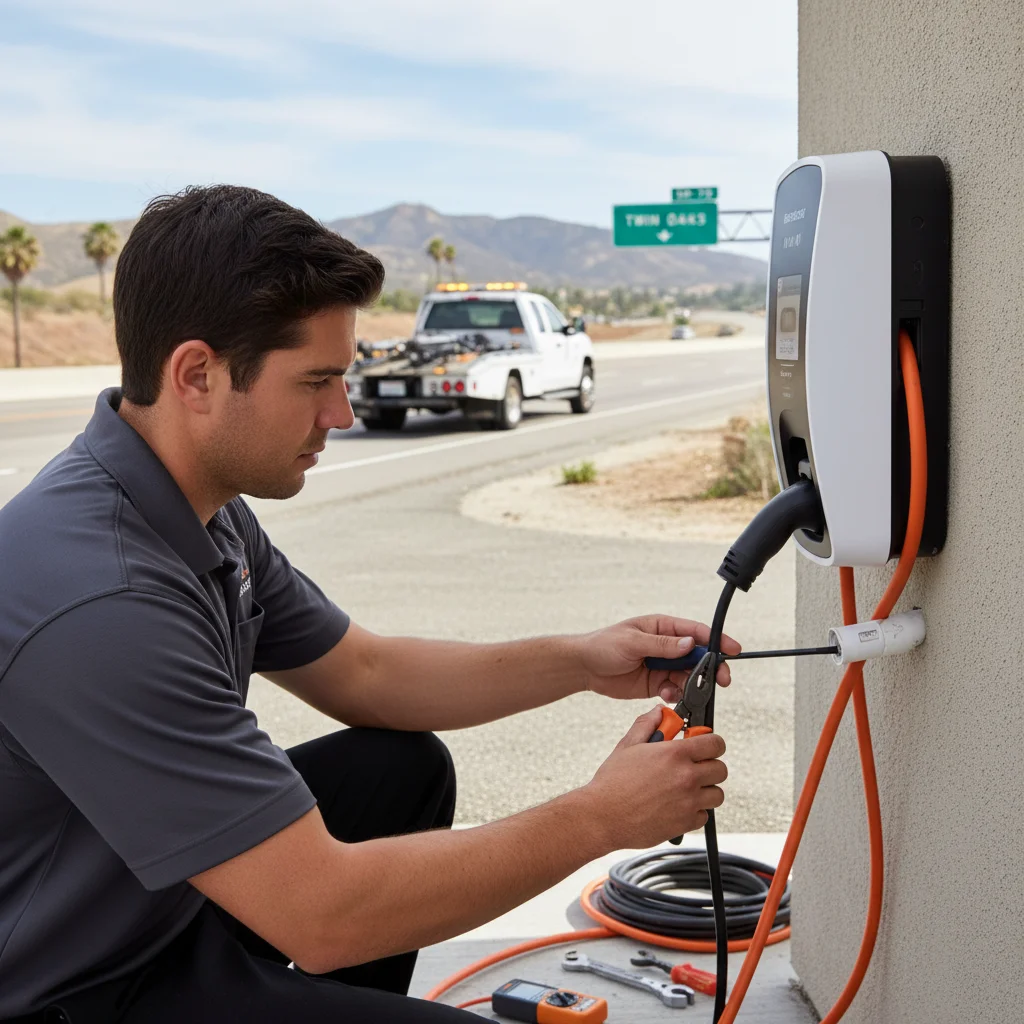
Heat, monsoon dust, and a shoulder you have to own
Summer nights in the mid-80s don’t give the pack a full reset. July highs around the Valley average near 107F, and August near 105F. Those are NOAA 1991-2020 normals via NWS Phoenix. Mesa shares that metro heat pattern. The small 12-volt hates this more than the traction pack does. Battery Council International studied starter batteries in heat. Via Battery University, life ran about 47 months in hot climates. Cool climates saw about 59 months. A battery that lasts five years elsewhere can fail in two or three here. AAA calls heat the number-one cause of battery failure. In an EV, a dead 12-volt strands you even with a full traction pack. The 12-volt runs the door handles and the screens. It also runs the contactor that connects the main battery.
Monsoon season is June 15 to September 30. Dust and flash flooding hit US-60 and Loop 202 in July through September. Haboobs can drop visibility to near zero. If crews barricade a flooded dip, don’t drive around it. ARS 28-910 is the Stupid Motorist Law. Drive into a flooded, barricaded area and you can be billed for the emergency response. This page doesn’t publish that dollar figure. The driving rule is still simple: stay out of the water.
Once you’re stopped, ARS 28-871 controls the shoulder. You can’t park on the traveled lanes if you can get off them. A vehicle disabled so badly it can’t move is exempt. Leave room for other traffic to pass. Stay visible 200 feet in each direction. Keep your hazard lights on. ARS 28-775 is the Move Over law. Drivers who see warning lights should change lanes if they can. If they can’t, they slow down. That’s how an operator works a live freeway without collecting extra risk.
Arizona does run free motorist help. DPS Roadside Motorist Assistance changes tires and brings gasoline or diesel. It jump-starts batteries, adds water, and calls tows. Its published materials don’t mention charging an EV that’s out of traction power. ADOT’s Incident Response Unit covers Phoenix-area freeways from 5am to 8pm weekdays. It’s a 14-member unit, sponsored by State Farm since 2020. It clears crashes and debris, and it helps stranded motorists. It doesn’t advertise a Level 2 charge either. EV roadside assistance from an independent operator is what brings 240 volts to the bumper.
Phoenix-Mesa Gateway Airport sits on the southeast side. Hourly, Daily, and Ray Road Economy lots hold cars through a trip. A 12-volt that sat in heat often won’t wake the car at pickup. Official amenities pages don’t settle whether on-site EV charging is there. Sources conflict, so this page won’t claim a station. Confirm at the lot if you planned to plug in. A dead 12-volt still needs a jump at the stall.
What the mobile operator brings to the shoulder
Charge Pro PHX doesn’t own trucks or employ technicians. It holds no trade license, and it performs no work. It doesn’t set prices or publish hours. The mobile EV charging operator we match you with quotes you before they start. They bill you directly after that quote. The operators we connect you with are licensed and insured. Their rig brings a 240-volt Level 2 source. Typical charging adds 10 to 20 miles of range. That takes 15 to 30 minutes of plug-in time. That’s often enough to leave a Superstition Freeway shoulder. You can then reach a charger you already meant to use. This page won’t guess that distance, so you pick the next stop. Operators handle Tesla and every major EV brand.
Las Sendas, Red Mountain, and Alta Mesa still sit in Mesa. Mesa Riverview shopping sits near Loop 202. Sloan Park holds Cubs spring training. Those lots produce parked-car 12-volt calls after a long bake. They’re off the Superstition shoulder, on the same hot grid.
If the car truly won’t take a charge, you need a tow. Collision damage and a blown tire need a tow too. Arizona sets no statewide tow-rate cap. Cities and counties may set local maximums. Confirm cost with the tower before they hook up. ARS 28-872 lets police order a disabled vehicle removed. Don’t sit in a live lane arguing about it.
For the empty-pack case, charge on site instead of waiting on a tow. Factory Tesla roadside won’t charge you on the shoulder. It tows toward a Supercharger or a service center. Ford’s published out-of-charge help is a tow. That tow aims at a charger, home, or dealer. A local operator is the one who plugs in where you already are.
When to call for a match
Call when the pack is empty or too low to leave the shoulder safely. Call when the car won’t wake and you suspect the 12-volt. Call from a Banner Baywood lot if the car is dark. Same if you’re in an ASU Polytechnic stall or a Gateway parking row. Nearby Gilbert, Chandler, Tempe, and Queen Creek feed the same East Valley freeways. The match is still a local independent operator. It isn’t a Charge Pro truck.
Call (602) 932-0920 to get matched with an operator. The operator quotes you before they start. This line doesn’t promise an arrival time.