Your EV stalled in Buckeye, on I-10 or a Verrado street. Roadside help here is an on-site charge or a 12-volt jump. Charge Pro PHX matches you with independent local operators. They cover the Papago Freeway, Sun Valley Parkway, MC-85, and neighborhood lots. You get a quote before any work starts.
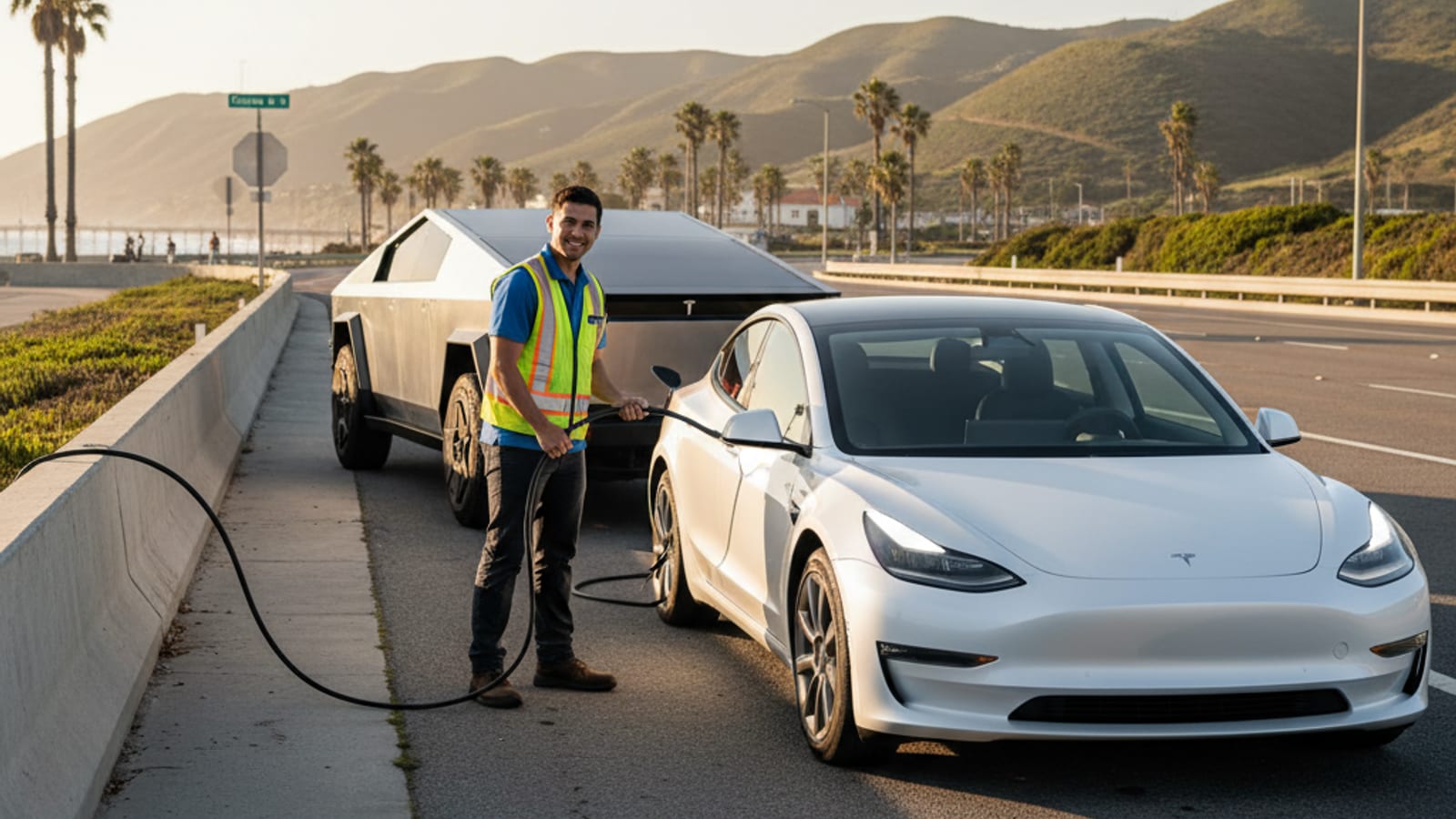
Buckeye sits at the Valley’s far-west edge
This West Valley city covers about 395 square miles. That’s the largest land area of any city we serve. The ACS 2020-2024 file puts the population at 104,923. Only 3.9 percent of the housing predates 1980.
Verrado, Sundance, Festival Ranch, Tartesso, and Blue Horizons follow that new-build pattern. Overnight charging on APS is common in those garages. Named APS programs include the R-EV overnight plan. There’s also a Level 2 smart-charger rebate, APS Smart Charge, and Take Charge AZ. Confirm that plan against your own bill. Valley electric service can split block by block. The rescues we match here are almost always on the pavement.
Heat, I-10, and the westbound desert run
The Papago Freeway, I-10, heads west through open desert. MC-85 and Sun Valley Parkway feel just as exposed. Phoenix logs about 111 days at or above 100F. Cabin cooling eats range on those long, exposed miles. Recurrent’s Phoenix-area data shows 20 to 30 percent loss above about 95F. AAA’s 2026 study found about 8.5 percent loss at 95F versus 75F. A low pack pointed at Quartzsite gets serious on that westbound run.
Goodyear and Surprise sit closer to the core. Buckeye is the last built-up stop before I-10 opens toward the desert. Don’t roll off Monroe Avenue already low if you’re bound for California.
Haboob pull-asides that drain a parked EV
Monsoon season runs June 15 through September 30. Haboobs can drop visibility to near zero in minutes. You ease onto an I-10 shoulder and wait it out. Climate control, lights, and screens keep drawing while the dust wall passes. That’s charge you lose without moving an inch.
Arizona DPS Roadside Motorist Assistance will jump a 12-volt or bring gasoline. ADOT’s Incident Response Unit works Phoenix-area freeways on weekdays. Their published window is 5am to 8pm. Neither program advertises charging an empty traction pack. If the pack is spent, you need a different kind of truck.
A Level 2 charge, or a 12-volt wake-up
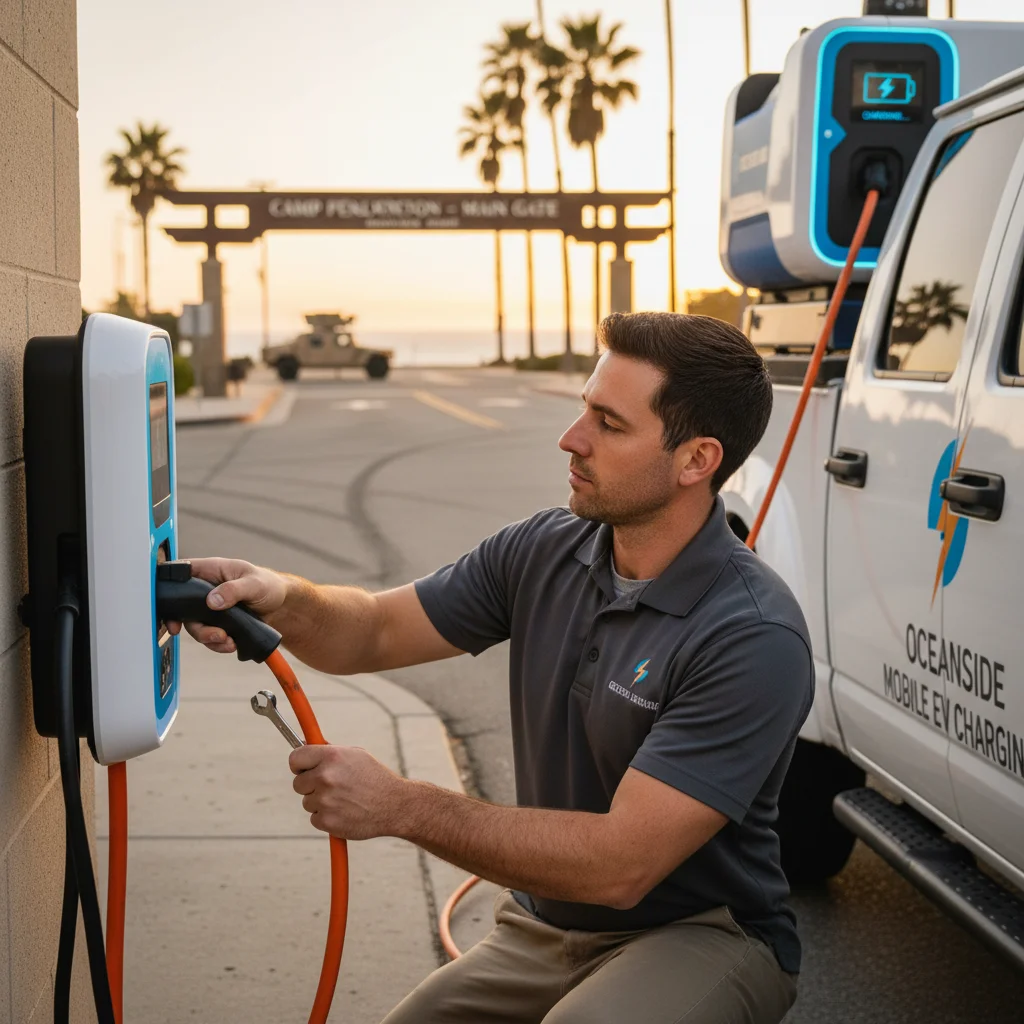
Mobile EV charging means a 240-volt Level 2 source at your bumper. Teslas take a native NACS plug, and other EVs use CCS or J1772. Operators typically add 10 to 20 miles in 15 to 30 minutes of charging. That’s session time on the cable. It isn’t a promise of when someone shows up.
If the car won’t wake, check the small 12-volt first. Desert heat is the top killer of those packs. A dead 12-volt locks the contactors even with a full traction battery. The operator can jump or replace it on site. Tesla factory roadside tows to a Supercharger and doesn’t charge on the pavement. If you’re already on the shoulder, read the I-10 heat guide.
Get off the traveled lane and share your pin
ARS 28-871 says leave the traveled highway when it’s practical. A vehicle that can’t be moved is exempt. Stay visible 200 feet each way and leave room to pass. Keep hazards on under ARS 28-775, the Move Over law. Give the operator a ZIP, a cross street, and which side you’re on. Buckeye ZIPs include 85326, 85396, 85361, 85340, and 85354.
Monroe Avenue’s historic downtown sits on old US-80. Verrado streets beat an interstate pull-aside when you can crawl there. Start with our Buckeye EV page for this West Valley city. Use out-of-charge recovery when the pack is empty.
If you need EV roadside assistance in Buckeye, call (602) 932-0920. We’ll connect you with a local independent operator. They quote you before they start, and they bill you directly.