You drive an EV in the Phoenix area and you need to know what your real charging options are. Tesla Superchargers and CCS public charging are the two networks, and they work differently for Valley drivers. Here is how they compare.
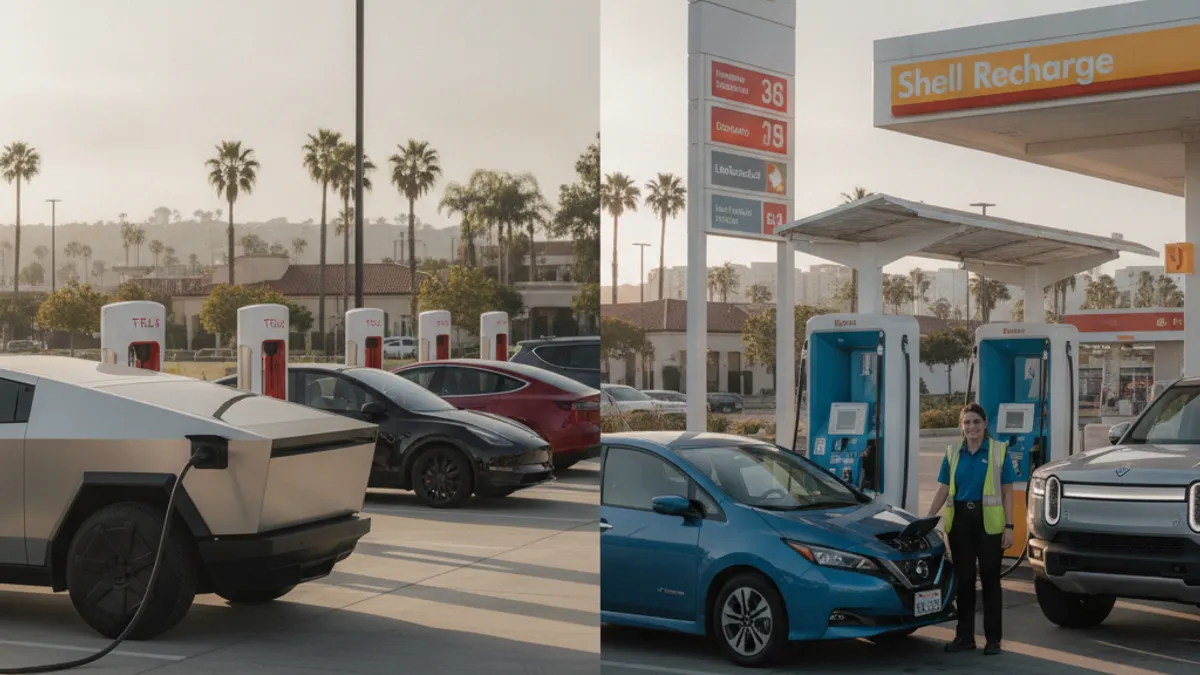
What the two networks actually are
Tesla Superchargers are Tesla’s own DC fast-charging network. They use the native NACS connector on Tesla cars and, since 2024, on a growing list of non-Tesla brands with NACS adapters. The session is DC fast charging, which is faster than Level 2.
CCS (Combined Charging System) is the standard DC fast plug for most non-Tesla EVs sold in the US since 2020. The session is also DC fast charging. The CCS network includes stations operated by Electrify America, EVgo, ChargePoint, and others, plus a mix of regional and national operators.
Level 2 charging is different from both. A Level 2 stall delivers 240 volts AC at a slower rate, and it is what most home wall chargers and most mobile operators use. A mobile Level 2 visit at the car is slower than a DC fast charge but more available.
How the two networks compare in Phoenix heat
DC fast charging is fast, but heat slows both networks. Charger handles and batteries derate above about 100F. A DC fast session that takes 25 minutes at 75F can stretch past 40 in July, especially at a busy Supercharger stall where multiple cars are pulling power at once.
The networks also fail differently. A Tesla Supercharger stall can show “stall unavailable” because of a network fault, a payment issue, or a software update. A CCS stall can show the same. Both networks run best in the morning or in the evening when the heat is lower.
For the broader picture on why a session might not start, see public charger says connected but not charging in heat.
What to do when both networks fail
A down Supercharger on the I-10 or a down CCS stall in Chandler is the same problem: the car is low and the network you planned to use is gone. A mobile Level 2 operator is the backup. The truck brings a portable 240-volt source to where the car sits and adds 10 to 20 miles in 15 to 30 minutes of charging.
That is not a replacement for DC fast charging. It is a bridge to the next working fast charger, or to home. Many Phoenix-area drivers end up using both: a DC fast network for everyday charging, and a mobile operator for the day the network fails.
For the broader picture on what mobile Level 2 adds at the car, see roadside Level 2 charging for stranded drivers.
What the ADOT NEVI build-out means
ADOT’s National Electric Vehicle Infrastructure plan carries about $76.5 million to add up to 69 DC fast-charging sites along interstates, 150 kW minimum, at least every 50 miles, with construction underway in 2026. Designated corridors include I-10, I-17, I-8, I-19, I-40 and parts of US-60 and SR-347. SR-347’s charging gap is publicly acknowledged and still in planning as of 2026.
The build-out is real, but it is multi-year. Today, the gaps on SR-347 between Maricopa and the I-10, on the I-17 north of Cordes Junction, and on the I-8 toward Gila Bend are the longest stretches between fast chargers anywhere in the metro.
How a mobile operator fits between the networks
A mobile operator is not part of either network. The truck is independent. For a Phoenix-area driver, the practical model is:
- Daily charging at home on Level 2 (overnight, with the heat derate in summer).
- DC fast charging on the network for road trips and top-ups.
- A mobile operator as the backup when the network fails or the car will not make the next charger.
For Tesla drivers, the Supercharger network is the primary network. For non-Tesla drivers, the CCS network is the primary. Both end up using a mobile operator at some point.
What to do if you are stranded right now
If your EV is stranded because both networks failed or your car cannot reach the next charger, get the car as far off the travel lane as you can and keep hazards on. Have a location ready.
Call (602) 932-0920. The operator confirms the connector (NACS for Teslas, CCS or J1772 for other brands) and quotes before any work starts.
Frequently asked questions
Are Tesla Superchargers open to non-Tesla EVs?
Many are, since the 2024 network opening. You need a NACS adapter for most non-Tesla brands, and not every Supercharger site supports non-Tesla sessions. Check the Tesla app before you roll.
Are CCS public chargers faster than Tesla Superchargers?
Both networks run DC fast charging at similar power levels. The exact speed depends on the stall, the car, the temperature, and the network load.
What if the public stall shows a fault and won’t start?
That is a station issue, not a car issue. Try another stall on the same site, then another site, or call a mobile operator to bring Level 2 to where the car sits.
Does Charge Pro PHX help when both networks fail?
We do not run the networks, but we match you with a mobile operator who can bring a Level 2 charge to your car if the public stall is down and you cannot reach another one.